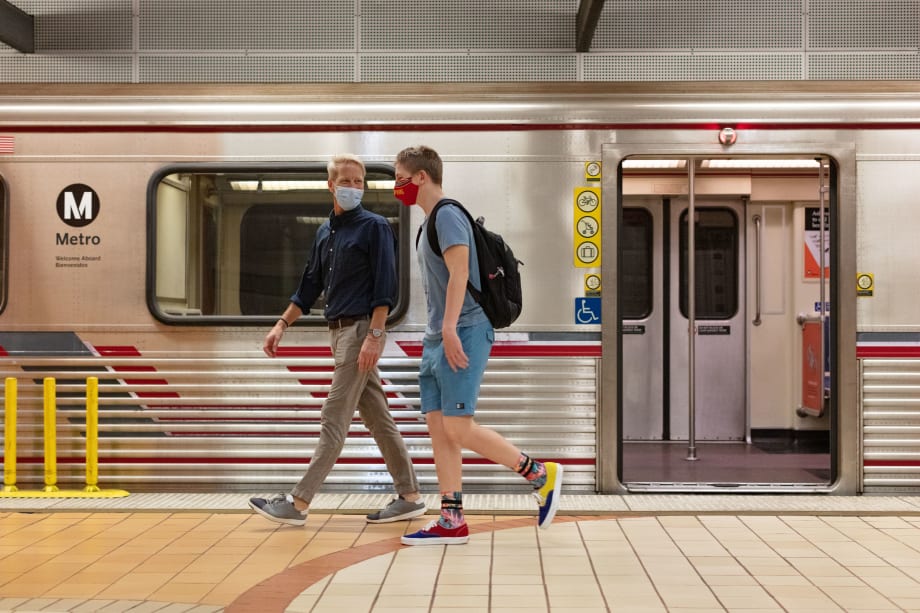
In April 2024, Metro had 26,210,300 boardings on its bus and rail services. A total of 21,286,056 rides were taken each weekday, with Saturday boardings at 2,702,268 and Sunday boardings at 2,221,976.
In April, weekday ridership for bus and rail was at 80.5% of the level it was in April 2019, before the pandemic.
Photo: LA Metro
3 min to read
The Los Angeles County Metropolitan Transportation Authority (Metro) saw its 17th consecutive month of year-over-year ridership growth with a 10.8% increase in total ridership in April 2024 compared to April 2023. Average weekday ridership saw a 9.2% increase in boardings over April 2023.
In April 2024, Metro had 26,210,300 boardings on its bus and rail services. A total of 21,286,056 rides were taken each weekday, with Saturday boardings at 2,702,268 and Sunday boardings at 2,221,976.
Ad Loading...
In April, weekday ridership for bus and rail was at 80.5% of the level it was in April 2019, before the pandemic.
Weekend ridership in April reached 92.6% of the pre-pandemic level from April 2019. Overall, Metro’s combined bus and rail ridership in April reached 82.5% of its April 2019 pre-pandemic level.
Passenger Rail Ridership
The total number of April rail boardings was 5,705,850, with 4,504,214 trips taken on weekdays. Average ridership across the A, B, D, and E rail lines was up 2.6% on weekdays, 2.7% on Saturdays, and 1.4% on Sundays.
In April, the A Line saw the largest total weekday boardings with 1,469,754 trips taken and slightly surpassed the B Line, which had 1,466,124 weekday boardings, as Metro’s busiest weekday rail line as riders continued to enjoy the benefit of one-seat boardings to their downtown destinations.
On the A and E Lines combined, average weekday ridership was up 27.9%, with average Saturday ridership up 30.5% and average Sunday boardings up 25.7% over April 2023 ridership of the A, E, and L lines that were combined as the new A and E Lines in June 2023.
Ad Loading...
L.A. Metro’s Bus Ridership
In April, Metro bus saw a 12.5% year-over-year ridership increase over April 2023. More than 20 million (20,504,450) rides were taken on Metro buses. Metro recorded an average of 762,811 bus boardings on weekdays in April 2024 (up 10.9% over April 2023 and a new post-COVID record for weekday bus ridership).
An average of 512,520 boardings occurred on Saturdays (up 3.7% over April 2023), with an average of 418,132 boardings on Sundays (up 4.5% over April 2023).
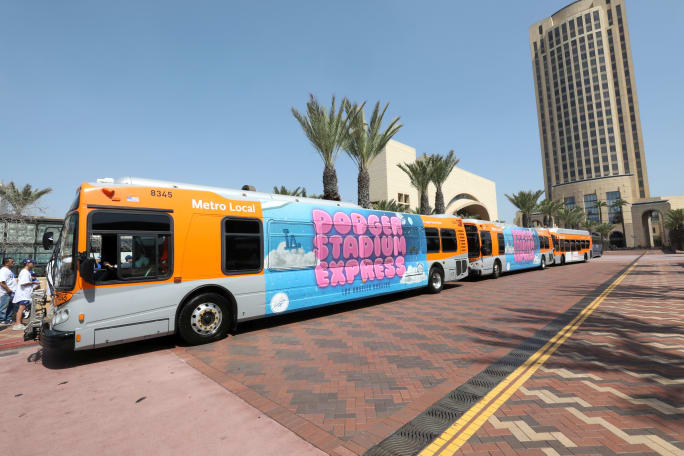
In the first 22 games of the season, Metro has welcomed almost 81,000 Dodger fans onto the Dodger Stadium Express from both Union Station and the South Bay — and boardings have increased 17.2% compared to last season.
Photo: LA Metro
Weekend/Leisure Ridership
Weekend riders continue to use Metro for travel to leisure activities, boosting weekend boardings and quickly closing the gap between pre-pandemic and current weekend ridership.
Average Saturday boardings on bus and rail combined reached 91.5% of April 2019 levels, and on Sundays during the month, average combined boardings reached 93.9% of April 2019 levels.
In April, weekend activities such as the Grand Prix of Long Beach, the LA Times Festival of Books, Anime Nation Fest, CicLAvia, and LAFC all saw participants opting to ride Metro, boosting weekend ridership.
In the first 22 games of the season, Metro has welcomed almost 81,000 Dodger fans onto the Dodger Stadium Express from both Union Station and the South Bay — and boardings have increased 17.2% compared to last season, which is a higher rate of growth than Dodger game attendance overall (up 13.6% this season).
Contract Four is the largest in the Second Avenue Subway Phase 2 project and includes construction of station infrastructure, tracks, and signals for the subway expansion, MTA officials said. Work on Contract Four will begin in 2027.
The new regional transit authority appointed its first board chair and interim executive director while extending reduced fares across CTA, Metra, and Pace for eligible riders.
Reliability-Centered Maintenance helps transit agencies move beyond routine checklists to focus limited resources on the assets and failures that have the greatest impact on safety, reliability, and service.
The 90-day demonstration will deploy coordinated security teams at five light rail stations while testing controlled access and gathering data to guide future investments.
Learn about delivering 1300 gates at 91 stations while managing fare evasion. Explore the large scale deployment, solution customization and real-world results that affect the region. Prepare for deployment in your region now.
Between packed transit stations and team motorcoaches, see how agencies and operators across North America tackled the transportation demands of the 2026 FIFA World Cup.
The stopgap keeps federal transportation programs moving, but missing advance funding could complicate the transit and rail projects agencies are planning next.