




More news: US DOT Gives Guidance on Competitive Grants
NFI Sees Strong Q4, Braces for Possible Tariff Impacts
After a strong fourth quarter, NFI prepares for the possible impacts of proposed tariffs as they move into Fiscal Year 2025.
March 17, 2025
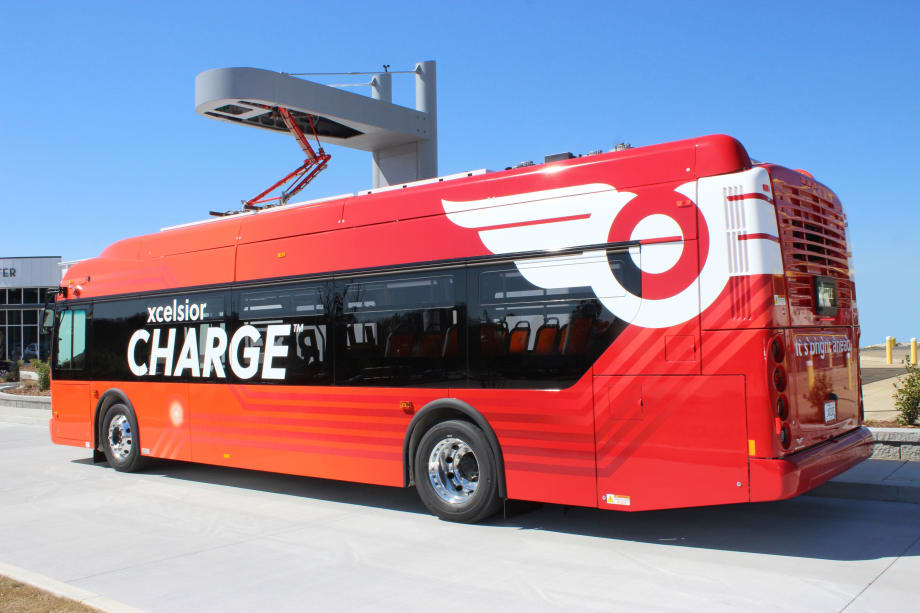
NFI Group saw several increases in Q4 2024 thanks to the increasing popularity of zero-emission buses.
Photo: New Flyer
5 min to read
NFI Group Inc. (NFI) recently announced its audited consolidated financial results for Fiscal Year 2024, which reported a 5.1% year-over-year revenue growth for the fourth quarter.
Looking at Q4 2024
With $837 million in revenue, the fourth quarter for the company saw a 6.1% gross margin increase and a $20.9 million increase in net earnings. Other increases include a 76.4% year-over-year increase in their adjusted EBITDA, a 61.2% year-over-year increase in their backlog, and a 6.4% increase in ROIC.
"Our fourth quarter performance contributed to a fiscal year that saw significant improvement in profitability metrics and the achievement of numerous milestones in aftermarket performance, zero-emission bus deliveries and backlog growth,” said Paul Soubry, president and CEO, NFI. “We achieved these results while managing a seat supply disruption that impacted our North American transit bus business and total liquidity. We’ve continued to work with this supplier on a detailed performance recovery plan and have seen some improvement in the first quarter that we expect will lower bus inventory balances and improve production efficiencies as we move through the first half of 2025.”
Soubry attributed the backlog growth to strong market demands across North America, which provides NFI strong visibility for growth with orders for 2025,2026, and options extending to 2030. The company is also growing in international markets.
Manufacturing Revenue Increases
The report specifically discusses manufacturing, with a $18.9 million increase in revenue, or 2.9% year over year.
The revenue was driven by higher zero-emission bus (ZEB) deliveries, which offer a higher average selling price per unit and medium-duty and low-floor cutaway sales. The total increase in manufacturing revenue for fiscal year 2024 was 16.5%.
Manufacturing in Q4 2024 saw $15.8 million in net earnings, an increase of $6.9 million year over year.
The company’s total backlog at the end of Q4 2024 consists of 15,135 EUs, an increase of 43% on an EU basis and 61.2% on a dollar basis. The growth is attributed to a record number of awards received throughout 2024.
Looking at Aftermarket Numbers
The Aftermarket segment reported a record year, supported by a strong fourth quarter featuring $157.1 million in revenue, an increase of 15.8% from Q4 2023. Aftermarket segment quarterly net earnings increased by $2.5 million, or 10.1%.
The aftermarket segment increases were due to improved sales volume, including increased parts sales for other bus manufacturers' products, pricing adjustments, and a favorable product mix.
The Market’s Outlook
Improvements to revenue, gross profit, net earnings, adjusted EBITDA, free cash flow, and ROIC are anticipated in the near and long term as the company fills out its backlog.
Increases in bus and coach production, deliveries of a higher number of ZEBs aftermarket business growth, the growing demand for buses, coaches, and parts, and the services provided by Infrastructure Solutions are also factors in the predicted growth.
A record number of new orders in 2024 is the first reason the growth expectations have been made.
In addition, the growing market demand within public and private coach and low-floor cutaway markets led to the predictions.
Internationally growth is expected to be slower due to increases in foreign and domestic competition.
Supply lines are a concern due to the highly customized nature of NFI’s products.
Strategies are being implemented to mitigate overall supply chain risk, specifically targeting those related to the production of ZEBs, which has less experienced supply chains compared to traditional propulsion systems.
The company anticipates that, through the second quarter of 2025, its North American transit operations will see a significant improvement in seat supply performance and a reduction in the inventory of complete but missing-seat buses.
With a new Buy America-compliant seat supplier being worked on for the second half of 2025, NFI and the broader industry are predicted to see sustained improvements in seat supply performance.
Tariffs and Their Impact
Actions to alleviate the potential impacts of the U.S. and Canadian tariffs are being taken by the company. These actions include leveraging its localized production facilities, regionalized service and aftermarket parts distribution networks, and contractual terms of its firm orders.
A significant amount of imports and exports of parts, components, and partially and fully assembled buses that need to cross the U.S. and Canada border will remain.
A significant portion of increased costs resulting from the tariffs are expected to be passed on to the end customer through contractual obligations and general price increases.
The impacts of increased input costs in private coach markets may be more difficult to pass on because they do not have the same contractual terms.
NFI anticipates that tariffs may reduce private coach demand and associated production within North America and that the payment timing of tariffs may have near-term cash flow implications. A decrease in order sizes due to higher prices may also be observed.
Recent Executive Orders from the Trump Administration have signaled a review and potential pause of federal funding from the Infrastructure Investment and Jobs Act, including for transit vehicles.
The company has held discussions with U.S. transit agency customers and concluded that these potential funding restrictions would not impact its firm order backlog, which is comprised of legally binding purchase contracts.
New bus and coach orders may be impacted, however, and the conversion of bus and coach options into firm orders, particularly in regard to electric vehicles.
Due to their wide range of propulsion-agnostic bus and coach models, NFI expects that any decrease in electric vehicle orders is likely to be replaced by orders for other propulsion types, such as clean diesel, compressed national gas, or diesel-electric hybrids.
The risk that the tariffs and other trade measures and U.S. policy developments may evolve in unpredictable ways remains.
The impact of tariffs and other trade measures on general economic conditions, supply chain health, customer demand, and the company’s business is uncertain and could be materially adverse.
The current seat supply disruptions may also be extended and/or exacerbated beyond NFI’s current expectations, and the risk of additional supply or operational disruptions remains.
More Management

ENC Lands MATA Contract and More in Biz Briefs
In this edition of Biz Briefs, we spotlight the latest developments shaping the future of mobility.
Read More →
From Surviving to Thriving: Building Stronger Transportation Organizations
Bus Business Consultants founder Brian Dickson shares lessons on leadership, organizational health, and creating options for long-term success in a changing transportation industry.
Read More →
Everett Transit, Community Transit Outline Consolidation Agreement
The proposed agreement calls for a 50% increase in bus service in Everett, a new microtransit zone, continued paratransit service, and the transfer of Everett Transit operations to Community Transit.
Read More →
Strada360’s Steve Lassey on Turning Transit Data Into Better Decisions
From breaking down data silos to preparing for AI, Strada360 CEO Steve Lassey discusses how transit agencies can use technology to improve operations, customer information, and long-term decision-making.
Read More →
People Movement: Phil Washington Joins HNTB, Denver RTD Launches CEO Search, and More
In this edition, we also spotlight recent personnel moves at STV, the Eno Center for Transportation, and more, highlighting the people taking on new roles across the transportation industry.
Read More →
SEPTA Details Accelerate Vision for Transit System
The plan outlines investments in trolley modernization, new Metro and Regional Rail vehicles, accessible stations, and more frequent bus and rail service.
Read More →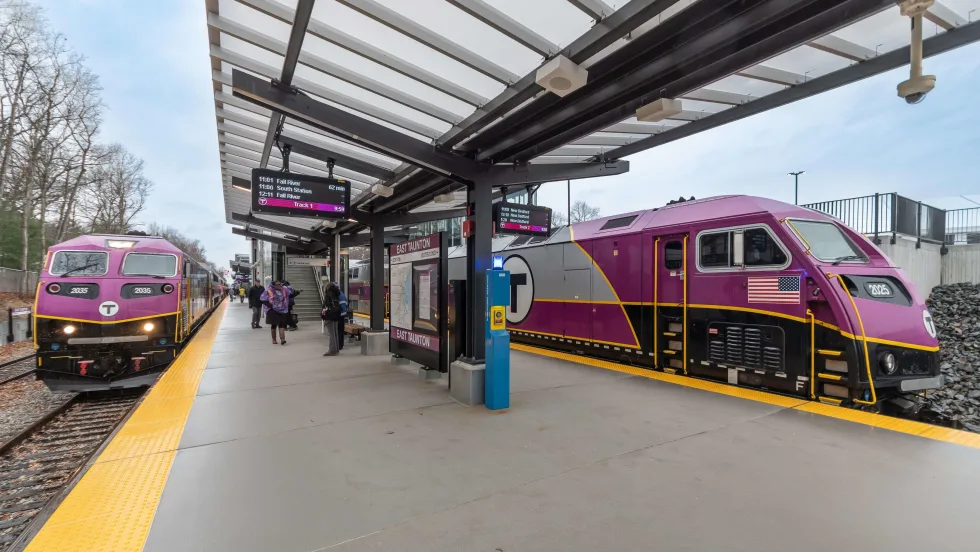
FTA Ends Direct Oversight of MBTA Safety Actions
The federal agency closed its remaining special directive to the Massachusetts Department of Public Utilities following a safety review that began in 2022.
Read More →
Report: Transit Bus Manufacturing Supports 34,100 Jobs, $5.1B in GDP
The “Buses Mean Business” report examines the transit bus manufacturing industry’s economic footprint, supply chain, and rising demand for vehicle replacements.
Read More →
LIT Marks 10-Year Milestone at Annual Summit
Hosted by the COTA from September 10 to 13, the Summit carried the theme “Celebrating 10 Years of Excellence, Leadership, and Impact,” with every part of the program honoring the people, agencies, and partners who built LIT over its first decade.
Read More →
People Movement: Dan Dipert Coaches Adds Third-Generation Leader, Keolis Names New Valley Metro VP/GM, and More
In this edition, we also cover recent appointments and announcements at the Wabtec, SilverRide, HNTB, and more, showcasing the individuals helping to shape the future of transportation.
Read More →