



US DOT Gives Guidance on Competitive Grants
After a directive was issued to review competitive grant programs, the U.S. Department of Transportation has issued guidance addressing questions regarding energy, climate change, diversity, and equity.

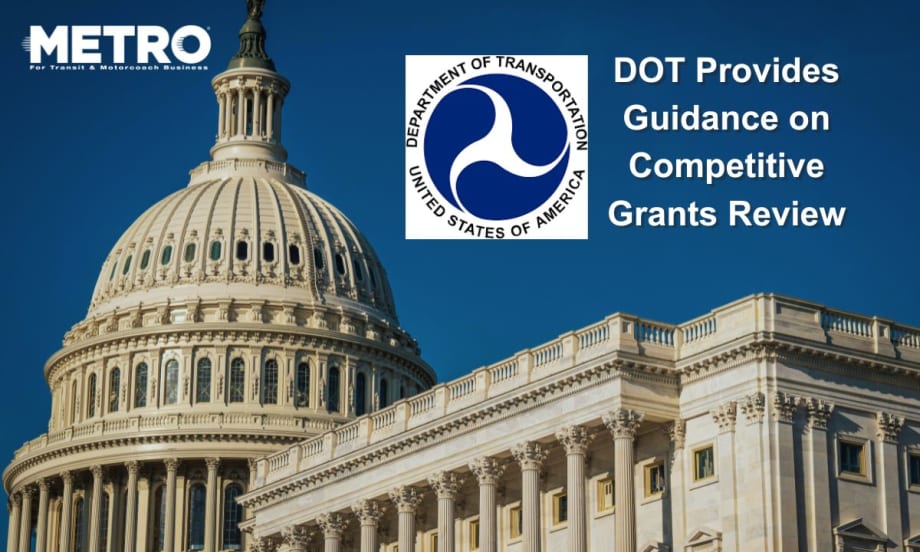
The U.S. DOT has provided guidance on its required competitive grant review, including which specific presidential policies apply and an outline of steps to take after the review.
Photo: USDOT/Canva
The U.S. Department of Transportation (DOT) recently issued guidance regarding the directive for all modal agencies to review all competitive grant programs and awards, including a project-by-project review. These reviews include programs run by the Federal Transit Administration and Federal Railroad Administration.
Guidance on What Policies Apply
The reviews are to identify project scope and activities that allocate funding to advance priorities counter to the Trump Administration’s executive orders, including climate, energy, diversity, and equity projects.
Policies that apply to the review are outlined in Executive Order 14148, Executive Order 14154, Executive Order 14151, Executive Order 14168, secretarial Order 2100.7, and the Secretarial Memorandum on Implementation of Executive Orders Addressing Energy, Climate Change, Diversity, and Gender.
This guidance applies to competitive award selections made after January 20, 2021, without grant agreements or partially obligated grant agreements. Projects with executed grant agreements that are fully obligated are outside the scope of the provided guidance.
Identifying Components Against Current Presidential Policy
Modal agencies are to identify programs that may include any elements such as equity activities, Diversity, Equity and Inclusion activities, climate change activities, environmental justice activities, and gender-specific activities. Programs with the primary purpose of bicycle infrastructure, electric vehicles (EV), and electric vehicle charging infrastructure must also be identified.
Projects with any of the above elements will be subject to a project-by-project review if they meet specific criteria. Project-by-project reviews will examine and flag any project scope elements or activities for potential removal, such as:
Project activities such as equity analysis, green infrastructure, bicycle infrastructure, EV and/or EV charging infrastructure.
Project purpose or primary project benefits that include equity and/or climate such as projects that purposefully improve the condition for EJ communities or actively reduce GHG emissions.
Steps to Take After Elements Have Been Identified
Agencies must recommend to the Office of the Secretary which project sections should continue in their current form, be revised with a reduced or modified scope, or be canceled entirely based on their review.
Agencies will negotiate with the project sponsor to update the project scope to eliminate and replace identified project elements that align with the program statute, scope of the project sponsor’s application, and Trump Administration executive orders if a project is revised.
If the project sponsor does not agree to remove project elements, the DOT has directed agencies to proceed with a reduced award, removing the flagged scope and activities.
More News: HID Mass Transit Report Highlights 5 Key Priorities for 2025
More Management

ENC Lands MATA Contract and More in Biz Briefs
In this edition of Biz Briefs, we spotlight the latest developments shaping the future of mobility.
Read More →
From Surviving to Thriving: Building Stronger Transportation Organizations
Bus Business Consultants founder Brian Dickson shares lessons on leadership, organizational health, and creating options for long-term success in a changing transportation industry.
Read More →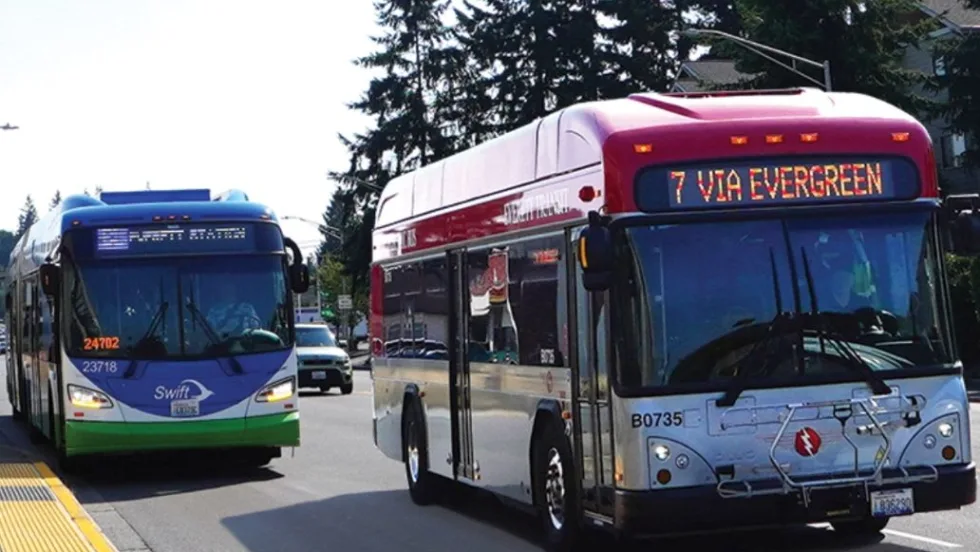
Everett Transit, Community Transit Outline Consolidation Agreement
The proposed agreement calls for a 50% increase in bus service in Everett, a new microtransit zone, continued paratransit service, and the transfer of Everett Transit operations to Community Transit.
Read More →

Strada360’s Steve Lassey on Turning Transit Data Into Better Decisions
From breaking down data silos to preparing for AI, Strada360 CEO Steve Lassey discusses how transit agencies can use technology to improve operations, customer information, and long-term decision-making.
Read More →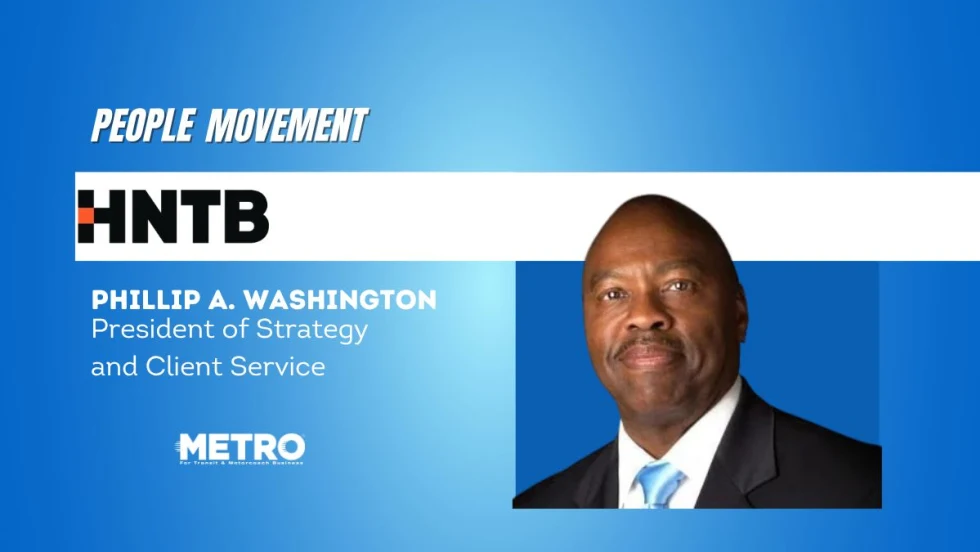
People Movement: Phil Washington Joins HNTB, Denver RTD Launches CEO Search, and More
In this edition, we also spotlight recent personnel moves at STV, the Eno Center for Transportation, and more, highlighting the people taking on new roles across the transportation industry.
Read More →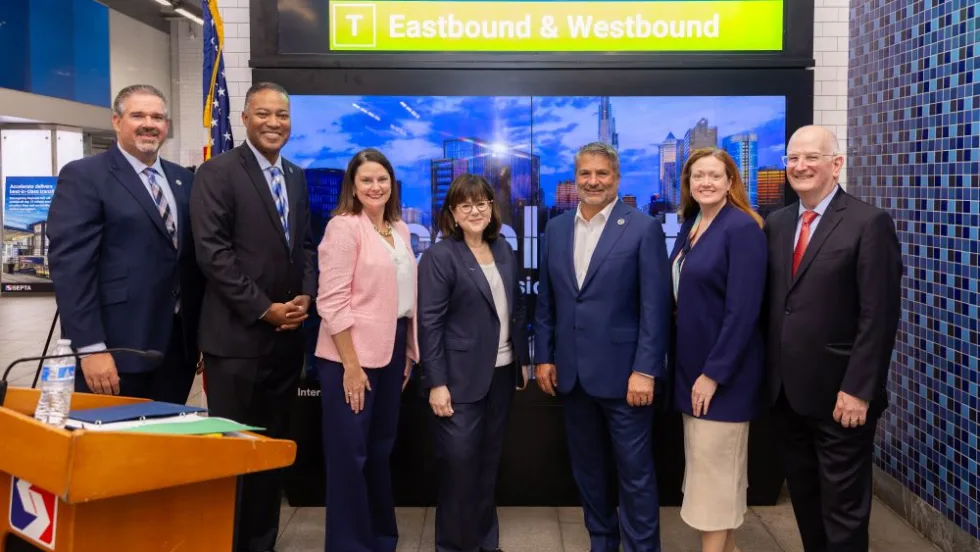
SEPTA Details Accelerate Vision for Transit System
The plan outlines investments in trolley modernization, new Metro and Regional Rail vehicles, accessible stations, and more frequent bus and rail service.
Read More →
FTA Ends Direct Oversight of MBTA Safety Actions
The federal agency closed its remaining special directive to the Massachusetts Department of Public Utilities following a safety review that began in 2022.
Read More →
Report: Transit Bus Manufacturing Supports 34,100 Jobs, $5.1B in GDP
The “Buses Mean Business” report examines the transit bus manufacturing industry’s economic footprint, supply chain, and rising demand for vehicle replacements.
Read More →
LIT Marks 10-Year Milestone at Annual Summit
Hosted by the COTA from September 10 to 13, the Summit carried the theme “Celebrating 10 Years of Excellence, Leadership, and Impact,” with every part of the program honoring the people, agencies, and partners who built LIT over its first decade.
Read More →
People Movement: Dan Dipert Coaches Adds Third-Generation Leader, Keolis Names New Valley Metro VP/GM, and More
In this edition, we also cover recent appointments and announcements at the Wabtec, SilverRide, HNTB, and more, showcasing the individuals helping to shape the future of transportation.
Read More →