




More news: NY MTA Announces Details of Queens Bus Network Redesign
NY MTA to Protect Metro-North Hudson Line From Climate Change
The New York MTA is looking to tackle climate change while also keeping their Metro-North Hudson Line in a state of good repair with their new initiative that focuses on the line.
April 10, 2025
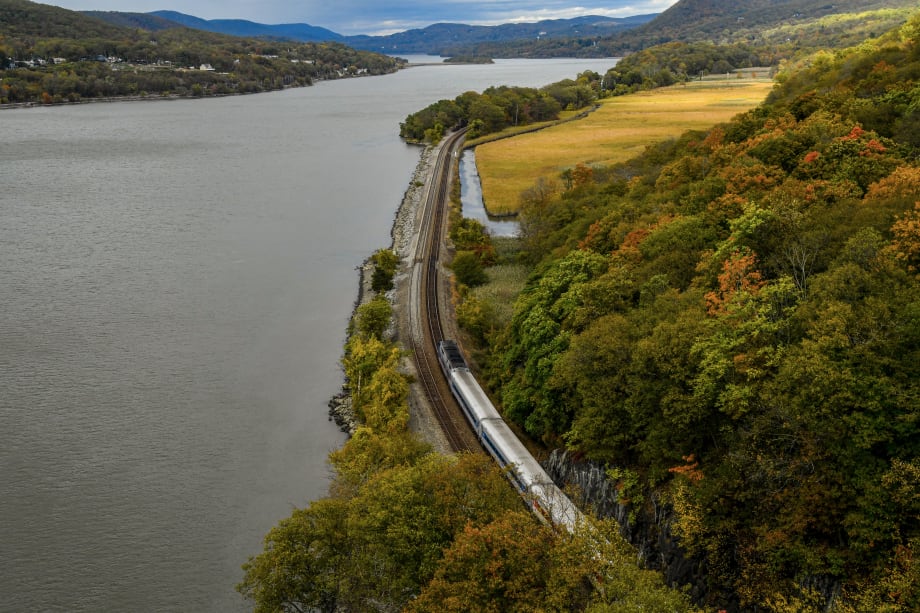
The Metro-North Hudson Line will be having a lot of work done on it in the near future to enable the MTA to protect it from the effects of climate change.
Photo: NY MTA
3 min to read
The New York Metropolitan Transportation Authority (MTA) recently announced a new initiative to protect the Hudson Line from climate change effects through investments to fortify the line against future stormwater runoff, tidal floods, and other risks.
Combating Climate Change Effects
This effort is known as the Metro-North Hudson Line Climate Resilience Blueprint, and will rebuild critical infrastructure such as culverts, drainage, retaining walls, slopes, shorelines, and track. The project is focused on a 20-mile stretch between Riverdale and Croton-Harmon that is vulnerable to the impacts of extreme weather.
“Securing the next generation of great public transit along the Hudson Line means investing in infrastructure to protect Metro-North from climate change,” said MTA Construction and Development President Jamie Torres-Springer. “The Hudson Line Climate Resilience Blueprint will give us a clear path to make our service stronger and more reliable, and we’re excited to share our vision with the commuters who depend on it.”
The blueprint also outlines design guidance and actions to protect the entirety of the Hudson Line from climate change and ensures a coordinated approach is taken for all future Hudson Line projects. This includes target track elevations, standards for waterfront shoreline improvements, and performance criteria for drainage.
The agency is hosting the first of a series of Open House events for the Blueprint on April 23. The open house will feature a brief presentation given by MTA Construction & Development (C&D) representatives about the Blueprint and Capital Plan, with a Q&A session to follow.
A flagship project in the MTA’s 2025-2029 Capital Plan that was a direct outgrowth of findings from the MTA’s Climate Resilience Roadmap, the Blueprint shows how the agency is taking a future-looking approach to tackling the challenges of climate change.
The Blueprint builds on MTA’s and C&D’s commitment to “better, faster, cheaper.” Initiative for projects that are completed on time and on budget by maximizing opportunities to bundle construction projects that address a state of good repair.
“By the 2050s, 80 percent of the Hudson Line will be at increased risk of flooding due to rising sea levels and more frequent severe weather events,” said Metro-North President Justin Vonashek. “The Hudson Line is a key economic driver for the Hudson Valley and it’s important that we make these crucial investments to protect the future of not only the railroad, but the entire coastal area.”
Looking at the MTA Capital Plan
The Capital Plan is a $68.4 billion investment in the region’s subways, buses, railroads, bridges, and tunnels over the next five years to ensure New Yorkers continue to have access to reliable, accessible, and sustainable transit.
It includes targeted investments to rebuild, improve, and expand the transit system, enabling the MTA to continue to provide frequent and reliable service by restoring it to good repair.
The plan also aims to improve the customer experience, with investments in accessibility, stations, and modern fare gates. Resiliency and sustainability initiatives and action on climate change are also included.
More Rail

ENC Lands MATA Contract and More in Biz Briefs
In this edition of Biz Briefs, we spotlight the latest developments shaping the future of mobility.
Read More →
Strada360’s Steve Lassey on Turning Transit Data Into Better Decisions
From breaking down data silos to preparing for AI, Strada360 CEO Steve Lassey discusses how transit agencies can use technology to improve operations, customer information, and long-term decision-making.
Read More →
SEPTA Details Accelerate Vision for Transit System
The plan outlines investments in trolley modernization, new Metro and Regional Rail vehicles, accessible stations, and more frequent bus and rail service.
Read More →
FTA Ends Direct Oversight of MBTA Safety Actions
The federal agency closed its remaining special directive to the Massachusetts Department of Public Utilities following a safety review that began in 2022.
Read More →
Amtrak, CN Reach Agreements to Strengthen Passenger Rail Service, Safety
The agreement resolves a more than decade-long proceeding before the Surface Transportation Board concerning the terms and conditions for Amtrak services, such as the City of New Orleans, Illini/Saluki, and Wolverine.
Read More →
New York MTA Advances Final Contract for Second Avenue Subway Expansion
Contract Four is the largest in the Second Avenue Subway Phase 2 project and includes construction of station infrastructure, tracks, and signals for the subway expansion, MTA officials said. Work on Contract Four will begin in 2027.
Read More →
San Diego MTS Breaks Monthly Trolley Ridership Record
Agency officials said July’s ridership indicates MTS’s continued recovery from the pandemic.
Read More →
Report Examines NJ TRANSIT Reliability, Funding Challenges
The Garden State Initiative analysis examines the roles of Amtrak infrastructure, fleet management, and agency operations while recommending a more performance-based approach to improving reliability.
Read More →
Stadler, CapMetro Sign Long-Term Rail Fleet Support Agreement
Beginning in 2027, Stadler will provide on-site technical expertise, spare parts support, training, and obsolescence management to help extend the reliability and longevity of CapMetro’s GTW fleet.
Read More →
Biz Briefs: Alstom Lands Canadian Contract, LYT to Supply California TSP, and More
In METRO's latest installment, we take a look at recent news from Complete Coach Works, Beep, FlixBus, and more partnerships making headlines across the transportation sector.
Read More →