



Consultant Q&A: AECOM's Diane Cowin on Planning, Innovation, and the Future of Transit
As Transit Market Leader for the Americas, she brings deep expertise in federal funding strategy, ESG-focused development, and equity-centered leadership.

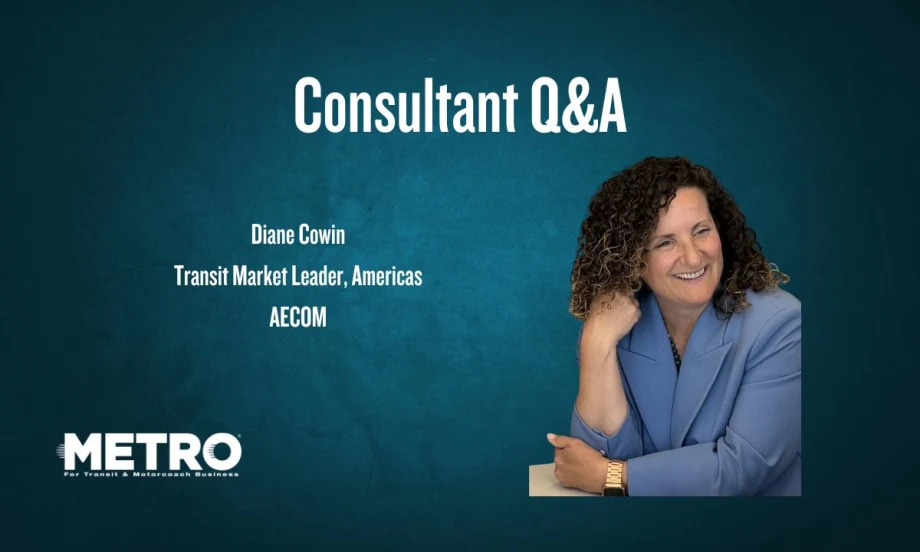
Diane Cowin is committed to advancing sustainable, resilient transportation and energy solutions across the Americas.
Photo: AECOM
- Diane Cowin serves as the Transit Market Leader for the Americas at AECOM.
- She specializes in strategies related to federal funding and ESG-focused development.
- Her leadership emphasizes equity-centered approaches in planning and innovation.
*Summarized by AI
Diane Cowin is AECOM's Transit Market Leader for the Americas. With deep expertise in federal transit funding, regulatory strategy, and ESG-driven market development, she is a trusted advisor to public- and private-sector clients.
Cowin brings a proven track record in profit-and-loss leadership, operational excellence, and equity-centered succession planning. In addition to her executive roles, she is an inclusive and creative board director with experience across nonprofit and corporate boards. She is committed to advancing sustainable, resilient transportation and energy solutions across the Americas.
METRO spoke with Cowin about the challenges transit projects face during the planning phase, as well as efficiency, accessibility, and other aspects of project execution.
Transit Project Hurdles and Execution
What are the biggest challenges you face during the planning phase of a transit project?
I started my transit career as a planner, so I don’t see challenges as much as the project's possibilities and potential at the initiation phase. Complex infrastructure planning is a dynamic and nuanced balance of securing an appropriately positioned champion, maintaining public and stakeholder interest and confidence, and defining the project that better serves the community it serves within a budget and schedule that leverages funding and financing from public and private sources.
Due to supply chain complexities, lengthy approvals, mid-design scope changes, increased demand for talent, and other macro- and microeconomic realities, transit project capital costs have risen significantly. This has resulted in a rise in cost-saving innovations, a focus on sustained support through continuous communication, complex compromise and informed consent, and a strategic approach to phasing and/or the project's financial stack.
What innovative design or engineering solutions have you implemented to enhance transit efficiency?
Increasing capital costs and competition for funding and financing drive innovation to deliver efficiencies across all phases of a project or program, including increased design automation with AI and the concept of design-to-cost.
During transit project development, AECOM focuses on cost-driven approaches, such as ‘design to cost,’ which drive prudent decision-making and scope management. This approach can also establish ‘minimal viable products’ to meet the budget and provide much-needed transit services in a phased approach. Computational design with AI for repeatable elements, such as bridges, saves design time and supports efficient decision-making while learning and improving with each new task.
These cost and funding constraints are also driving innovative, alternative approaches to improve capacity in existing infrastructure operations by reducing headways through advanced digital technology for train signaling systems.
How do you ensure that transit projects are designed with equity and accessibility in mind?
Early on, a significant shift in my career came about after I had worked on my first light rail (LRT) project for DART (Dallas Area Rapid Transit). I saw how the opportunities for community building and access to new jobs, healthcare, and affordable homes could redefine people’s lives.
However, to deliver a truly equitable and accessible service, a focused intention is required during every phase of a project. Providing meaningful opportunities for representation early and often during project definition and design is an essential first step; however, developing key performance indicators with the communities and representative groups holds agencies and project teams accountable.
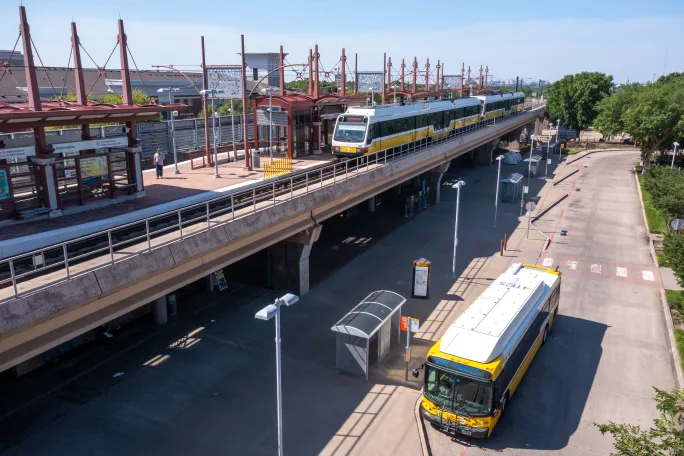
To deliver a truly equitable and accessible service, a focused intention is required during every phase of a project, Cowin says.
Photo: DART
The Future of Public Transportation
What does the future of public transit look like in 10 to 20 years?
The transit industry is primed to evolve in the next 10 to 20 years. I see the continued emergence of AI and automation in project development, improving operations, and customer service. Further development and enhancement of technology for customer information systems, ticketing, and payment systems will likely enhance passenger experience and confidence.
The energy transition and renewables will continue to advance, with innovations in everything from energy storage and management solutions to new renewable profiles for transit rolling stock and vehicles.
Vehicle technologies are evolving rapidly through automation, AI, and energy systems, which will allow customers greater flexibility but also challenge the transit industry to remain flexible and adaptable to take advantage of the rapidly changing landscape.
Quick Answers
Diane Cowin serves as the Transit Market Leader for the Americas at AECOM, where she focuses on aspects like federal funding strategy, ESG-focused development, and equity-centered leadership.
*Summarized by AI
More Management
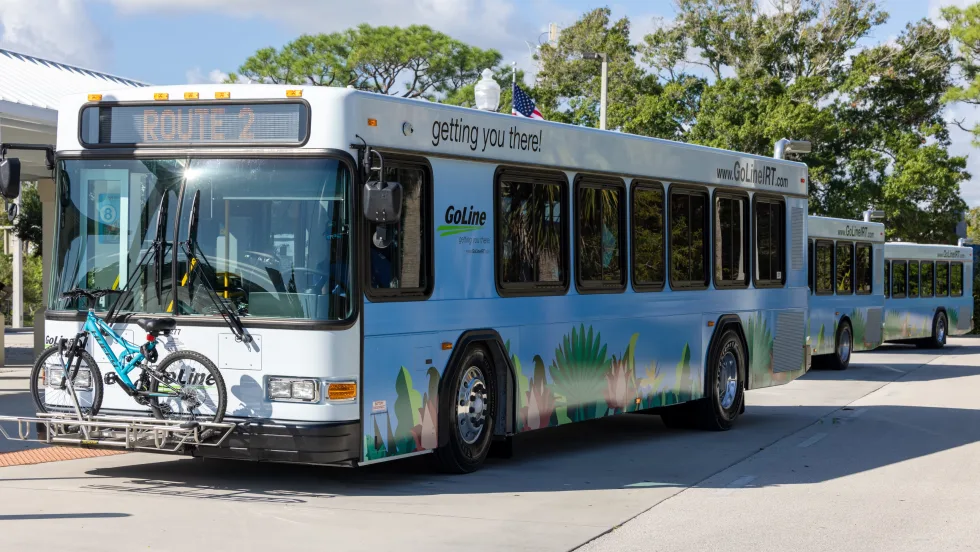
Indian River Transit’s Community-Focused Approach Earns National Recognition
Named APTA’s 2026 Outstanding Public Transportation System in its size category, Florida’s Indian River County transit system continues to grow ridership through fare-free service and a focus on evolving community needs.
Read More →
ENC Lands MATA Contract and More in Biz Briefs
In this edition of Biz Briefs, we spotlight the latest developments shaping the future of mobility.
Read More →
From Surviving to Thriving: Building Stronger Transportation Organizations
Bus Business Consultants founder Brian Dickson shares lessons on leadership, organizational health, and creating options for long-term success in a changing transportation industry.
Read More →

Everett Transit, Community Transit Outline Consolidation Agreement
The proposed agreement calls for a 50% increase in bus service in Everett, a new microtransit zone, continued paratransit service, and the transfer of Everett Transit operations to Community Transit.
Read More →
Strada360’s Steve Lassey on Turning Transit Data Into Better Decisions
From breaking down data silos to preparing for AI, Strada360 CEO Steve Lassey discusses how transit agencies can use technology to improve operations, customer information, and long-term decision-making.
Read More →
People Movement: Phil Washington Joins HNTB, Denver RTD Launches CEO Search, and More
In this edition, we also spotlight recent personnel moves at STV, the Eno Center for Transportation, and more, highlighting the people taking on new roles across the transportation industry.
Read More →
SEPTA Details Accelerate Vision for Transit System
The plan outlines investments in trolley modernization, new Metro and Regional Rail vehicles, accessible stations, and more frequent bus and rail service.
Read More →
FTA Ends Direct Oversight of MBTA Safety Actions
The federal agency closed its remaining special directive to the Massachusetts Department of Public Utilities following a safety review that began in 2022.
Read More →
Report: Transit Bus Manufacturing Supports 34,100 Jobs, $5.1B in GDP
The “Buses Mean Business” report examines the transit bus manufacturing industry’s economic footprint, supply chain, and rising demand for vehicle replacements.
Read More →
LIT Marks 10-Year Milestone at Annual Summit
Hosted by the COTA from September 10 to 13, the Summit carried the theme “Celebrating 10 Years of Excellence, Leadership, and Impact,” with every part of the program honoring the people, agencies, and partners who built LIT over its first decade.
Read More →