




Keep Reading: The Benefits of Rethinking Resilient Infrastructure for Transit
NFI 2024 Sustainability Report Highlights Zero-Emission Growth and Community Impact
The report details NFI’s strides in clean transportation, workforce development, and community programs shaping a sustainable future.
August 13, 2025
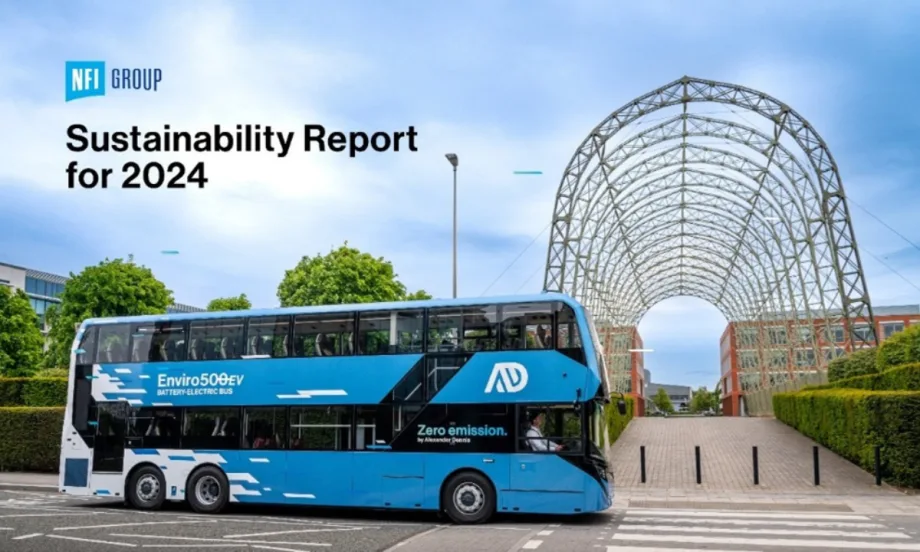
NFI’s Sustainability Report highlights its pledge to deliver better products, workplaces, and community impact worldwide.
Photo: NFI Group Inc.
2 min to read
NFI Group Inc. recently released its Sustainability Report for 2024, which offers an annual summary of its products and operations, including highlights of its sustainability initiatives, evolving priorities, and areas of impact.
The report focuses on the three main components of NFI’s Sustainability Pledge, “A Better Product. A Better Workplace. A Better World,” which guides the company’s daily actions, long-term planning, and drives ongoing improvement.
A Better Product: In 2024, NFI expanded its low- to zero-emission product and services portfolio, received a record number of new orders, and delivered its highest number of zero-emission buses (ZEBs), accounting for 23% of total deliveries.
A Better Workplace: In 2024, NFI expanded its Community Benefits Framework across all subsidiaries to guide hiring and workforce development efforts, while facilitating programs focused on unique community needs. The company also invested $12.9 million and over 365,000 hours in NFI team member career development in 2024.
A Better World: NFI contributed to community well-being through company and employee-led programs, and in 2024, NFI continued to build on its partnership with United Way agencies, supporting 21 communities across North America.
“At NFI, sustainability is more than a core value — it’s a guiding principle that shapes how we operate across our value chain,” said Janice Harper, executive VP of people and culture. “In 2024, our team took important steps in our sustainability journey by working to strengthen environmental practices, support social initiatives, and enhance system resilience. We’re proud to share these efforts in the seventh edition of our annual Sustainability Report.”
Report Consults Stakeholder Engagement and Performance Metrics
To develop this report, NFI consulted with a broad range of internal and external stakeholders on regional and global levels, including key internal departments, customers, suppliers, investors, creditors, and community partners, to present a clear and balanced disclosure of NFI’s sustainability activities and performance identified as most relevant to NFI and its stakeholders.
“Sustainability is a strategic driver of our performance and long-term growth. By continuously improving how we innovate, operate, and engage across our value chain, we aim to strengthen our business and contribute meaningful value to our people, our communities, and the environment,” said Paul Soubry, president and chief executive officer at NFI. “Our purpose is to move people, and that begins with prioritizing the safety, health, and success of our team to deliver dependable, high-quality products and services.”
According to a company release, this report has been reviewed and published with the approval of NFI’s senior executives, NFI’s Sustainability Council, and the Board of Directors. The performance data within has been validated by internal management and is for certain jurisdictional regulatory authorities in the form required by such authorities.
More Management

Bringing Austin’s First Light Rail System to Life
Austin Transit Partnership CEO Greg Canally discusses the city's nearly 10-mile light rail project, its collaborative approach to project delivery, the importance of community engagement, and the milestones ahead as construction approaches in 2027.
Read More →
ETA CEO John Maglio on Transit Technology, Innovation, and Building Agency Trust
ETA founder and CEO John Maglio explores the evolution of transit technology, the importance of reliable systems, and how stronger partnerships can help agencies improve operations and the passenger experience.
Read More →
Metra Draft Plan Outlines Costs, Service Improvements for Regional Rail
The Systemwide Network Plan identifies infrastructure needs and potential investments to expand all-day, bidirectional rail service across the Chicago region.
Read More →
New Orleans RTA Names Augustine III as New CEO
In this edition, we also spotlight recent personnel moves at HDR, PATH, STV, and more, highlighting the people taking on new roles across the transportation industry.
Read More →
How Transit Agencies Are Using Free Rides to Improve Voting Access
Transit agencies are using fare-free service, trip-planning tools, and targeted rides to improve voting access. See what other agencies can learn from these efforts.
Read More →
Caltrain’s Electrification Drives a New Era of Ridership Growth
The railroad’s shift to electric service has brought more frequent trains, stronger customer satisfaction, and increased ridership, earning it APTA’s Outstanding Public Transportation System award.
Read More →
Chicago, Charlotte Transit Agencies Expand Rider Support Programs
CTA launched crisis intervention teams as CATS prepares to deploy fare ambassadors, expanding customer assistance and security efforts across both systems.
Read More →
New York MTA Launches Historic $1.9B Signal, Track Modernization Project
Funded in part by congestion pricing revenue, the project will replace nearly century-old signals along the A and C lines in Brooklyn and Queens.
Read More →
Brian Dickson on Building Stronger, More Resilient Transportation Organizations
Bus Business Consultants Founder Brian Dickson discusses the leadership principles, operational discipline, and strategic planning that separate transportation companies positioned for long-term success from those stuck in survival mode.
Read More →
LA Metro Breaks Ground on Vermont BRT Project
The 12.4-mile corridor is projected to serve 66,200 daily riders, reduce travel times by up to 24%, and create the nation's busiest bus rapid transit corridor.
Read More →