



2013 Top Rail Project Profiles
As part of this year's Top Rail Projects feature, METRO focused on three projects in the works in Houston, Detroit and Tucson, Ariz.
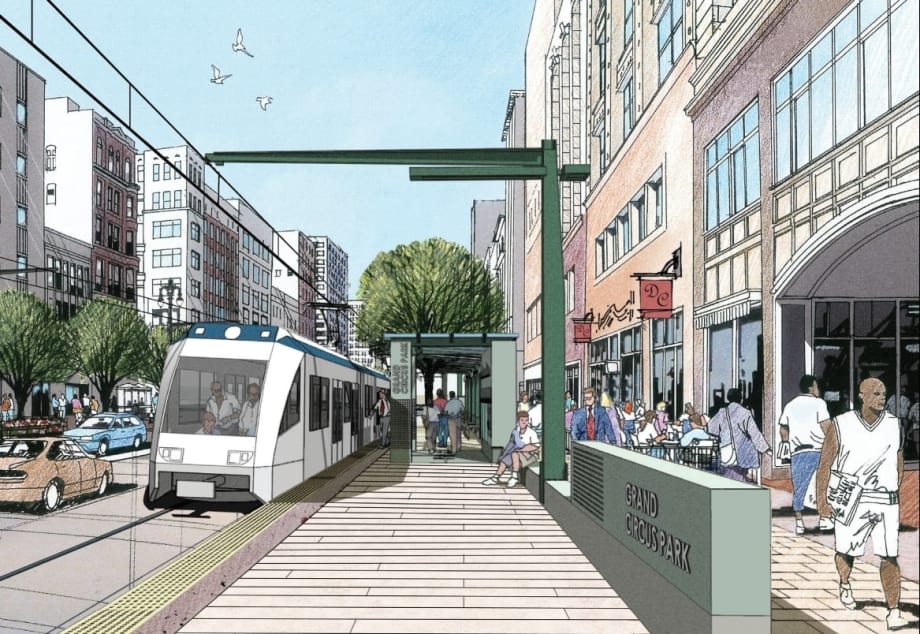
As part of this year's Top Rail Projects feature, METRO focused on three projects in the works in Houston, Detroit and Tucson, Ariz.
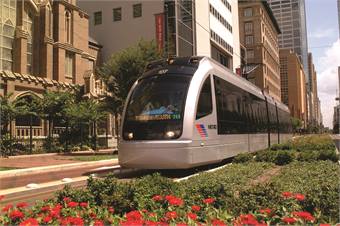
Houston Metro Adding 19 Light Railcars
With its rail system surpassing 100 million boardings four years ahead of its projects, Houston’s Metropolitan Transit Authority (Metro) purchased 19 second-generation S-70 Siemens light railcars to deal with the growth.
“Nine new Siemens H2 S-70 vehicles have been delivered to Metro and three have achieved Conditional Acceptance and are now in revenue service on the Main St./Red Line,” explains Margaret O’Brien, spokesperson for Metro. “The other six Siemens vehicles on site are in the testing and commissioning phase. Once they achieve Substantial Completion, complete the Burn-In Test and achieve Conditional Acceptance, the vehicles will be placed in revenue service.”
The purchase of the S70s represented a savings of almost a year’s time in getting optimal service to riders. Metro was able to achieve this by exercising a vehicle option with the Utah Transit Authority when it “piggybacked” through an inter-agency agreement to procure the light railcars from Siemens.
The S70 LRV is electrically powered from an overhead wire (catenary) system and carries about 200 passengers per car. The units can be coupled — up to four together — for more efficient service during peak times.
Each new S70 unit is equipped with eight wide-opening, sliding doors all located in the low-floor area, four on each side of the vehicle. The door spacing is optimal for passenger flow — the time necessary to enter and exit the vehicle, which can cause delays in the schedule. The design of the interior maximizes passenger space, using a knee-to-back seating arrangement and a large standing area with extra hand straps and grab bars for passenger safety.
In addition to the amplified passenger space and wide doorways, the updated S70 is also equipped with two designated wheelchair spaces, allowing priority seating for disabled passengers as well as a hydraulic system that permits height control and level boarding.
Metro is also responding to requests from cyclists by outfitting each new H2 S70 with two bicycle racks, located at front and rear doorways, which may make travel safer during hours when bikes are permitted on board.
The delivery of the 19 Siemens S70 Vehicles will be completed in August 2013 and used on Metro’s North Line, with testing and commissioning activities already underway, according to O’Brien.
In addition to the new Siemens vehicles, Metro’s remaining Construcciones y Auxiliar de Ferrocarriles (CAF) vehicles are scheduled to arrive in Houston beginning in October 2013. The CAF railcars will also undergo thorough testing prior to Metro accepting them for use in revenue service.[PAGEBREAK]
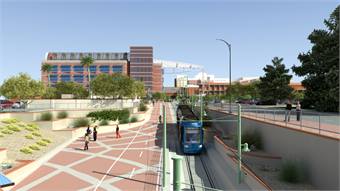
Ariz.'s streetcar project 80% complete
Tucson, Ariz.’s Sun Link streetcar project is part of the $2.1 billion Regional Transportation Plan, approved by Pima County voters in May 2006. The project is funded by the Regional Transportation Authority (RTA), as well as federal and other regional funds.
Construction of the project began in April 2012 with an aggressive build schedule that calls for completion within 475 days. The City of Tucson and the RTA are co-managing the project, which is currently in phase two of construction and 80% complete.
The 3.9-mile streetcar line represents the Tucson’s largest construction project to date, generating some 500 constructions jobs. Construction of the line segment portion of the project has progressed well and is currently on schedule and within budget, but there are some challenges, explains Project Manager Shellie Ginn.
“A major component of this project has been locating, relocating and upgrading underground utilities along the route — and in some instances, the existing utilities were over 70 years old and were quite compromised,” she says. “Utility-related issues necessitated several redesigns and delayed the project schedule in some areas. Additionally, the production of the vehicles for the system has been delayed due to technical difficulties with the vehicle manufacturer, our nation’s only domestic manufacturer of streetcar vehicles.”
The project team is expecting delivery of the first streetcar vehicle later this summer and the second vehicle sometime in the fall. Because of the requirement to test each vehicle before launching passenger service, which is slated for late summer 2014, passenger service will be impacted by when vehicle tests are complete.
The project has generated more than 500 construction jobs, 1,500 new housing units, and more than $800 million in private investment to-date, with new restaurants, businesses and entertainment venues already opening along the streetcar route, according to Ginn.
“The streetcar is also an important new, ‘green’ transit option that will make it easier to connect to other communities in our region beyond downtown and the University [of Arizona] areas,” she adds. “Sun Link has allowed the university to expand its landlocked campus into Tucson’s downtown, opening a downtown campus and two large student living complexes.” [PAGEBREAK]
Detroit's streetcar project moves forward
In January, U.S. Department of Transportation Secretary Ray LaHood confirmed a $25 million federal grant to Detroit’s M-1 Rail, which will go toward building the 3.3-mile Woodward Avenue Streetcar Project.
In April, M-1 received clearance from the Federal Transit Administration for the Woodward streetcar project through the issuance of the Amended Record of Decision. This was the final approval step under the National Environmental Policy Act process and allows the project to move ahead to the next phases of design, right of way acquisition and construction.
The vision for a rail line along the Woodward Corridor has been in existence since 2007, and it has gone through a number of iterations — in technology and actual cars and total distance. This was done as more information on infrastructure, ridership projections, overall safety, financial feasibility and other factors became available, with the final design taking into consideration all of those factors and more, according to Heather Carmona, M-1’s chief administrative officer.
“The current and final 3.3-mile streetcar circulator plan that is now in place was also one of the earliest iterations of the M-1 Rail plan,” she says. “There was a period of time that a more ambitious 9.3-mile light rail transit plan to 8 Mile that was proposed in partnership with the city, however, that plan eventually stalled when it could not meet key ridership, funding and other criteria. M-1 Rail, as an ambition, did not falter however, as the work for the original plan was still valid and beneficial to the community good.”
M-1 RAIL’s work has become an unprecedented model in the region for public-private will and cooperation, adds Carmona, with the streetcar project becoming central to many people’s thinking as a first step of connective tissue in the geographic heart of the region.
“We are developing a streetcar line that is expected to be an economic driver for the Woodward Corridor, generating more than $500 million worth of economic development,” she says. “For many across our community, the belief is that someday the streetcar will become the centerpiece for a seamless transit system that connects Detroiters and people throughout the region to jobs and prosperity; thriving businesses; and retail, sporting and cultural activities.”
More Rail

New York MTA Advances Final Contract for Second Avenue Subway Expansion
Contract Four is the largest in the Second Avenue Subway Phase 2 project and includes construction of station infrastructure, tracks, and signals for the subway expansion, MTA officials said. Work on Contract Four will begin in 2027.
Read More →
San Diego MTS Breaks Monthly Trolley Ridership Record
Agency officials said July’s ridership indicates MTS’s continued recovery from the pandemic.
Read More →
Report Examines NJ TRANSIT Reliability, Funding Challenges
The Garden State Initiative analysis examines the roles of Amtrak infrastructure, fleet management, and agency operations while recommending a more performance-based approach to improving reliability.
Read More →
Stadler, CapMetro Sign Long-Term Rail Fleet Support Agreement
Beginning in 2027, Stadler will provide on-site technical expertise, spare parts support, training, and obsolescence management to help extend the reliability and longevity of CapMetro’s GTW fleet.
Read More →
Biz Briefs: Alstom Lands Canadian Contract, LYT to Supply California TSP, and More
In METRO's latest installment, we take a look at recent news from Complete Coach Works, Beep, FlixBus, and more partnerships making headlines across the transportation sector.
Read More →
CATS Gold Line Marks 5 Years of Service, 2.8M Passenger Trips
With a six-mile expansion planned, the Charlotte streetcar is positioned to connect more neighborhoods and major transit hubs across the region.
Read More →
Why Simulating Pedestrian Movement Has Become Essential for Modern Rail Stations
Pedestrian microsimulation is helping rail planners identify bottlenecks, test station designs, and prepare complex transit hubs for growing passenger volumes.
Read More →
Amtrak Begins Major Construction at New York’s Sunnyside Yard
The new maintenance facility will support Amtrak’s Airo trainsets while improving maintenance efficiency and turnaround times in New York.
Read More →
Chicago Leaders Unveil Plans for O’Hare Airport Express Train
The privately developed project would offer a 15-minute trip between downtown and O’Hare’s Terminal 2, with trains operating every 15 minutes on a dedicated track. The service would use battery-electric trains and three existing freight rail rights-of-way.
Read More →
OCTA Maps Out 30-Year Strategy to Protect Coastal Rail Corridor
The draft feasibility report identifies strategies to protect the coastal rail line for decades as the agency continues near-term stabilization and sand placement efforts.
Read More →