



Alliances Boost the Bottom Line of Motorcoach Operators
Building loyal, reliable partners is critical. Hotels and tourist attractions are often willing partners, as are non-motorcoach tour operators and tour wholesalers.
Now that the war in Iraq is over, motorcoach operators are expecting the public’s pent-up demand for tours and charters to satisfy the operators’ pent-up need for sales. But are they prepared to take full advantage of the public’s desire to hit the road again? Some are and some aren’t. Motorcoach operators who’ve cultivated partnerships with destinations, hotels and tour operators certainly have an advantage over any competitors who have not built alliances. “It’s not what you know anymore; it’s who you know,” says Judy LoSasso, tour manager for TCL Tours, a division of the Leprechaun Companies in Newburgh, N.Y. The tour division operates 28 buses and vans for senior and church groups, schools and independent tours. On the road again? Just a couple of weeks after the war ended, LoSasso said she saw an immediate surge in business. “People who were hesitant to call us a month ago are now calling,” she says. “Also, we had a bad winter here in the Northeast. Everyone wants to get out and go somewhere.” Concerns about security and anti-American terrorism have not gone away, however. That could translate into increased interest in motorcoach travel. “I think people are traveling on motorcoaches because they don’t want to fly,” says LoSasso. “People would rather travel in a group, and they’d rather go in a motorcoach.” Building relationships with key suppliers is more important now than ever, LoSasso says. “A lot of destinations now are asking what we can do to promote them,” she says. To this end, convention bureaus often will provide funding for mailing of marketing material. The key, LoSasso says, is to have more than just a nodding acquaintance with the suppliers. “You can’t just go up to a stranger and say, ‘I want to bring people to your area,’ and expect anything. It has to be through networking and it’s gotta be a friendship and loyalty program.” The power of networking Although not personal friends, Brenda Tidwell and Jane Derthick are loyal partners in a business relationship that has been mutually beneficial since early 2000. Tidwell, co-owner of Leisure Time Charters and Tours in Emerson, Ga., has been booking school tours of Ruby Falls, a guided cave tour attraction with a 145-foot waterfall in Chattanooga, Tenn., since she and Derthick, Ruby Falls’ vice president of marketing, met at a social event sponsored by the American Bus Association more than three years ago. “I told her, ‘I’ve got too many buses sitting idle in January and February,’” Brenda recalls of their cocktail conversation. “Jane told me, ‘I’ve got an empty cave.’” Empty buses, empty cave — not surprisingly, Tidwell and Derthick spent several more hours at the social gathering forming a marketing strategy to fill those voids. A direct-mail campaign, jointly funded by both concerns, put postcards in the hands of thousands of teachers within a 100-mile radius of Tidwell’s location in Emerson. Soon, Tidwell’s phone began ringing and school tours to Ruby Falls were scheduled. The partnership went beyond just booking tours, however. To help Tidwell improve her margin, Derthick agreed to provide a place for lunches prepared and served by Leisure Time. “We never dreamed that we would let a motorcoach operator bring in lunches, but we decided it was worth it. All we want is admission,” says Derthick. In addition, Ruby Falls employees are extra attentive to the busloads of children ferried by Leisure Time. “They bend over backward for us,” says Tidwell. Delays caused by traffic tie-ups are no problem because Ruby Falls will stay open late if necessary to accommodate Tidwell’s tours. And Derthick is just as appreciative of Leisure Time. “Their drivers are wonderful,” she says. “They work really hard.” One of the reasons Derthick is so enthusiastic about Tidwell’s groups is that she can count on repeat business from children who return with their families. “We give them coupons for free admission, so they’ll ask their parents to take them back,” she explains. Also, the $4 admission fee isn’t the only sale that Derthick makes with the school groups. The gift shop rings up considerable sales from the souvenir-hungry children. Leisure Time transports 4,000 to 5,000 students to Ruby Falls per year and has added a local aquarium and an outing to an IMAX theater to the trip in the spring. Building staying power Leisure Time’s partnerships are not limited to destinations such as Ruby Falls, however. Tidwell says she’s also built strong relationships with hotels. For example, Leisure Time has a solid tie to the Hampton Inn in Dry Ridge, Ky., located a stone’s throw from I-75 about 40 miles south of Cincinnati. “It’s hard to draw people in from the interstate because we’re not a destination,” says Phyllis Hunstein, general manager of the 62-room hotel. Plus, she has to compete with five other hotels at the same I-75 exit. After working once with Leisure Travel about five years ago, Hunstein called Tidwell and urged her to return. Tidwell saw that one of her bus tours of Niagara Falls drove right past Dry Ridge and began arranging overnight stays at the Hampton Inn. Tidwell’s business has meant a lot to Hunstein. “Brenda doesn’t play any games,” she says. “I’ve raised my rates on my other bus tours, but not on hers.” Gambling on exclusivity Flexibility can be a plus for a coach operator, but so can exclusivity. Good Time Tours in Pensacola, Fla., operates line runs to Biloxi, Miss., that cater to gamblers. Rather than offer deals at Biloxi’s nine casinos, Good Time chose two resorts — Casino Magic and the Grand Casino — for exclusive partnerships. “Through the years we have managed to build a trusting relationship with the casinos,” says Jerri Smith, general manager of Good Times. Under the agreement, passengers pay only $8 for transportation to the casinos and are given $10 in chips. “The most a person will ever pay to ride one of our buses to Biloxi is $8, so he is up $2 once he gets the $10 from the casino,” says Smith, adding that the casino in turn pays Good Times a commission for each customer delivered. Good Times transports approximately 100,000 passengers per year to Biloxi. Its main hub is in Pensacola, but its 16 coaches have 15 pick-up locations along the Gulf Coast. A fish story Finding new products can be as simple as tossing your line into the water, literally. Jeff Greteman, general manager of Windstar Lines in Carroll, Iowa, created a five-day fishing trip to Ballard’s Resort in Baudette, Minn., based on a fishing story from a relative. According to Greteman, his cousin was fishing at Ballard’s and discovered that the owner was not happy with the existing motorcoach service. “They were older coaches and the drivers were not professional or uniformed,” Greteman relates. “My cousin told him about us and got the ball rolling.” The resort’s general manager, Gary Moeller, later visited Windstar’s main office in Carroll and liked what he saw. “We told him that if he used our charter service, we could help promote his resort here in Iowa,” says Greteman. “He liked that a lot.” Subsequently, Greteman and his two brothers, Scott and Pat, visited Ballard’s and liked what they saw. “We already did one trip in February for ice fishing,” he says. At press time, he planned to devote one of the company’s 13 coaches exclusively to Ballard’s from May through September. “We feel it will be a win-win situation,” Greteman says. “We will be getting several thousand dollars in additional charter revenue and, in addition, a generous commission per person for every group we sell into Ballard’s. For them, they now have a voice in Iowa promoting their resort.” Don’t ignore tour operators In addition to courting the favor of destinations and hotels, motorcoach companies should be working more closely with tour operators. So says Dale McClelland, president of Celebrate Pittsburgh and Beyond, a tour operator in Turtle Creek, Pa. “There is not enough partnering between bus companies and tour operators,” McClelland says. “There is more potential business if the bus company looks at the tour operator and their customers as an additional source of revenue rather than as a direct competitor.” As an example, McClelland says she’s trying to work with an out-of-area motorcoach company that’s headed west. “We can add to their tour,” she says. “If their first night’s stay is in Pittsburgh, why not pick up another 10 people from here if they only have 20 or 30 people on the coach?” To forge partnerships among motorcoach companies, tour operators and group leaders, McClelland recommends some new strategies for a group show scheduled in western Pennsylvania. “By invitation, bus companies will bring their group leaders to the show to visit with suppliers from many destinations,” McClelland says. “In addition, we will encourage the motorcoach companies to partner with a tour operator and have the tour operator’s customers use their coach.” The benefit, McClelland says, is that prospective customers will be exposed to the motorcoach company. Although many motorcoach companies have great relationships with tour operators, McClelland says the potential for more partnering is untapped. “There’s just not enough of it,” she says. “Sometimes bus companies don’t make enough of an effort to cement relationships with tour operators.”
More Management
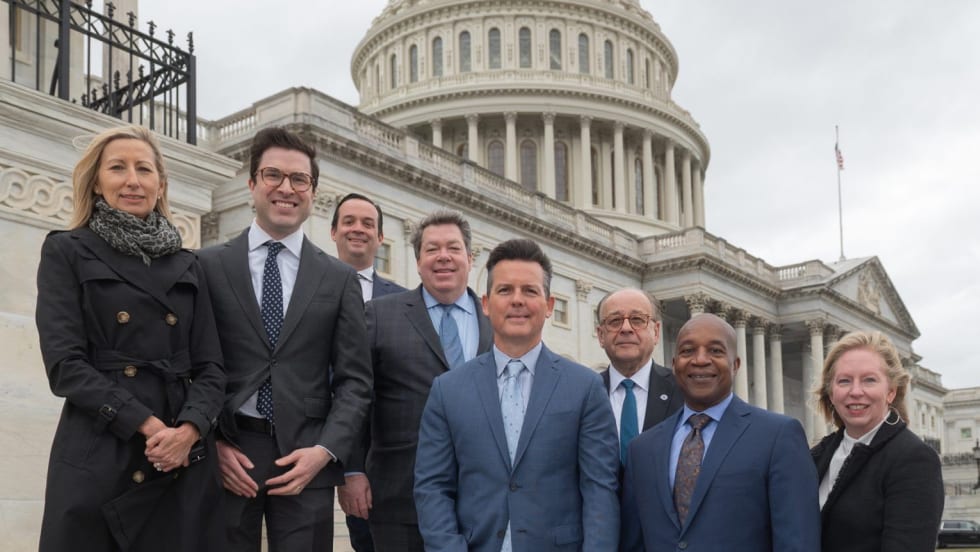
The Business Voice Behind Public Transportation
As chair of APTA’s Business Members Board of Governors, Ray Melleady explains how more than 850 business members are partnering with transit agencies to advance funding, innovation, and industry-wide collaboration.
Read More →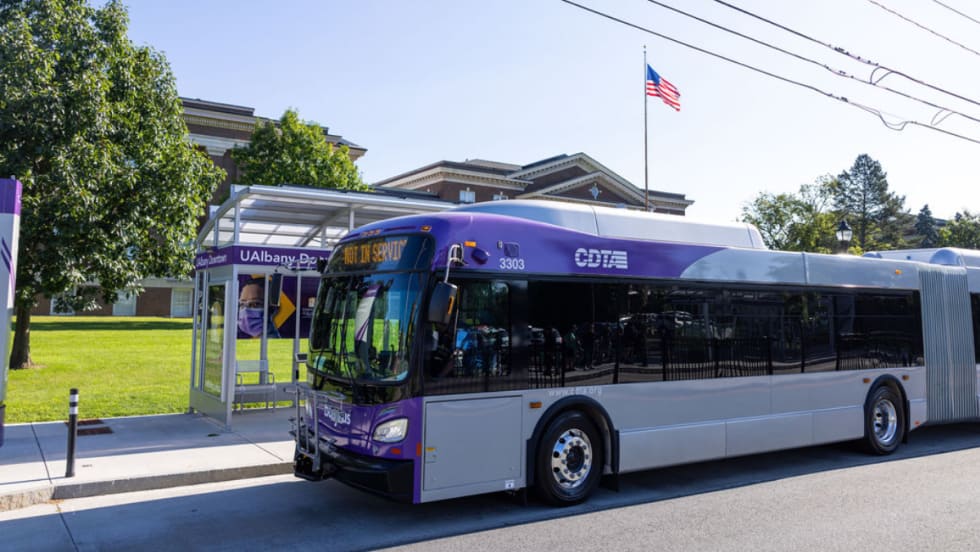
New York’s CDTA Service Rebalancing Boosts Productivity, On-Time Performance
Despite a slight dip in ridership, the agency’s FY2026 results show its service rebalancing strategy is helping the agency carry more riders per service hour while improving reliability.
Read More →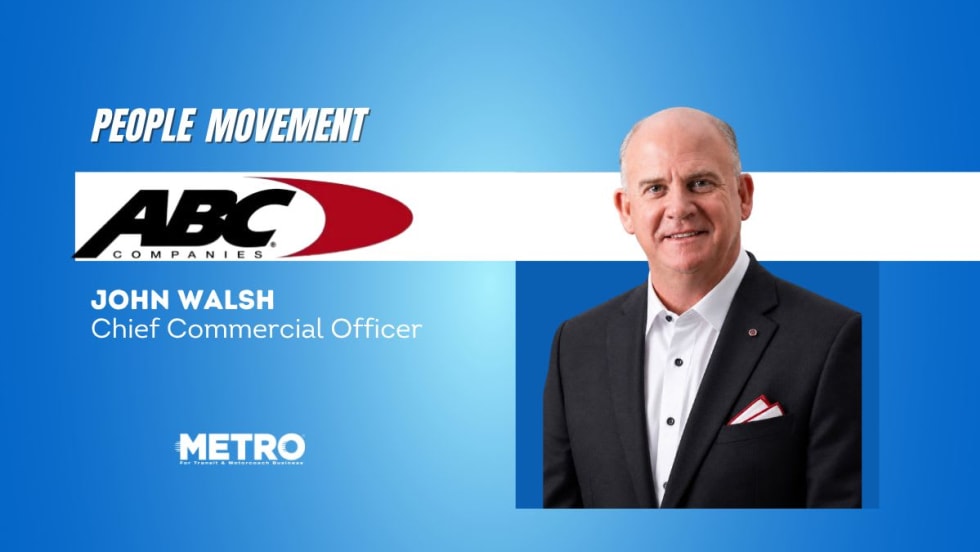
People Movement: ABC Names John Walsh as Chief Commercial Officer
In this edition, METRO also covers recent appointments and announcements at the DART, STV, and more, showcasing the individuals helping to shape the future of transportation.
Read More →
From Surviving to Thriving: Building Stronger Transportation Organizations
Bus Business Consultants founder Brian Dickson shares lessons on leadership, organizational health, and creating options for long-term success in a changing transportation industry.
Read More →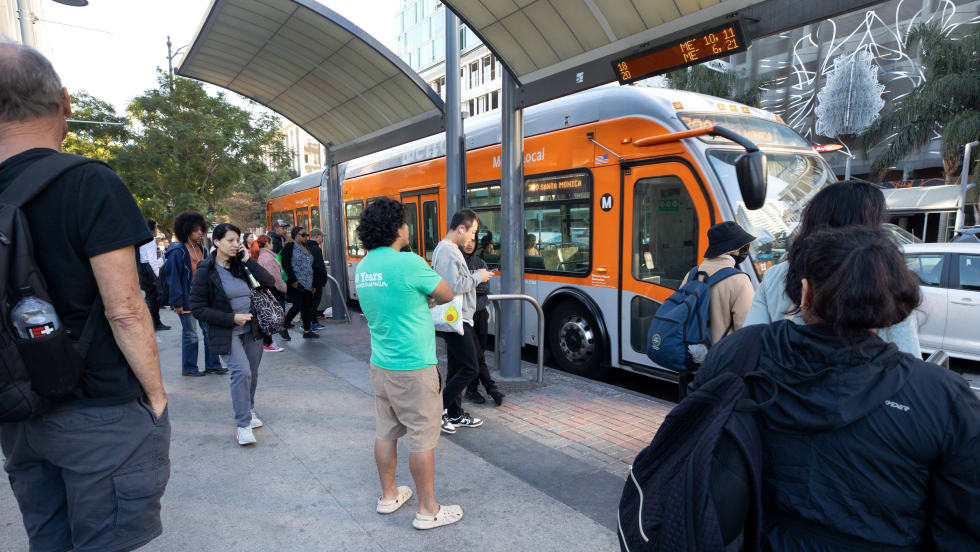
LA Metro Ridership Continues Growth as Rail Gains Accelerate
New rail connections and major events help drive continued ridership gains, with Metro recording its eighth consecutive month of year-over-year rail growth.
Read More →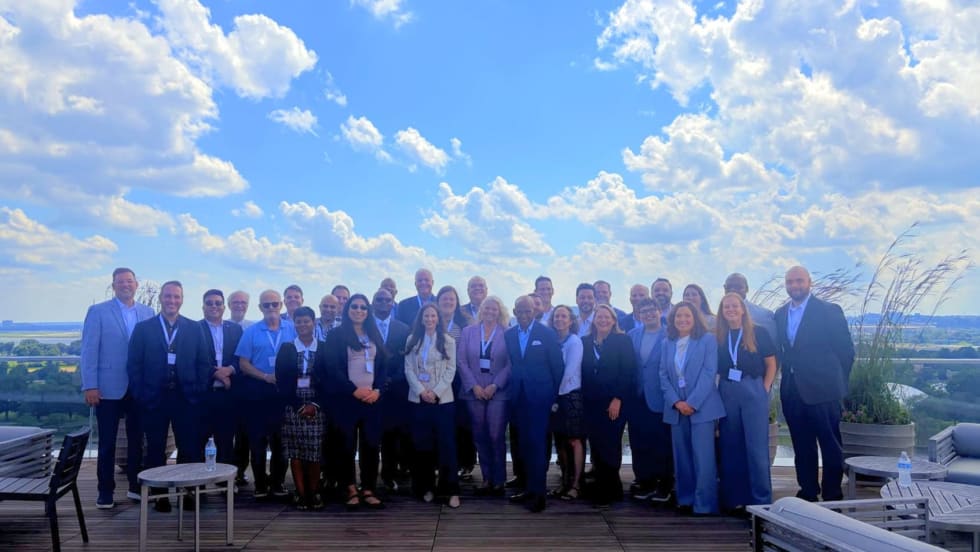
TransDASH Summit Focuses on Measuring What Matters in Transit
Transit agencies unveil a national performance platform designed to benchmark customer experience, safety, community value, and other outcomes.
Read More →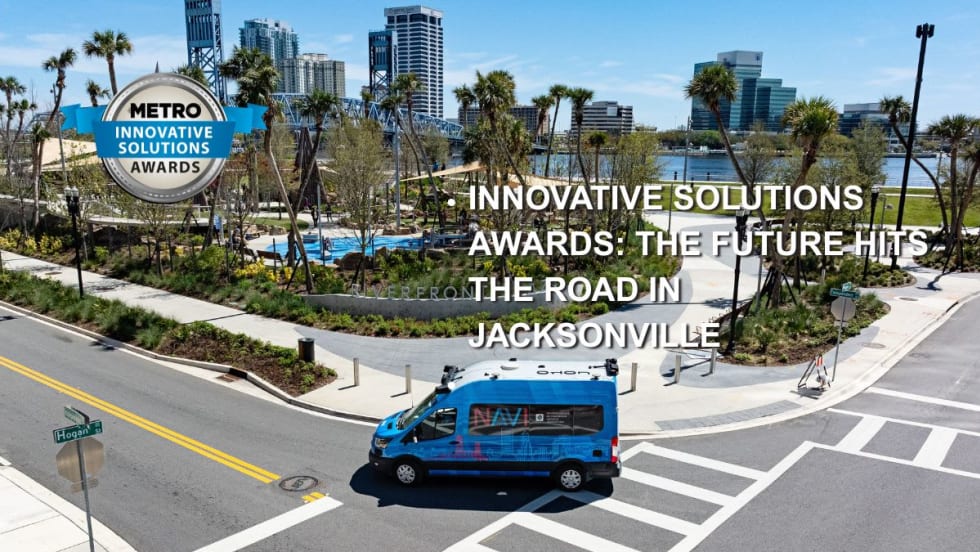
Jacksonville’s NAVI Project Charts a New Course for Autonomous Public Transportation
Through its NAVI program, JTA is showing how autonomous vehicles, intelligent infrastructure, and coordinated operations can work together to deliver everyday public transportation.
Read More →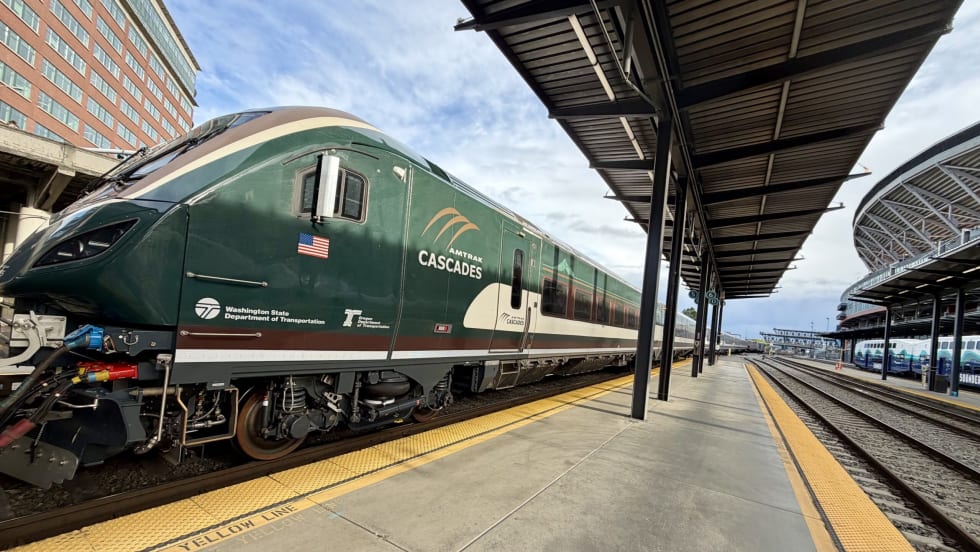
FRA Announces $5.3B in Rail Investments, Including $2B for Amtrak
Funding will support grade-crossing improvements, infrastructure upgrades, and new Amtrak equipment in 23 states.
Read More →
Finding the ‘Happy Medium’: Optimizing Maintenance Without Sacrificing Reliability
The key to maintenance optimization isn’t doing less work—it’s doing the right work at the right time on the right assets.
Read More →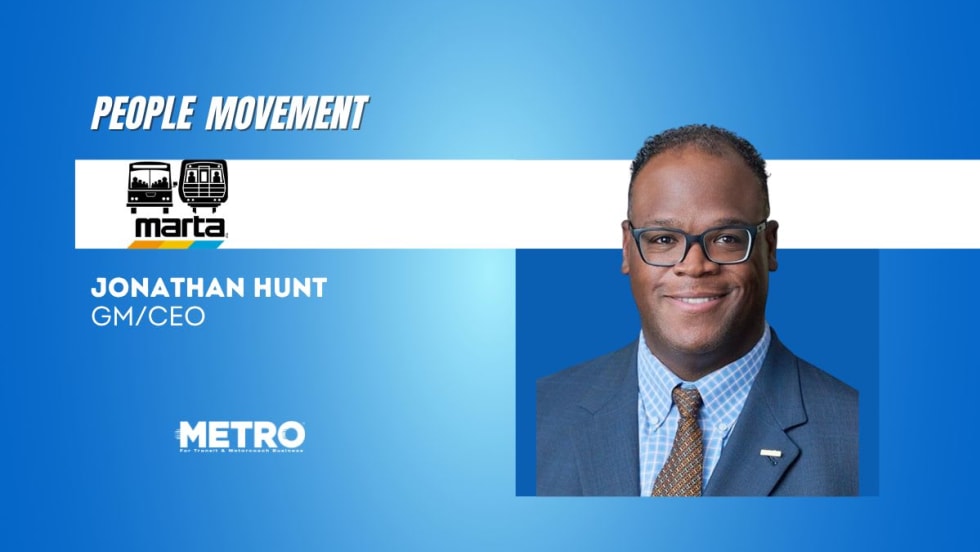
People Movement: MARTA Drops Interim Tag on GM/CEO Hunt and More
In this edition, METRO covers recent appointments and announcements at the FMCSA, HDR, SilverRide, and more, showcasing the individuals helping to shape the future of transportation.
Read More →