



Alstom Launches EC6, Outlines Future Plans
Alstom has continued to grow its Electro Code product line throughout the years, and the recent launch of the new Electro Code 6 (EC6) track circuit shows how far the company has come with the technology.

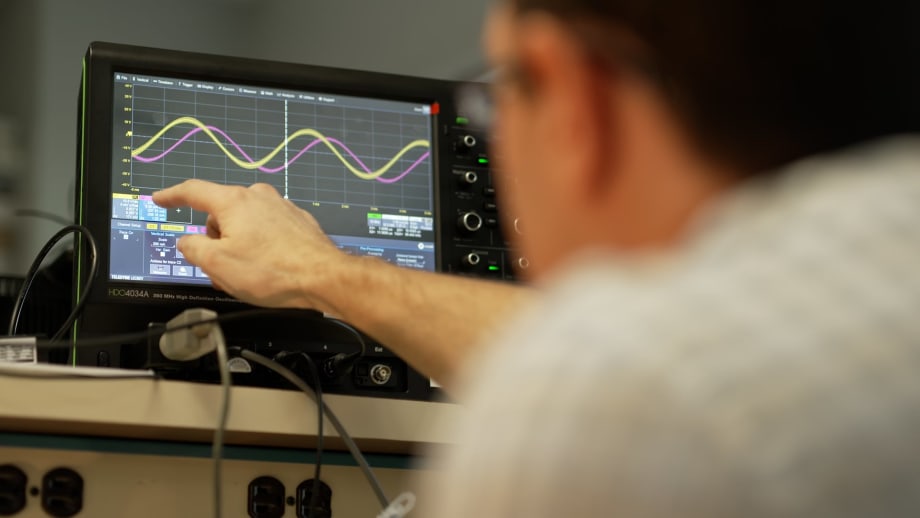
Since its installation, EC6 has eliminated the need for adjustments during rainy conditions that would have made EC5 fail to operate and has also eliminated four intermediate equipment locations (and associated insulated joints) in 17 miles.
Photo: Alstom
Alstom recently unveiled its new Electro Code 6 (EC6) track circuit, as it went into revenue service in April.
EC6 provides two-way digital communications through the rails to detect trains and transmit signal aspects.
The technology enables longer track circuits, detects and locates broken rails, and requires no adjustments throughout its lifecycle, according to Alstom.
Existing EC5 and ElectroLogIXS systems can be upgraded to EC6 in minutes without changing existing wiring and application logic.
EC6 showcases the journey of Alstom’s Electro Code product line, which dates back to the 1970s.
The Goal for Alstom’s New EC6
Alstom, which makes passenger trains and rail signaling equipment, is rolling out more advanced digital circuits in North America and other global markets that monitor the electrical current flowing through tracks to collect and share detailed information like a train’s location, rail integrity, train shunt quality, and track conditions.
According to the company, the goal is to lower the risk of derailments, system failures and, ideally, operate freight lines more efficiently by allowing trains to run closer together.
“There's electrical current going through the rail that’s used to say: is there a train here or not? That technology hasn’t really changed much in 100 years,” said Jeff Baker, VP of Alstom’s freight and product division, in Forbes Magazine. “Those existing systems also determine whether rails are broken, detect a train’s position with about two miles resolution, and transfer only three or four bits of data per second.”
Even before Alstom began developing its new advanced track circuit, the ElectroLogIXS Electro Code 6, the company had been working on technology that would eliminate the need for insulated joints. Those insulated joints are required for traditional track circuits to electrically isolate sections of the track.
“To eliminate insulated joints, Alstom realized they would have to communicate more information between the ends of the track circuit,” said Greg Hann, senior product manager at Alstom. “They developed a new digital communications protocol that would allow significantly more information to be communicated over the rail within the same period as traditional track circuits, with increased security, over longer distances, and at lower signal levels. With this capability, Alstom decided to employ this technology to evolve their Electro Code track circuit.”
The primary function of all track circuits is to detect trains (or prove the absence of them), allowing railway signal systems to provide protection for train operation, according to Hann.
Some track circuits also communicate information from one end of the track section to the other for the purpose of determining what wayside signal aspect (colored lights) to display to the train operator, indicating whether to proceed, stop, or slow down.
“Electro Code 6 technology uses innovative signal processing to digitally communicate information between each end of the track circuit,” Hann said. “This information is communicated similarly to how messages are sent over Ethernet. The information is then digitally encoded and protected by a CRC; hence, it is more secure. It can travel longer distances and is less susceptible to noise and can also communicate more information in a single message.”
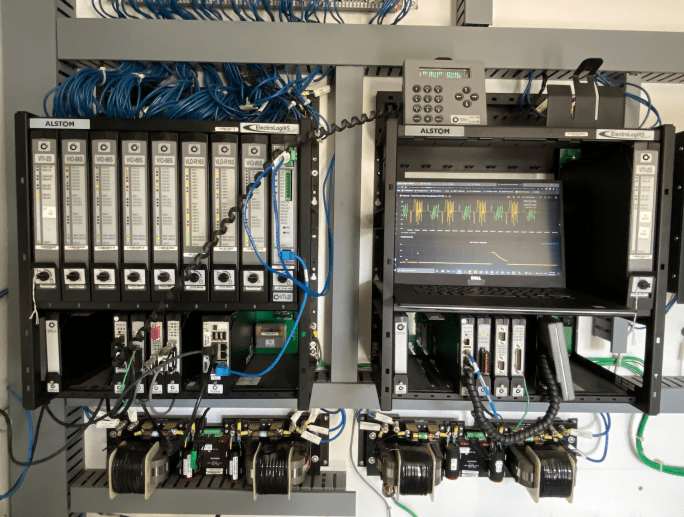
Alstom, which makes passenger trains and rail signaling equipment, is rolling out more advanced digital circuits in North America and other global markets.
Photo: Alstom
EC6’s First Revenue Service Experience, Customer Feedback
Alstom’s EC6 underwent its first revenue service installation in April, and Hann said the technology “operated as advertised in challenging track conditions, proving its benefit to the rail industry.”
“The customer in this case was interested in using EC6 to improve reliability in an area where Alstom’s previous Electro Code track circuit (EC5) would struggle to operate during rainy conditions, and where they had already added more equipment, including insulated joints, to reduce the length of track circuits to help improve this issue,” Hann said.
Since its installation, EC6 has eliminated the need for adjustments during rainy conditions that would have made EC5 fail to operate and has also eliminated four intermediate equipment locations (and associated insulated joints) in 17 miles.
The first installation of EC6 also proved to the railroad that upgrading an existing ElectroLogIXS/EC5 location to EC6 is a simple process with no disarrangement of the signal system. It took fewer than 15 minutes to update each location.
Alstom added that its customers had been communicating to the company about their interest in a track circuit that does not require adjustment when track conditions change.
“There is also a desire to communicate more information between each end of the track circuit and the need for longer track circuits which minimize equipment and insulated joints,” Hann said. “Alstom works very closely with our customers when researching and developing new technology. Their feedback is of great value in our efforts to create and install prototypes and ultimately final designs of our products, which are tested to ensure they operate properly and safely in the real-world environment.”

EC6 showcases the journey of Alstom’s Electro Code product line, which dates back to the 1970s.
Photo: Alstom
Challenges, Plans for EC6
Alstom experienced challenges when developing and launching EC6, such as accounting for different environments.
“Designing this kind of safety-critical technology that operates in rugged environments takes a long time and a lot of effort, not to mention the fact that we were approaching challenges that have not been addressed by other types of track circuits to date, such as not requiring adjustment, real-time measurements of ballast conditions, and longer track lengths,” Hann said.
Alstom had to account for the potential variables of track circuits in the real world, such as seasonal changes affecting track circuit operation, which required extensive analysis, simulation, modeling, and testing (in both the lab and in the field).
“There was also the challenge of being patient, only releasing the product when we were confident it was ready,” Hann added.
Alstom’s current plan for EC6 is for customers to upgrade their existing track circuits to gain the benefits the technology has to offer and to switch over to EC6 for new installations.
As for the future, Hann said Alstom will be able to expand on EC6’s capabilities.
“Now that we can communicate information reliably through the rail, we can extend this technology to provide our customers with additional benefits in the future,” he said. “For example, we may be able to send information through the rail to be received by trains. We will also develop software applications to analyze data we collect from EC6 to help with troubleshooting and/or predictive maintenance.”
More Technology

From Hardware to Digital Partner: Luminator Charts Its Next Chapter
CEO Magnus Friberg discusses Luminator’s shift toward becoming a digital partner, the growing importance of software and interoperability, and how AI can help agencies improve operations and passenger experience.
Read More →
Beyond the Checklist: A Structured Approach to Transit Maintenance
Reliability-Centered Maintenance helps transit agencies move beyond routine checklists to focus limited resources on the assets and failures that have the greatest impact on safety, reliability, and service.
Read More →
NJ TRANSIT Advances Bus Technology Upgrades Across Statewide Fleet
More than 1,500 buses now feature upgraded technology designed to improve arrival predictions and provide free Wi-Fi, with deployment expected to reach nearly 2,000 buses by the end of 2026.
Read More →

Building a Flexible Path to Transit Electrification
John Hroncich discusses BAE Systems’ modular and scalable approach, lessons learned from decades of real-world operations, and how agencies can identify electrification strategies that fit their fleets.
Read More →
Biz Briefs: Alstom Lands Canadian Contract, LYT to Supply California TSP, and More
In METRO's latest installment, we take a look at recent news from Complete Coach Works, Beep, FlixBus, and more partnerships making headlines across the transportation sector.
Read More →
From Legacy Silos to Conversational Intelligence
What if transit leaders could ask any operational question and get a trusted answer in seconds? Conversational AI is transforming how agencies use their data.
Read More →
USDOT Announces Rail Vehicle Replacement Grants, Chattanooga AV Shuttle Funding
More than $191 million in federal funding will help three transit agencies replace aging rail vehicles and support a new autonomous shuttle service in Chattanooga.
Read More →
Bus Tech Talk: Keeping Transit Technicians Ahead of the Technology Curve
LA Metro’s Obed Mejia discusses technician training, evolving maintenance technology, fleet replacement, and strategies for getting the most out of today’s transit fleets.
Read More →
Biz Briefs: RIPTA Unveils New Frontrunners, Clevland RTA Adds New Siemens, and More
In METRO's latest installment, we take a look at recent news from Siemens, Prevost, Dodge, and more partnerships making headlines across the transportation sector.
Read More →
Why Simulating Pedestrian Movement Has Become Essential for Modern Rail Stations
Pedestrian microsimulation is helping rail planners identify bottlenecks, test station designs, and prepare complex transit hubs for growing passenger volumes.
Read More →