



Amtrak reform bill puts burden on states
Under the administration’s plan, Amtrak would transition over time into three entities.

The U.S. Department of Transportation submitted to Congress the Bush Administration’s proposal for reform of Amtrak, which would minimize federal subsidies and break up the passenger rail service into three entities, giving states operational and funding accountability for passenger rail service. “Business as usual is a recipe for failure,” Transportation Secretary Norman Y. Mineta said in a statement. “I believe that our states and localities, in partnership with the federal government, are best suited to decide how and when to operate passenger rail service.” Under the administration’s plan, Amtrak would transition over time into three entities: a private passenger rail company that would operate trains under contract to states; a company that would maintain and operate the infrastructure on the Northeast Corridor under contract to a multi-state Northeast Corridor Compact; and a government corporation that would retain Amtrak’s current right to use the tracks of the freight railroads and the Amtrak corporate name. Mineta cited the Cascades rail service, developed by the states of Washington and Oregon, which invested some $170 million in high-quality passenger rail service from Portland to Seattle, as a model for the proposal. Under this service, state funds were used to improve track, purchase new trains and upgrade stations. States also provided operational subsidies to support the service and hired Amtrak to run it. In response to the reform proposal, David Gunn, Amtrak president, said in a statement, “Amtrak wasn’t asked to work on developing the plan and hasn’t been consulted or briefed on it. Consequently, we’ll withhold commenting until such time as we are briefed. We will continue to put every effort into securing the $1.8 billion in federal support needed next year to fund the capital projects that are needed right now to run safely and reliably.” In his statement, Gunn cited instances in which rail service was disrupted by failed equipment in need of repair or replacement. “The gravity of this immediate need to maintain Amtrak’s operational reliability vastly overshadows any debate over the plan introduced today,” he said. “We believe that it would be the end of intercity passenger service,” said Scott Leonard, assistant director of the National Association of Railroad Passengers, in response to the proposal. “There’s no amount of reorganization that can make up for the fact that passenger rail has not been funded adequately in this country. And if the system isn’t adequately funded in the near term, it doesn’t matter what sorts of long-term plans get imposed, there won’t be anything left to fix.” Rich Kirkpatrick, spokesperson for the Pennsylvania Department of Transportation, agreed that the administration is moving in the wrong direction with its proposal. “The federal government’s expectations that compacts of states, or states themselves, can plan for and operate intercity passenger rail without a federal role is not a workable strategy.” “The administration’s proposal is not acceptable to Missouri,” said Jan Skouby, administrator of railroads and waterways for the Missouri Department of Transportation. “It doesn’t address the needs of the national passenger rail system and it places the operating, funding burden on the states and provides inadequate capital funding, while focusing federal funds on the Northeast Corridor.” Republican senators countered the Bush Administration’s proposal by issuing a six-year, $60 billion plan to help Amtrak. The legislation, created by Senate Commerce, Science and Transportation Committee members Kay Bailey Hutchison (R-Texas), Trent Lott (R-Miss.), Conrad Burns (R-Mont.) and Olympia Snowe (R-Maine), gives Amtrak $2 billion in annual operating subsidies and calls for $48 billion in bonds to raise money for repairs and track construction.
More Rail
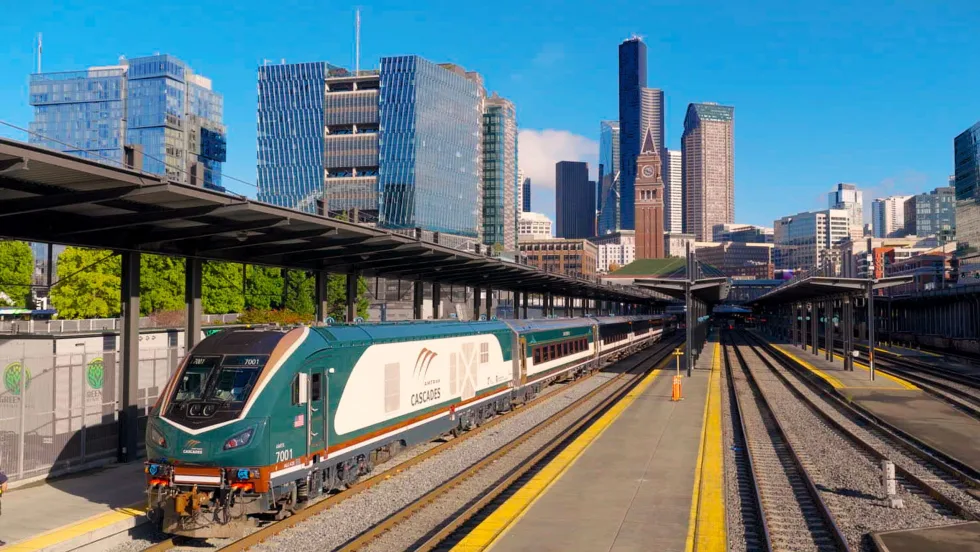
Airo Trains Make Their Amtrak Cascades Debut in the Pacific Northwest
Effective immediately, two cutting-edge Airo trainsets will join the Amtrak Cascades route, operating four daily trips between Vancouver, B.C., Seattle, Portland, and Eugene, Oregon, marking the first introduction of Airo trains into passenger service anywhere in the country.
Read More →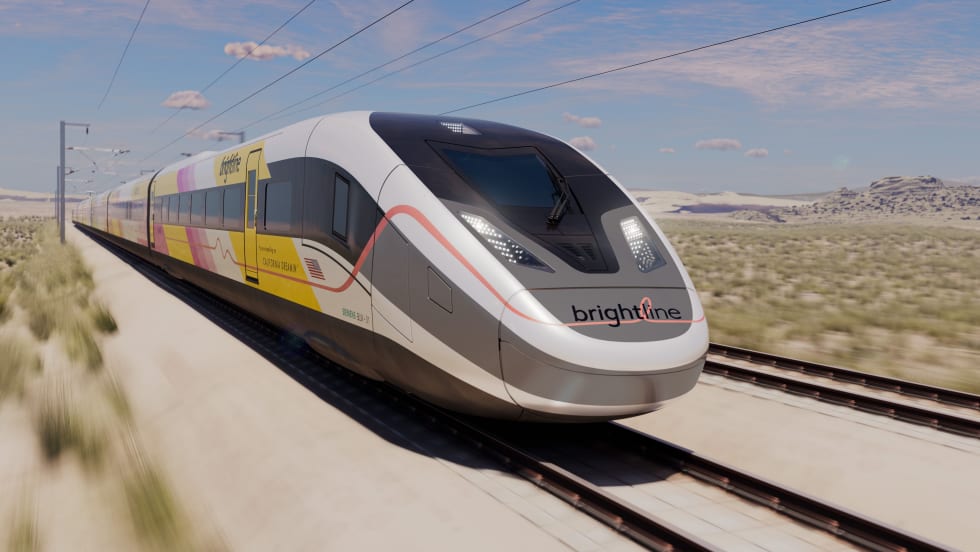
Florida's Brightline Announces Financial Restructuring
Brightline Florida says train operations will continue as normal as certain parent entities enter Chapter 11 and financial stakeholders provide $490 million in new long-term capital.
Read More →
ENC Lands MATA Contract and More in Biz Briefs
In this edition of Biz Briefs, we spotlight the latest developments shaping the future of mobility.
Read More →
Strada360’s Steve Lassey on Turning Transit Data Into Better Decisions
From breaking down data silos to preparing for AI, Strada360 CEO Steve Lassey discusses how transit agencies can use technology to improve operations, customer information, and long-term decision-making.
Read More →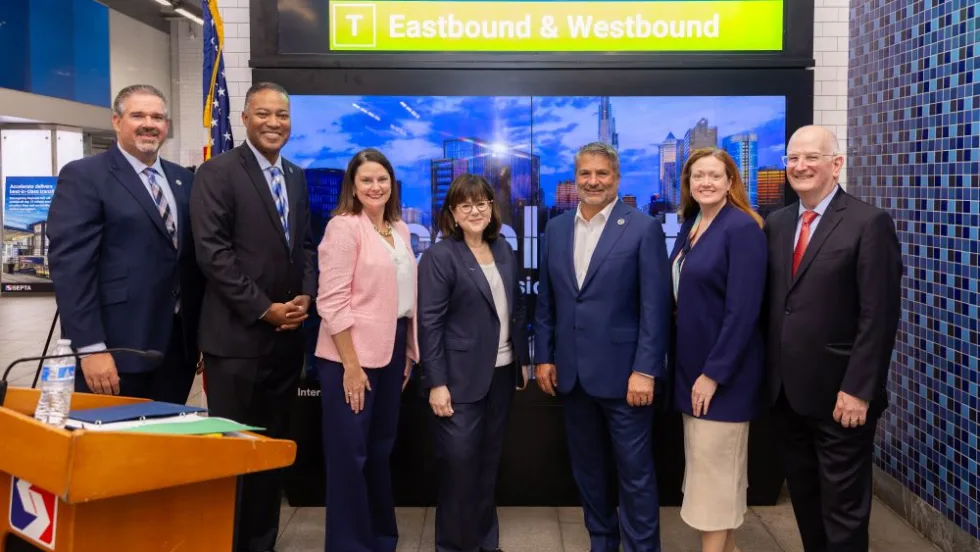
SEPTA Details Accelerate Vision for Transit System
The plan outlines investments in trolley modernization, new Metro and Regional Rail vehicles, accessible stations, and more frequent bus and rail service.
Read More →
FTA Ends Direct Oversight of MBTA Safety Actions
The federal agency closed its remaining special directive to the Massachusetts Department of Public Utilities following a safety review that began in 2022.
Read More →
Amtrak, CN Reach Agreements to Strengthen Passenger Rail Service, Safety
The agreement resolves a more than decade-long proceeding before the Surface Transportation Board concerning the terms and conditions for Amtrak services, such as the City of New Orleans, Illini/Saluki, and Wolverine.
Read More →
New York MTA Advances Final Contract for Second Avenue Subway Expansion
Contract Four is the largest in the Second Avenue Subway Phase 2 project and includes construction of station infrastructure, tracks, and signals for the subway expansion, MTA officials said. Work on Contract Four will begin in 2027.
Read More →
San Diego MTS Breaks Monthly Trolley Ridership Record
Agency officials said July’s ridership indicates MTS’s continued recovery from the pandemic.
Read More →
Report Examines NJ TRANSIT Reliability, Funding Challenges
The Garden State Initiative analysis examines the roles of Amtrak infrastructure, fleet management, and agency operations while recommending a more performance-based approach to improving reliability.
Read More →