



RELATED: Driverless vehicles and the future of public transit
Autonomous Vehicles Have Potential to Deliver Array of Benefits
More than 10 years ago, in a dusty California desert, the rubber of the CAV revolution met the road with the first autonomously-navigated vehicles participating in one of the first events that sparked the development of self-driving cars...
by Veronica Siranosian
August 21, 2017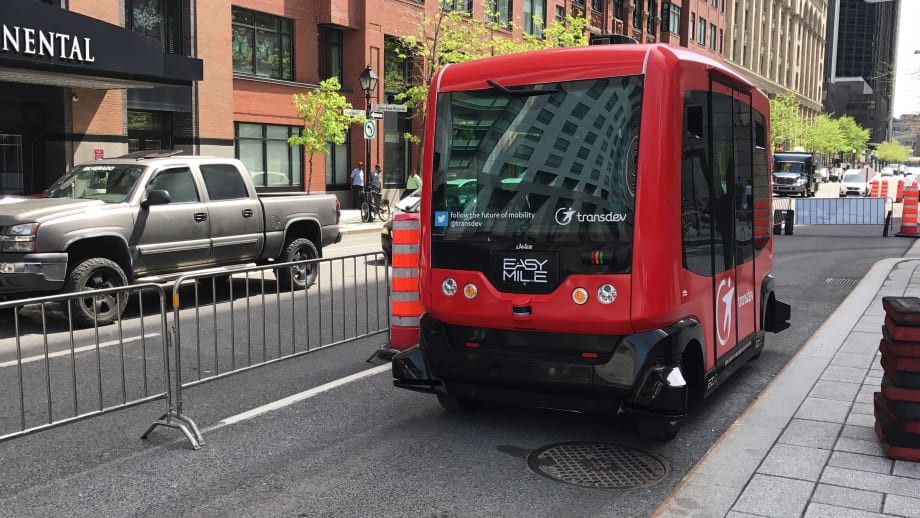
The advent of CAVs is causing vehicle makers to rethink their roles; transportation agencies to imagine new ways of providing service; and urban planners to consider new uses for parking lots, curbs, and other urban spaces historically used by vehicles.
3 min to read

Imagine a streetcar that detects and avoids collisions; driverless shuttles whisking passengers from a train stop to their final destinations; and vehicles that drive and park themselves. Connected and Autonomous Vehicles (CAVs) have the potential to deliver safe and reliable ways to get from point A to B, and they are coming sooner than you think.
More than 10 years ago, in a dusty California desert, the rubber of the CAV revolution met the road with the first autonomously-navigated vehicles participating in the Defense Advanced Research Projects Agency Grand Challenge, one of the first events that sparked the development of self-driving cars.
Since then, CAVs have evolved from futuristic concepts to modern opportunities. The U.S. Department of Treasury estimates that the CAV industry could generate between $5.0 and $7.5 trillion in net economic benefits over the next 30 years.
Governments around the world are pursuing autonomous technology. Dubai, for example, has a goal of having 25% of vehicle trips be autonomous by 2030. China has set goals for “partially-autonomous” vehicles to account for 50% of vehicle sales by 2020; and fully autonomous technologies to be featured in 10% of sales by 2030. The Australian Driverless Vehicle Initiative is already conducting live technology demonstrations to raise awareness and build momentum for the safe deployment of autonomous vehicles.
The advent of CAVs is causing vehicle makers to rethink their roles; transportation agencies to imagine new ways of providing service; and urban planners to consider new uses for parking lots, curbs, and other urban spaces historically used by vehicles.
Autonomous vehicles have the potential to deliver an array of benefits, but their integration into our cities and communities must be thoughtfully planned. By mapping how CAVs may affect future transportation networks, AECOM is helping to forecast, develop and meet federal, regional, and local safety, mobility, and environmental goals. Our initial work points to these key ideas:
Technology is a tool, not a solution in itself. The exciting thing about CAVs is not only that cars will drive themselves, but that great advances can be achieved for safety and mobility. Rather than focusing on what we can do to accommodate CAVs, we should focus on how CAVs can advance our mobility, equity, and safety goals.
Partnerships and pilots will pave the way. Recent advances in transportation technology have brought new players into the field, from ride sourcing to software companies. Partnering on pilot projects with new mobility service providers can allow transit agencies to test solutions and move technology forward in a way that best serves local needs.
Planning is imperative. While autonomous vehicles will deliver safety benefits, many of their other impacts are still largely speculative. Now is the time for scenario planning to bookend potential future scenarios, and to evaluate how present-day policy and infrastructure decisions can help shape CAV deployment to best meet mobility goals.
The possibility of an electric, shared, and automated future is promising, but CAVs are not a panacea for our transportation challenges, nor should they be. In high-capacity corridors, high-capacity transit solutions, like rail, will best serve demand. However, along with bicycle and pedestrian infrastructure, CAVs can be a useful tool to extend the reach of high-capacity transit and serve lower density areas beyond the reach of these networks.
As part of a multi-modal suite of solutions, CAVs can expand transportation choices and better serve riders.
Veronica Siranosian is senior project manager and CAV expert at AECOM (www.aecom.com).
Subscribe to Our Newsletter
More New Mobility
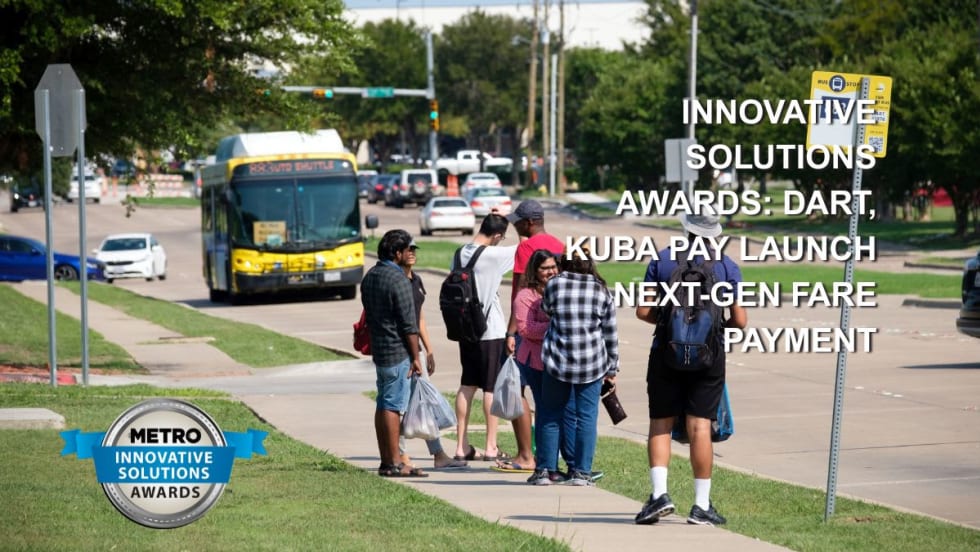
How DART's GoPass Is Redefining Regional Mobility
Serving 14 transit agencies, GoPass simplifies multimodal travel by allowing riders to plan, pay for, and manage an entire trip through one app.
Read More →
Biz Briefs: OCTA Taps Clean Energy for Hydrogen Station, Stadler to Supply Via Rail Vehicles, and More
From manufacturers and suppliers to transit agencies and motorcoach operators, these updates offer a snapshot of the projects, partnerships and business moves driving the industry forward.
Read More →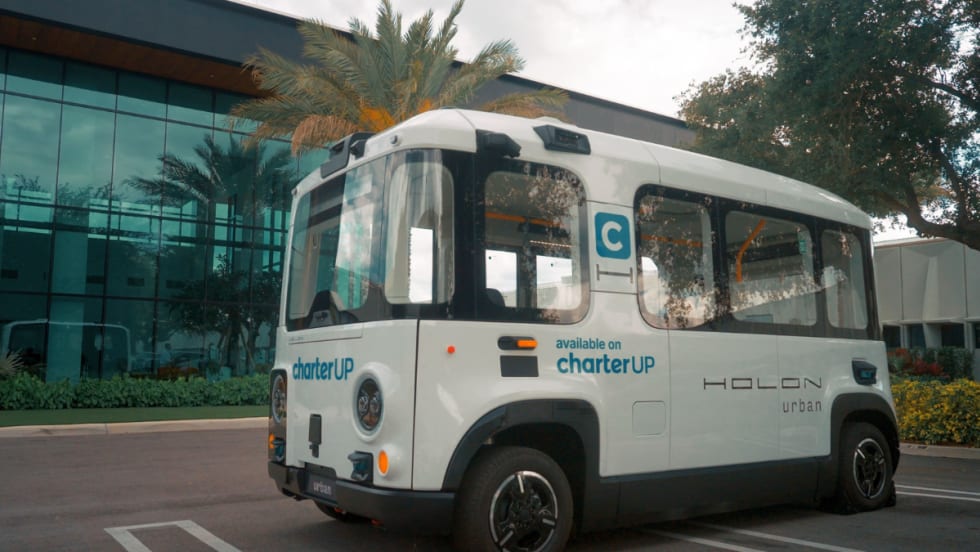
CharterUP Expands Into New Mobility and Autonomous Transportation
Vice President of New Mobility Stephen Joos discusses how CharterUP is leveraging its nationwide transportation network, technology platform, and autonomous vehicle partnerships to expand into workforce mobility, campus shuttles, and transit solutions.
Read More →
METRO Magazine Announces 2026 Innovative Solutions Awards Winners
Projects Recognized for Advancing Mobility Through Technology, Accessibility, Workforce Innovation, and Operational Excellence
Read More →
Biz Briefs: STV teams with Amtrak, Motorcoach Operators Boost Fleet and Land Contracts, and More
From manufacturers and suppliers to transit agencies and motorcoach operators, these updates offer a snapshot of the projects, partnerships and business moves driving the industry forward.
Read More →
Biz Briefs: Masabi Teams with St. Louis Metro and More
In METRO's latest installment, we take a look at recent news from Transdev, Hitachi, and more partnerships making headlines across the transportation sector.
Read More →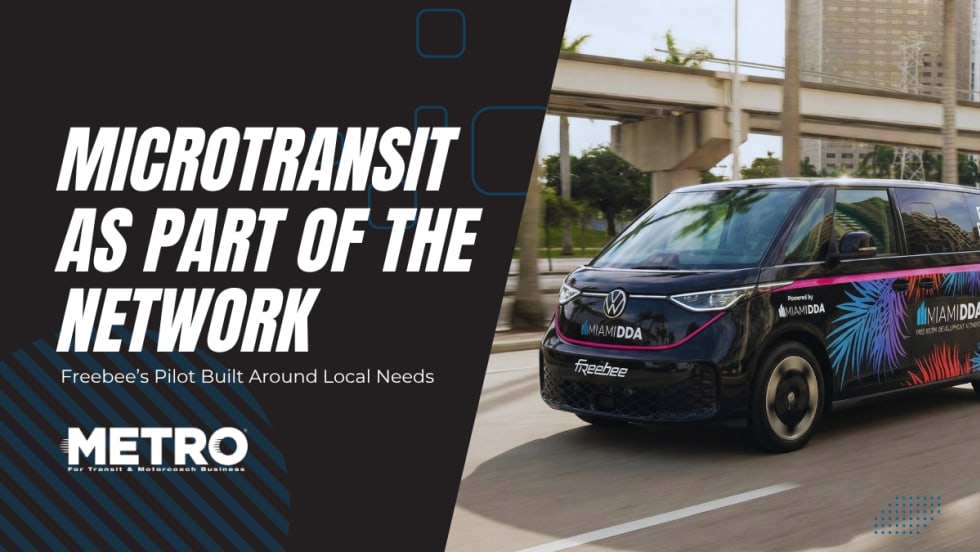
Microtransit's Next Test: Becoming Part of the Network
Freebee shows how electric microtransit is moving beyond pilots to fill network gaps, connect riders to transit, and prove lasting value.
Read More →
Ford to Leave JTA After More Than 10 Years as CEO
He plans to continue his work advancing innovative mobility solutions to improve the quality of life in communities across the nation. He did not announce specific plans.
Read More →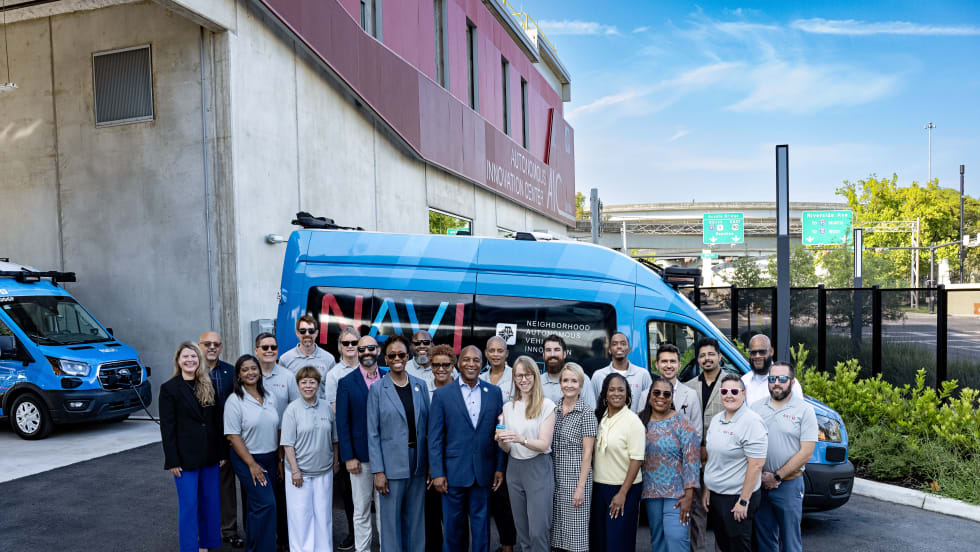
Florida's JTA Marks One Year NAVI Anniversary
During its first year of operation, NAVI has transported over 15,200 passengers and traveled more than 61,000 miles in autonomous mode without a safety incident caused by the autonomous driving system.
Read More →
SEPTA Board Approves FY2027 Budget Amid Funding Challenges
The spending plan represents an increase of just 1.9% over the current year and includes investments in new buses, additional full-length fare gates, and other customer enhancements.
Read More →