



Balancing equity, sustainability an ongoing challenge for transit
METRO Magazine Publisher James Blue's column from the April issue.
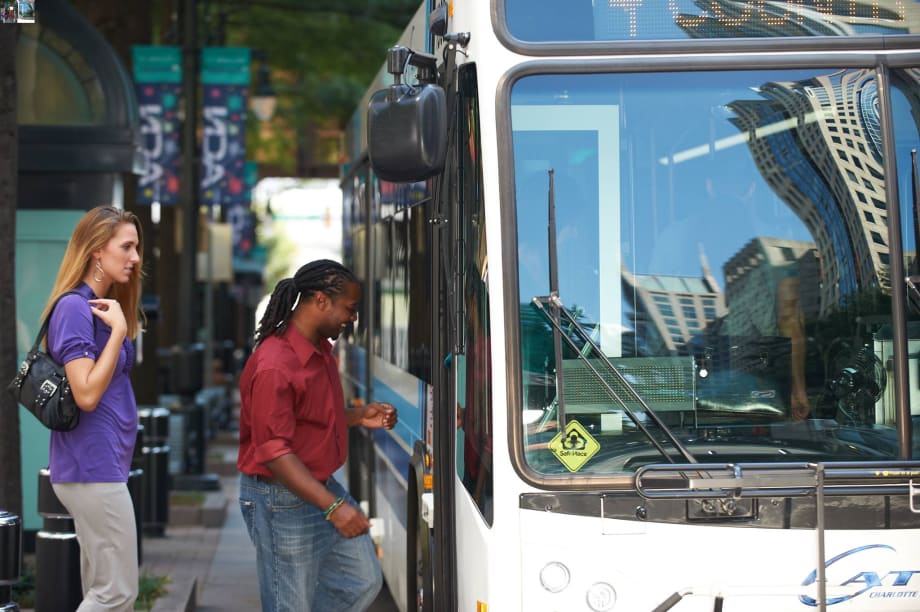
Although not thought of as an issue for electric bus projects, equity concerns have been raised as transit agencies plan to shift their fleets to zero-emission propulsion.
CATS
Although not thought of as an issue for electric bus projects, equity concerns have been raised as transit agencies plan to shift their fleets to zero-emission propulsion.
CATS
Articles in the April issue of METRO Magazine deal with two very hot topics of late: electric buses and economic development through transit investments such as streetcars. The goals of both of these are fundamentally the same — sustainable economic growth — but how they are pursued can sometimes undermine social equity, also an aspect of sustainability, as I’ll explain below. Fortunately, good planning that takes into account all of these complex concerns can help avoid trading one desirable goal against others.
Streetcars are mainly about revitalization
Perhaps more than any other public transportation mode, the renaissance in streetcar investments has been about redevelopment and revitalization of neighborhoods. This has led to catalyzing growth in a growing list of communities, from Tucson and Tempe in Arizona to Cincinnati, Ohio to Portland, Oregon. In these projects, however, success often comes with concerns about gentrification, which can lead to rent and home price increases being unaffordable for some whose families have lived in these neighborhoods for many decades.
Most project owners are sensitive to these threats, and have strategies that require affordable housing along with new market-rate units. Key to achieving a good balance is fostering collaboration among the public, private, and also nonprofit sectors, which must recognize each sector’s different needs, constraints, and project schedules.
Equity concerns must be part of electric bus projects, too
Although not thought of as an issue for electric bus projects, equity concerns have been raised as transit agencies plan to shift their fleets to zero-emission propulsion. For example, how and when the new battery-electric buses will be deployed to replace older, noisier buses with higher emissions, and what garages get the modifications first in the network, could help address any legacy social equity concerns.
Boston, Seattle, and Los Angeles have undertaken Title VI “disparate impact” and environmental justice analyses as part of their transition plans and commitments to an all-electric fleet. In some cases, improvements to the power capacity of a maintenance facility could even help improve power distribution and electric-grid resiliency for the whole surrounding neighborhood. On the other hand, if more affluent neighborhoods are the first to receive fancier, newer vehicles and the nearby garage gets quieter while those in less affluent places have to wait their turn yet again, such decisions will only inflame any long-standing resentment.
Continued rising inequality must not be the price we pay for sustainable growth. Equity must be remembered as one of the three components of sustainability’s triple bottom line.
More Management

METRO Opens Submissions for 2026 Motorcoach Awards
Nominations are now being accepted for METRO Magazine’s Operator of the Year and Innovative Operator of the Year awards.
Read More →
New York MTA Advances Final Contract for Second Avenue Subway Expansion
Contract Four is the largest in the Second Avenue Subway Phase 2 project and includes construction of station infrastructure, tracks, and signals for the subway expansion, MTA officials said. Work on Contract Four will begin in 2027.
Read More →
Transit Agencies Highlight Safety Gains at National Summit
Leaders from 15 major transit systems shared crime-reduction results and safety initiatives while discussing the role of continued federal support.
Read More →

NITA Names New Leadership, Expands Reduced-Fare Program at First Board Meeting
The new regional transit authority appointed its first board chair and interim executive director while extending reduced fares across CTA, Metra, and Pace for eligible riders.
Read More →
Beyond the Checklist: A Structured Approach to Transit Maintenance
Reliability-Centered Maintenance helps transit agencies move beyond routine checklists to focus limited resources on the assets and failures that have the greatest impact on safety, reliability, and service.
Read More →
APTA 2026 Nominating Committee Selects Leadership Slate, Names Chair and Vice Chair Nominees
Leadership changes will help shape the association’s priorities and its representation of the transportation industry during the 2026–2027 term.
Read More →
DART Launches Major Security, Fare Enforcement Initiative
The 90-day demonstration will deploy coordinated security teams at five light rail stations while testing controlled access and gathering data to guide future investments.
Read More →
Advancing Fare Collection Through Technology and Innovation
Learn about delivering 1300 gates at 91 stations while managing fare evasion. Explore the large scale deployment, solution customization and real-world results that affect the region. Prepare for deployment in your region now.
Read More →
Game Day in Motion: Moving Millions During the 2026 World Cup
Between packed transit stations and team motorcoaches, see how agencies and operators across North America tackled the transportation demands of the 2026 FIFA World Cup.
Read More →
Surface Transportation Extension Averts Shutdown, Leaves Transit Funding Gap
The stopgap keeps federal transportation programs moving, but missing advance funding could complicate the transit and rail projects agencies are planning next.
Read More →