



Kansas City Streetcar Fuels Economic Boom
Partnerships, policies, and local funding for the 2.2-mile starter line lead to $2 billion in development and counting.
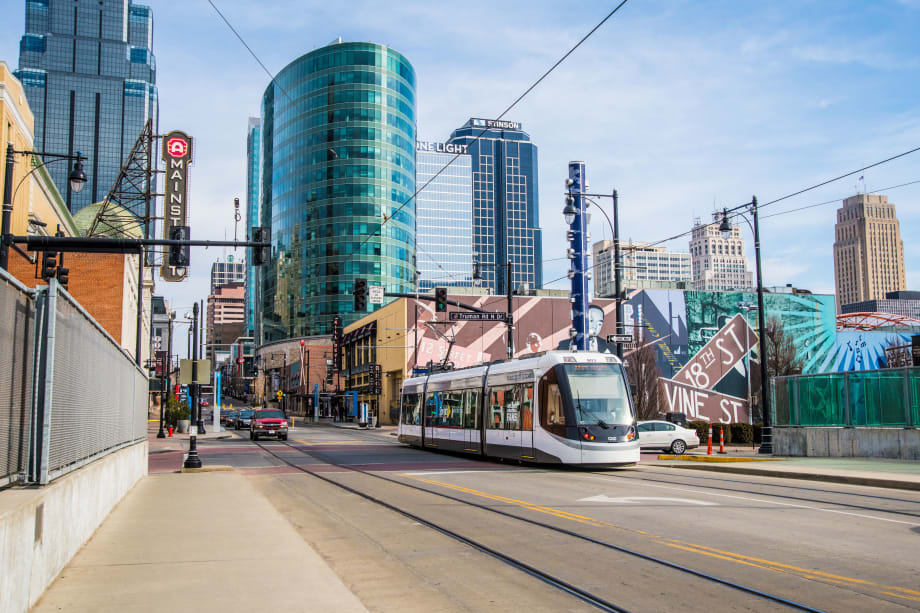
thanks to great partnerships, coordinated land-use policies, and innovative local funding models, positive outcomes have accelerated.
Photos courtesy Kansas City Streetcar Authority
thanks to great partnerships, coordinated land-use policies, and innovative local funding models, positive outcomes have accelerated.
Photos courtesy Kansas City Streetcar Authority
The Kansas City Streetcar proves it is possible to leverage strategic transportation investment to support focused growth and economic development strategies. The two-year-old system has served as a catalyst for the rebirth of downtown Kansas City, Missouri, setting 50-year records in residential, retail, and commercial investment, now totaling more than $2 billion.
Kansas City’s vision was to use the streetcar as a vehicle to enhance downtown mobility and to encourage placemaking and redevelopment through coordinated transportation and land-use policy. Based on our performance measures observed to date, the 2.2-mile KC Streetcar starter line has achieved these goals and more:
◗ Doubling ridership projections
The streetcar, free to users, has logged more than five million passenger trips in two-and-a-half years of service — doubling original ridership forecasts and ranking Kansas City’s system among the top performers in the country. Local residents using public transportation increased from 26% to more than 50% in a few short years.
◗ Increasing population downtown
With increased mobility options, downtown has become a premier place to live. We’ve seen a 40% increase in residential density within three blocks of the streetcar line, bringing residents back downtown in record numbers.
◗ Improved market and development conditions
Real estate that once sold for $40 a square foot and sat vacant and underutilized is now selling for $100 a square foot or more and being productively converted. This growth in value also is leading to higher density developments and more viable economic conditions for developments and buildings overall.
◗ Promoting a fast-growing urban core
Sales taxes within the streetcar’s downtown Transportation Development District, a revenue-generation mechanism, have increased by 65% compared with approximately 16% growth citywide over the same period. Downtown is growing at a faster rate than the city as a whole and proving to be a strong economic engine.
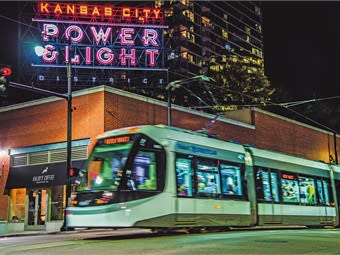
The two-year-old system has served as a catalyst for the rebirth of downtown Kansas City, Missouri, setting 50-year records in residential, retail, and commercial investment.
Successful system launch
The following are other strategies that have positioned our system for success:
◗ Partnerships
The Kansas City Streetcar Authority is a not-for-profit organization, separate from the city. We manage, operate and maintain the streetcar, support all marketing efforts and community engagement and represent the rate payers in the downtown TDD through our board of directors. Our staff of three couldn’t possibility accomplish those tasks without an active and supportive board and truly dedicated partners, including the City of Kansas City, the Kansas City Area Transportation Authority, and others.
◗ Revamped zoning and development policies
The City of Kansas City, in coordination with downtown neighborhoods and corridor stakeholders, proactively conducted an aggressive land-use policy evaluation and made significant changes to position the corridor to maximize development opportunities by eliminating parking requirements, up-zoning adjacent property, and assessing parking lots.
◗ Innovative funding mechanism
We believed removing fares would increase use of the system. Riders would, in turn, spend more money downtown. If that proved to be true, which it has, the streetcar should be able to benefit from the economic activity it helped generate.
The end result is a win-win-win for riders, downtown businesses, and revenue growth to more than cover streetcar operations and maintenance expenses. Revenues, generated by a one-cent sales tax and a special assessment on real estate within the TDD’s boundaries, cover 100% of the debt-service payments on the capital bonds issued to build the $102 million streetcar system. Revenues also pay for the system’s $5 million annual operations and maintenance costs. Additionally, we’ve used the revenue to pad operating reserves and purchase two more streetcars, increasing the fleet to six vehicles.
Our streetcar line was intended to be a long-term investment shaping a new and better downtown over decades. However, thanks to great partnerships, coordinated land-use policies, and innovative local funding models, positive outcomes have accelerated.
Tom Gerend is executive director of the Kansas City Streetcar Authority.
More Rail

New York MTA Advances Final Contract for Second Avenue Subway Expansion
Contract Four is the largest in the Second Avenue Subway Phase 2 project and includes construction of station infrastructure, tracks, and signals for the subway expansion, MTA officials said. Work on Contract Four will begin in 2027.
Read More →
San Diego MTS Breaks Monthly Trolley Ridership Record
Agency officials said July’s ridership indicates MTS’s continued recovery from the pandemic.
Read More →
Report Examines NJ TRANSIT Reliability, Funding Challenges
The Garden State Initiative analysis examines the roles of Amtrak infrastructure, fleet management, and agency operations while recommending a more performance-based approach to improving reliability.
Read More →
Stadler, CapMetro Sign Long-Term Rail Fleet Support Agreement
Beginning in 2027, Stadler will provide on-site technical expertise, spare parts support, training, and obsolescence management to help extend the reliability and longevity of CapMetro’s GTW fleet.
Read More →
Biz Briefs: Alstom Lands Canadian Contract, LYT to Supply California TSP, and More
In METRO's latest installment, we take a look at recent news from Complete Coach Works, Beep, FlixBus, and more partnerships making headlines across the transportation sector.
Read More →
CATS Gold Line Marks 5 Years of Service, 2.8M Passenger Trips
With a six-mile expansion planned, the Charlotte streetcar is positioned to connect more neighborhoods and major transit hubs across the region.
Read More →
Why Simulating Pedestrian Movement Has Become Essential for Modern Rail Stations
Pedestrian microsimulation is helping rail planners identify bottlenecks, test station designs, and prepare complex transit hubs for growing passenger volumes.
Read More →
Amtrak Begins Major Construction at New York’s Sunnyside Yard
The new maintenance facility will support Amtrak’s Airo trainsets while improving maintenance efficiency and turnaround times in New York.
Read More →
Chicago Leaders Unveil Plans for O’Hare Airport Express Train
The privately developed project would offer a 15-minute trip between downtown and O’Hare’s Terminal 2, with trains operating every 15 minutes on a dedicated track. The service would use battery-electric trains and three existing freight rail rights-of-way.
Read More →
OCTA Maps Out 30-Year Strategy to Protect Coastal Rail Corridor
The draft feasibility report identifies strategies to protect the coastal rail line for decades as the agency continues near-term stabilization and sand placement efforts.
Read More →