



Buy America or Bye, America?
Concerns have cropped up recently about changes in the manner in which Buy America is being interpreted and applied by federal regulators.
Collectively, the transit industry’s operators and suppliers have benefited greatly from the enactment of Buy America regulations more than three decades ago. These regulations support U.S. business interests and ensure tax dollars are recycled into the U.S. economy when federal dollars are invested in capital projects. Especially now, with the U.S. economy still roiling in uncertainty, federal lawmakers and regulators need to be sensitive to the interests of U.S. manufacturers of rolling stock. Not only do these suppliers provide high quality equipment to the transit industry, they also provide jobs to thousands of hard-working Americans. Concerns have cropped up recently about changes in the manner in which Buy America is being interpreted and applied by federal regulators. Some of these interpretations seem to run contrary to the spirit of the law, creating opportunities for suppliers of foreign-based products to take advantage of loopholes and inadequate enforcement. To address this critical issue, a coalition of suppliers called U.S. Transit Suppliers Mean Business has been formed. On June 19, the coalition launched its campaign to seek legislative support of a refinement of Buy America regulations. This issue is so important to the industry that I’d like to step aside and devote the remainder of my column to a verbatim reproduction of the coalition’s initial press release: “Jobs, Economy at Risk,” declares groupThe U.S. Transit Suppliers Mean Business coalition, comprised primarily of public transit suppliers, is led by Cubic Corp., and so far includes GFI-GENFARE, Colorado Railcar, Gillig Corp., Motor Coach Industries Inc. and DRI. “The Buy America Act needs a congressional ‘tune-up,’” said Richard Trenery, spokesperson for the coalition. “This new coalition has been formed to pinpoint steps to improve the Buy America provisions to ensure implementation of the intent of Congress. Proper application of the Buy America provisions will provide for more American jobs, boost the U.S. economy and enhance tax revenues while providing for free and open trade. Without congressional action, thousands of American jobs and hundreds of millions of dollars worth of American-made products are in jeopardy,” said Trenery. When federal dollars are used to fund transit projects, all bidders are required to comply with Buy America regulations. Several lawmakers have expressed their strong concern to the transit supplier industry and federal regulators that inconsistencies exist between some interpretations and applications of the regulations and the intent of Congress as originally expressed. The coalition is working closely with federal legislators to realign regulatory decision-making with the letter and spirit of the law. To provide the necessary tools and clarity to aid and support decision-making under the act, the coalition is advocating a simple, four-step legislative “tune-up” of the act: 1. Eliminate the over-one-decade-old “temporary” exemption related to microprocessors; 2. Restrict the usage of waivers; 3. Clarify and tighten the definition of “manufactured product”; and 4. Ensure all federal regulatory agency decisions involving Buy America are subject to review under the Administrative Procedures Act. The two most critical economic issues today are “jobs” and the “deficit.” Enforcing the intent of Congress in the Buy America Act will do a great deal to help both issues. “By taking action, Congress can immediately benefit American taxpayers, workers and businesses. In a struggling economy, U.S. citizens want their tax money to support Americans and American-made products,” said Brian Macleod, senior vice president of Gillig Corp. “With a little effort, Congress can save jobs and help preserve our economy.”
More Management

More Than a Summer Job: Building the Next Generation of Transit Talent
The Delaware River Port Authority and PATCO have transformed their internship program into a hands-on professional development experience that introduces students to the breadth of transportation careers — and creates a pipeline for future employees.
Read More →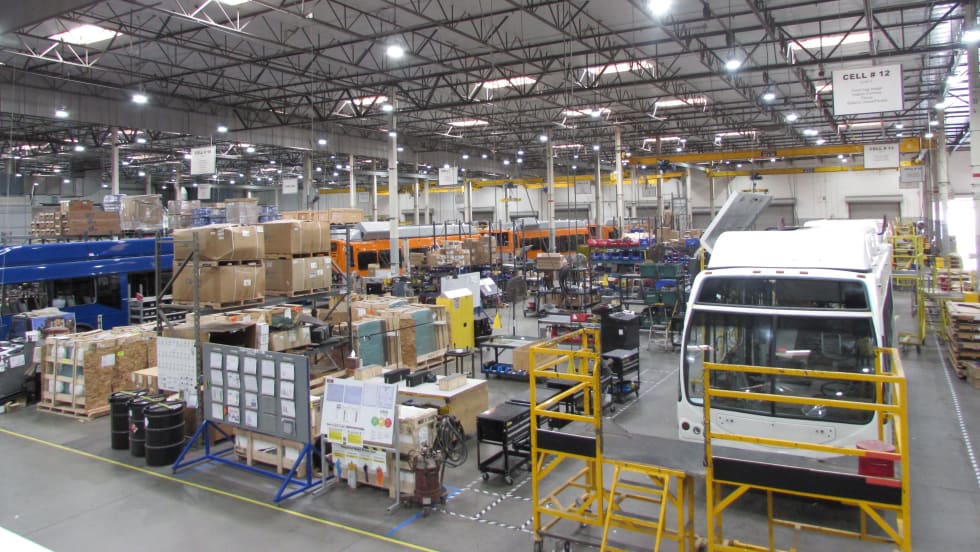
LA Metro Board Awards 220 Battery-Electric Bus Contract to ENC
The contract, which is the largest base award of battery-electric buses by a U.S. transit agency, will be built in Southern California, sustaining good jobs as LA prepares to welcome the world in 2028
Read More →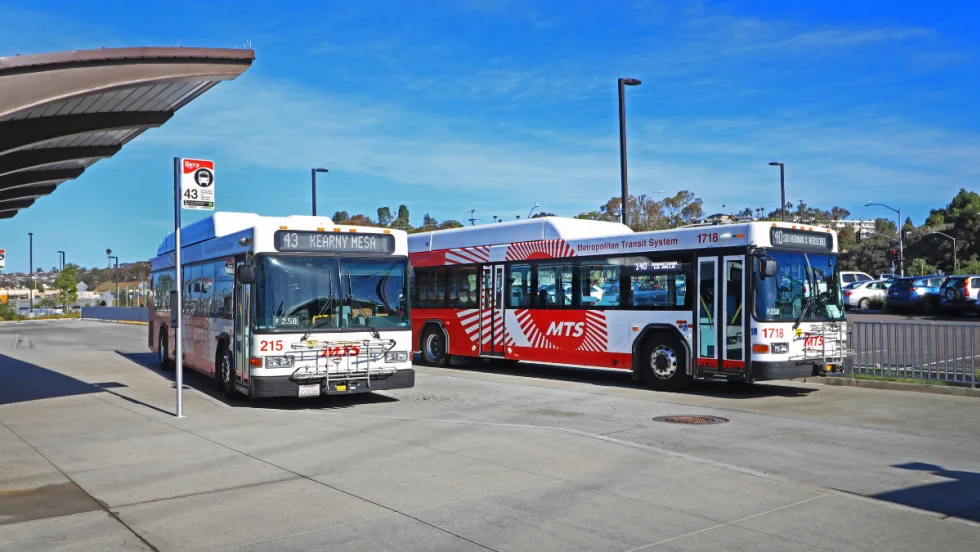
What’s Behind San Diego MTS’s Award-Winning Transit Strategy
Named one of APTA’s 2026 Outstanding Public Transportation Systems with 50 million or more annual passenger trips, California’s San Diego Metropolitan Transit System points to gains in ridership, safety, technology, and reliability as foundations of its success.
Read More →
Public Transit Conference Returning to GFX in 2027, Call for Papers Now Open
The Call for Papers is now open, allowing transit agency professionals and industry experts to help shape the PTC educational program by submitting session ideas for consideration.
Read More →
Indian River Transit’s Community-Focused Approach Earns National Recognition
Named APTA’s 2026 Outstanding Public Transportation System in its size category, Florida’s Indian River County transit system continues to grow ridership through fare-free service and a focus on evolving community needs.
Read More →
ENC Lands MATA Contract and More in Biz Briefs
In this edition of Biz Briefs, we spotlight the latest developments shaping the future of mobility.
Read More →
From Surviving to Thriving: Building Stronger Transportation Organizations
Bus Business Consultants founder Brian Dickson shares lessons on leadership, organizational health, and creating options for long-term success in a changing transportation industry.
Read More →
Everett Transit, Community Transit Outline Consolidation Agreement
The proposed agreement calls for a 50% increase in bus service in Everett, a new microtransit zone, continued paratransit service, and the transfer of Everett Transit operations to Community Transit.
Read More →
Strada360’s Steve Lassey on Turning Transit Data Into Better Decisions
From breaking down data silos to preparing for AI, Strada360 CEO Steve Lassey discusses how transit agencies can use technology to improve operations, customer information, and long-term decision-making.
Read More →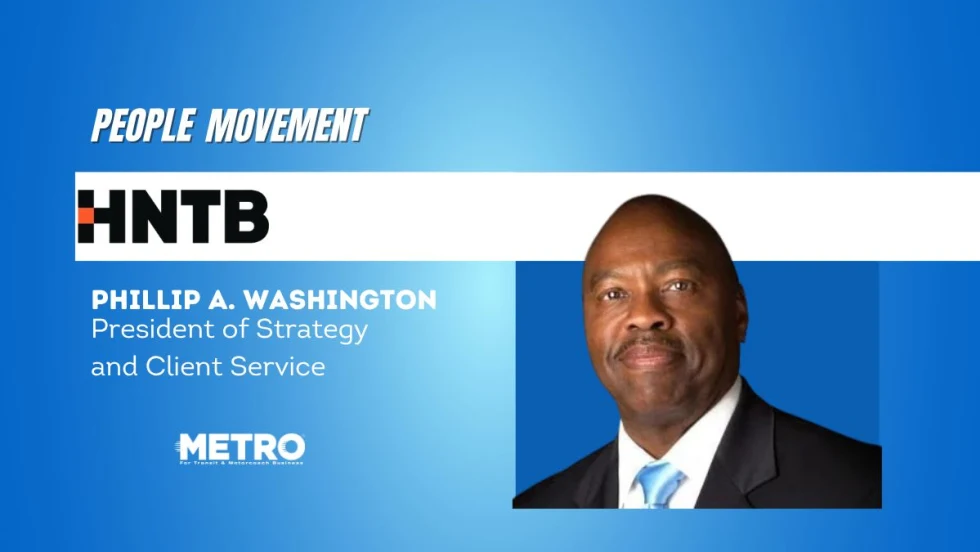
People Movement: Phil Washington Joins HNTB, Denver RTD Launches CEO Search, and More
In this edition, we also spotlight recent personnel moves at STV, the Eno Center for Transportation, and more, highlighting the people taking on new roles across the transportation industry.
Read More →