



RELATED: Best Practices for Long-Term Transit Project Communication
Collaborative Consultants Ease Rail and Transit Industry Demands
Consultants can provide specialized engineering support to transit agencies, helping them address a variety of needs and filling a gap left by retiring senior staff.
by Edward La Guardia
September 22, 2016
Photos courtesy SEPTA.
6 min to read

Photos courtesy SEPTA.
The 1970s and 1980s marked a dramatic shift in the U.S. railroad landscape. Most notably, the legacy urban rail environment was hit especially hard, resulting in the deconstruction of older service providers across the country. Facing issues ranging from aging infrastructure to a decreased passenger base, legacy service providers were forced into bankruptcy. The resulting aftermath set forth an era of mergers and acquisitions that would shape passenger and freight traffic operations through the present day.
The great divestiture of regional passenger rail from the combined service providers in the latter part of the 20th century resulted in the formation of new “quasi-governmental agencies” focused on passenger rail. Many of these newly formed agencies were created out of railroad mergers reside in the Northeast, including SEPTA, NJT, MBTA, and NYCT. These passenger service provider reconfigurations generated significant personnel moves and the hiring of dedicated staff. Tasked with addressing an aging rail infrastructure and older fleet vehicles in the face of increased urbanization, newly hired engineers gained experience working alongside veteran rail engineers to help these rapidly growing agencies keep up with transit demands.
Fast forward to the present day, and those once-new hires are now senior staff completing their full tenure of service. They are retiring from the mass transit providers and taking with them a wealth of experience and institutional knowledge acquired through decades of rail engineering and construction work. Currently, certain mass transit agencies are experiencing engineering staff reductions by as much as 30 to 40% of their current technical workforce. These losses of institutional knowledge and experience are generating a need and opportunity for the outside consulting industry to fill the gap in support of the transportation industry. To quote a senior engineering manager at the Southeastern Pennsylvania Transportation Authority (SEPTA), “We are well aware of the changes in staff at our transit authority and have identified specific engineering design and project management tasks that we need to assign to SEPTA dedicated consulting engineers.”
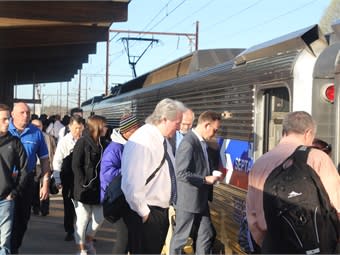
Addressing the need; solving the challenge
As the rail and transit agencies reach out to the consulting world, they require a complete complement of specialized consulting engineering services to meet their needs that range across the full gamut of support services: track design, traction power systems, communication and signals, along with full transit infrastructure systems. These needs can also range from the “simple” (providing engineering support for maintenance improvements, assisting with building code compliance, etc.) to the “complex” (system modifications, full system replacements, and line expansion designs).
The mass transit industry is also broadening the design landscape with new areas of focus. These areas include: increased safety and security, intermodal passenger management, increased accessibility across modes, new payment technologies, intelligent transportation systems, improved real-time passenger information systems, and research and development of high-speed and higher-speed rail. With this expanded design focus, the pressures of a successful agency/consultant partnership are compounded. But thankfully, if the complete team is committed to collaboration, programs can achieve end results that exceed expectations and result in potential expansion opportunities.
As rail and transit agencies enter partnerships with their consulting counterparts, the challenge becomes: Can the consulting world be resourceful and adept enough to address the myriad of needs with experienced staff?
This challenge is further complicated by a number of factors:
1. Is the consultant service provider able to offer staff that is capable of designing infrastructure elements in today’s evolving mass transit environment?
2. Similarly, are the consultants resilient in meeting the potentially demanding “work windows” and “very short out of service periods” tasked by rail and transit agencies?
3. How flexible is staff in working with varying equipment types, as some is industry-exclusive or unique to a specific owner, and legacy systems contain a blend of older and new equipment that is expected to function with high levels of service and minimal if any downtime?
4. Can we put in place a construction design and plan that takes into account the limited staging areas and construction zones available when work happens directly adjacent to fully functioning transit elements?
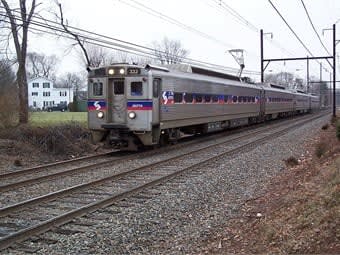
Change in consulting landscape creates collaborative opportunity
The rail and transit consulting world is going through its own metamorphosis. Mergers by some larger consulting firms — focused on engineering services beyond just those in the rail and transit space — have required relationships to be formed and reformed among newly acquainted coworkers. Even though these new firms often possess staff engineers capable of addressing a wide swath of needs to assist their agency partners, the challenge is not easily solved. The unique skillset of applied engineering in the mass transit environment, though relying on engineering fundamentals from other service areas (i.e., bridge design, building design, mechanical engineering, etc.), is not the same as practicing those disciplines for other owners. Additionally, although some retirees from mass transit agencies have taken up a second career in consulting fields, it is common that these individuals are long since removed from design and construction themselves. So while they have a keen sense of operational constraints, they are not always able to provide technical guidance to young and mid-level engineers.
As the demand widens across the industry, smaller engineering firms have the ability to rise to the occasion and capture a piece of the business. Some smaller or boutique firms have a wide array of capabilities and perform specialized services for mass transit agencies. They often have long-established client relationships that provide valuable visibility and communication with the transit agencies. The broader challenge for these boutique firms is to reach out to each other and openly review their resources, relationships and partnering needs. Although it risks losing a piece of the business, with communication and honest capabilities assessment, solid project partnerships can be formed among smaller firms that can result in owning a larger piece of business in the long run.
A statement by a senior member at Michael Baker International indicated that in order for architect/engineer firms to successfully service mass transit agencies, “we need to be out well ahead of the work and create solid well-rounded consulting teams to be competitive and meet the owner’s needs. We need to know what they need, what they don’t need, and the best way to provide the needed services in the operating environment.”
The key for establishing not just one, but a series of collaborative partnerships, requires the careful cultivation of teams that combine unique skillsets and perspectives. By doing this, consultant partnerships are able to provide mass transit clients with efficient design and construction management support and develop growing relationships across the marketplace.
This collaborative work is not easy, but has proven successful in opening doors and providing opportunities for future growth and satisfied customers. As an industry we are also able to assist clients in “creating work” — work that needs to be done but is driven from the consulting side because mass transit agencies have an overload of work and competing priorities that make them unable to address every need. Consulting firms taking the lead to scope projects, develop scopes of work, and estimate fees helps the agency more quickly execute the work and respond to critical needs.
Ultimately, a successful relationship between consultant firms and their mass transit and rail agency counterparts requires an investment. An investment in time to become fully entrenched in a client’s current/future needs, and the inner workings of the agency itself. An investment in resources to hire and train a dedicated and capable staff. And an investment in partnerships to complement service offerings.
Edward La Guardia is chief engineer in Michael Baker International’s Rail and Transit Practice. He is based in Philadelphia (www.mbakerintl.com).
Subscribe to Our Newsletter
More Management

METRO Opens Submissions for 2026 Motorcoach Awards
Nominations are now being accepted for METRO Magazine’s Operator of the Year and Innovative Operator of the Year awards.
Read More →
New York MTA Advances Final Contract for Second Avenue Subway Expansion
Contract Four is the largest in the Second Avenue Subway Phase 2 project and includes construction of station infrastructure, tracks, and signals for the subway expansion, MTA officials said. Work on Contract Four will begin in 2027.
Read More →
Transit Agencies Highlight Safety Gains at National Summit
Leaders from 15 major transit systems shared crime-reduction results and safety initiatives while discussing the role of continued federal support.
Read More →

NITA Names New Leadership, Expands Reduced-Fare Program at First Board Meeting
The new regional transit authority appointed its first board chair and interim executive director while extending reduced fares across CTA, Metra, and Pace for eligible riders.
Read More →
Beyond the Checklist: A Structured Approach to Transit Maintenance
Reliability-Centered Maintenance helps transit agencies move beyond routine checklists to focus limited resources on the assets and failures that have the greatest impact on safety, reliability, and service.
Read More →
APTA 2026 Nominating Committee Selects Leadership Slate, Names Chair and Vice Chair Nominees
Leadership changes will help shape the association’s priorities and its representation of the transportation industry during the 2026–2027 term.
Read More →
DART Launches Major Security, Fare Enforcement Initiative
The 90-day demonstration will deploy coordinated security teams at five light rail stations while testing controlled access and gathering data to guide future investments.
Read More →
Sponsored•September 9, 2026
Advancing Fare Collection Through Technology and Innovation
Learn about delivering 1300 gates at 91 stations while managing fare evasion. Explore the large scale deployment, solution customization and real-world results that affect the region. Prepare for deployment in your region now.
Read More →
Game Day in Motion: Moving Millions During the 2026 World Cup
Between packed transit stations and team motorcoaches, see how agencies and operators across North America tackled the transportation demands of the 2026 FIFA World Cup.
Read More →
Surface Transportation Extension Averts Shutdown, Leaves Transit Funding Gap
The stopgap keeps federal transportation programs moving, but missing advance funding could complicate the transit and rail projects agencies are planning next.
Read More →