




Another Perspective: Q’STRAINT’s Girardin Talks Equity, the Importance of Accessibility
Consultant Q&A: Burns Engineering's Carrasco Addresses Funding, Pandemic Challenges
Alva Carrasco, director of the Los Angeles Region at Burns Engineering, discussed several topics with METRO.
April 26, 2023
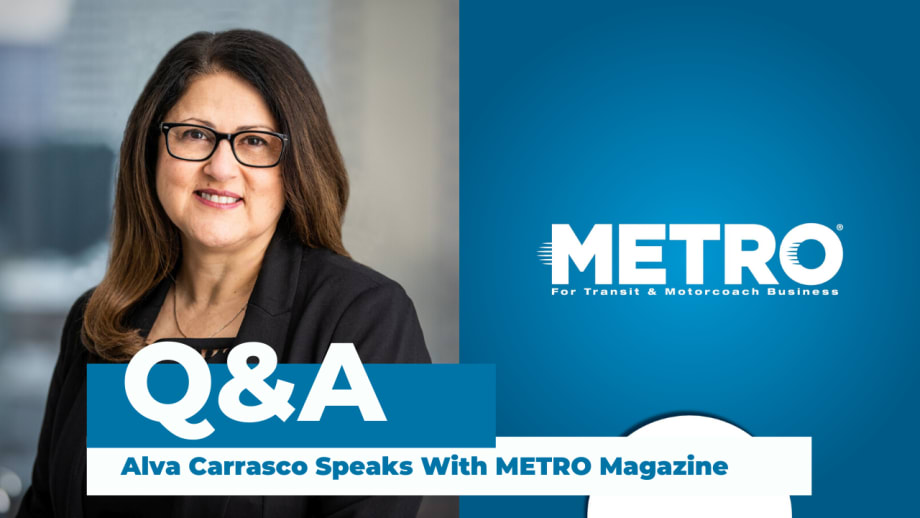
Alva Carrasco discussed Burns Engineering's efforts in improving ridership post-pandemic and more.
Photo: Burns Engineering
4 min to read
Alva Carrasco, director of the Los Angeles Region at Burns Engineering, discussed several topics with METRO, including equity and post-pandemic challenges.
Transit Equity, Post-Pandemic Challenges, and Ridership
Dig into this Q&A to learn more about how transit agencies are viewing transportation equity, how Burn Engineering is navigating challenges presented by the COVID-19 pandemic, and ways to improve ridership.
METRO: How are consultants helping transit agencies, if at all, with the idea of transit equity and inclusion?
Carrasco: Many disadvantaged communities remain underserved. Communities are relying on transit facilities and amenities that have suffered from years of underinvestment or no investment at all. Fortunately, our transit clients face a once-in-a-generation opportunity.
We can improve mobility, environmental justice, and social equity with infrastructure investments that directly impact disadvantaged communities. This is especially true given President Biden’s Justice40 initiative, which promises to direct 40 percent of federal investments to communities that are marginalized, underserved, and suffer disproportionately from pollution.
At Burns, we take, very seriously, our responsibility to support clients in implementing their transformational projects. Acting as a consulting partner, it is our role to deliver future-ready facility upgrades and infrastructure improvements. Looking ahead, we can make tremendous progress in expanding transit’s benefits — especially to our region’s most vulnerable communities.
METRO: How has the pandemic impacted your workforce and what are you doing to address those issues, if any?
Carrasco: As a result of the pandemic, Burns has instituted a hybrid working environment, providing a level of flexibility while still maintaining a culture of collaboration and camaraderie. Our employees and our clients appreciate the hybrid system. On a personal level, I feel a lot more motivated when I know I am going to the office to meet with my team.
Burns is growing at an incredible rate. We’re on pace to expand staff by 30% this year. Competing for engineering talent remains a challenge, especially during a nationwide workforce shortage. Fortunately, our mission-critical clients entrust us to deliver specialized, state-of-the-art projects. The opportunity to be part of that work draws the best of the best.
METRO: In the past, transit’s biggest issue has been funding. With the funds now coming in via IIJA and other programs, what must the industry do to capitalize on that infusion of money?
Carrasco: We’re fortunate to be experiencing the largest infusion of federal funding for public transportation in the country’s history. It’s an exciting time to be in the industry.
However, for many agencies, there simply isn’t enough in-house capacity to manage this influx of capital funds.
Project managers have become hard to come by, and they are hard to retain — both in the public and private sectors. I’m seeing a lot more interest in owner’s representative and program management oversight (PMO) services. Due to a lack of in-house resources, more agencies will look to add capacity by partnering with management consultants.
METRO: What will some keys be to transit being able to bring back ridership post-pandemic?
Carrasco: The pandemic shutdown upended everything we knew about transit. While many professional service workers were able to stay home, we witnessed frontline and essential workers continue to rely on public transit.
Three years later, some sectors are still struggling to get their workers to come back to work in the office. As an industry, we need to look at making transit systems work for those who rely on it the most.
Needless to say, there isn’t a silver bullet. We can start by focusing on improvements in system safety and security. That includes neighborhood-level enhancements, focusing on areas that surround bus stops or train stations.
Service schedules should consider customers whose shifts fall outside peak service hours and increase the frequency of service on lifeline routes. We should look for ways to provide greater bus stop amenities, such as shading, lighting, and seating — especially in disadvantaged communities.
Given the impact of inflation on commuters’ wallets, now may be the time for agencies to evaluate whether free fare programs are feasible. Some agencies are offering these programs for students, which can attract a new generation of riders.
METRO: What are the main hurdles for agencies in areas like California and New York in meeting the electric bus mandates? Is it feasible to believe they can overcome these issues to meet the mandates put into place?
Carrasco: Currently, the biggest barrier is the lack of funds for zero-emission buses (ZEB) and related infrastructure improvements.
California will need billions of dollars to fully transition public transit off fossil fuels to meet the California Air Resources Board (CARB) 2040 mandate. Even though the state and federal government are allocating unprecedented amounts of funds, it will still not be enough to cover all associated costs.
ZEB battery range remains a significant barrier as well. Although battery performance continues to improve year by year, manufacturers’ range estimates still do not necessarily reflect on-the-ground conditions.
Topography, weather, and route operations must all be considered. Battery-electric technology may not be mature enough to satisfy every system’s demands.
As battery and charging technology continue to improve, we can reasonably expect to see a greater range, declining costs, and advancements in reliability.
Eventually, I believe ZEBs will reach parity with conventional internal combustion engines. Getting there will require significant investment and carefully thought-out planning.
Topics:Management
Subscribe to Our Newsletter
More Management

FTA Ends Direct Oversight of MBTA Safety Actions
The federal agency closed its remaining special directive to the Massachusetts Department of Public Utilities following a safety review that began in 2022.
Read More →
Report: Transit Bus Manufacturing Supports 34,100 Jobs, $5.1B in GDP
The “Buses Mean Business” report examines the transit bus manufacturing industry’s economic footprint, supply chain, and rising demand for vehicle replacements.
Read More →
LIT Marks 10-Year Milestone at Annual Summit
Hosted by the COTA from September 10 to 13, the Summit carried the theme “Celebrating 10 Years of Excellence, Leadership, and Impact,” with every part of the program honoring the people, agencies, and partners who built LIT over its first decade.
Read More →

People Movement: Dan Dipert Coaches Adds Third-Generation Leader, Keolis Names New Valley Metro VP/GM, and More
In this edition, we also cover recent appointments and announcements at the Wabtec, SilverRide, HNTB, and more, showcasing the individuals helping to shape the future of transportation.
Read More →
METRO Opens Submissions for 2026 Motorcoach Awards
Nominations are now being accepted for METRO Magazine’s Operator of the Year and Innovative Operator of the Year awards.
Read More →
New York MTA Advances Final Contract for Second Avenue Subway Expansion
Contract Four is the largest in the Second Avenue Subway Phase 2 project and includes construction of station infrastructure, tracks, and signals for the subway expansion, MTA officials said. Work on Contract Four will begin in 2027.
Read More →
Transit Agencies Highlight Safety Gains at National Summit
Leaders from 15 major transit systems shared crime-reduction results and safety initiatives while discussing the role of continued federal support.
Read More →
NITA Names New Leadership, Expands Reduced-Fare Program at First Board Meeting
The new regional transit authority appointed its first board chair and interim executive director while extending reduced fares across CTA, Metra, and Pace for eligible riders.
Read More →
Beyond the Checklist: A Structured Approach to Transit Maintenance
Reliability-Centered Maintenance helps transit agencies move beyond routine checklists to focus limited resources on the assets and failures that have the greatest impact on safety, reliability, and service.
Read More →
APTA 2026 Nominating Committee Selects Leadership Slate, Names Chair and Vice Chair Nominees
Leadership changes will help shape the association’s priorities and its representation of the transportation industry during the 2026–2027 term.
Read More →