



Consultant Q&A: WSP's Schwarz Talks Project Delivery, Tech, and More
METRO recently spoke to Angela Schwarz about the top operational challenges facing public transit agencies today, how firms like WSP are helping to address them, the ongoing pressure to reduce costs per passenger, bus automation, and more.

Angela Schwarz joined WSP in 2021 as the national transit and rail systems practice leader, bringing with her 30 years of experience in transit systems engineering and delivery.
Photo: WSP
- Angela Schwarz of WSP discusses operational challenges that public transit agencies encounter, focusing on issues like cost reduction per passenger.
- Bus automation emerges as a significant topic, highlighting how technology can influence modern transit solutions.
- WSP's role in supporting transit agencies is explored, detailing their contributions to addressing various industry challenges.
*Summarized by AI
Angela Schwarz leads the efforts to strengthen WSP’s nationwide footprint across the transit and rail markets.
Schwarz joined WSP in 2021 as the national transit and rail systems practice leader, bringing with her 30 years of experience in transit systems engineering and delivery. Her responsibilities include advancing strategic partnerships with transit agencies, industry associations, and contractors, while ensuring the success of high-profile planning, design, and construction management initiatives.
METRO recently spoke to Schwarz about the top operational challenges facing public transit agencies today, how firms like WSP are helping to address them, the ongoing pressure to reduce costs per passenger, bus automation, and more.
Operational Challenges Facing Agencies, Delivering Projects
What are the most significant operational challenges facing public transit agencies today, and how can firms like WSP help to solve them?
Public transit agencies face several significant operational challenges, including:
Aging Infrastructure: Aging infrastructure can reduce performance and minimize system availability. Firms like WSP can implement reliability-based maintenance strategies to enhance system performance.
Increased Cost to Deliver Capital Projects in an Operational Condition: Delivering capital projects while maintaining operational conditions can be costly. WSP develops construction staging scenarios to optimize project delivery. For instance, in the SANDAG Blue and Orange Lines project, WSP used modeling to develop and test temporary infrastructure for single tracking during rail replacement and platform replacement to accommodate new, longer trains with low-level boarding. This approach helped complete the project six months ahead of schedule.
Optimizing the Cost per Passenger: Reducing labor costs while maintaining efficient operations is challenging. Increased automation can help optimize costs. WSP's work on the Cap Metro Automated Bus Yard demonstrates this: automated buses can self-drive to designated areas, reducing pull-in and pull-out time requirements. This efficiency allows labor hours to be repurposed or savings to be reinvested.
What role could public-private partnerships play in expanding transit infrastructure?
Collaborative public-private procurement has the potential to accelerate the expansion of transit infrastructure and enhance economic and social value.
However, it must be supported by incentives that encourage private investment. A great example is the ONE Central mixed-use project by Landmark Development, for which the State of Illinois enacted legislation to support in 2019.
Located on the Near South Side of Chicago, the various residential, retail, and commercial spaces are anchored by a multimodal transit hub that will connect a few transit systems. The project is proposed to occupy approximately 32 acres of rail yards between the McCormick Place Convention Center and the Museum Campus.
Integrating these transit options aims to improve accessibility and reduce congestion, making it easier for residents and visitors to navigate the city.
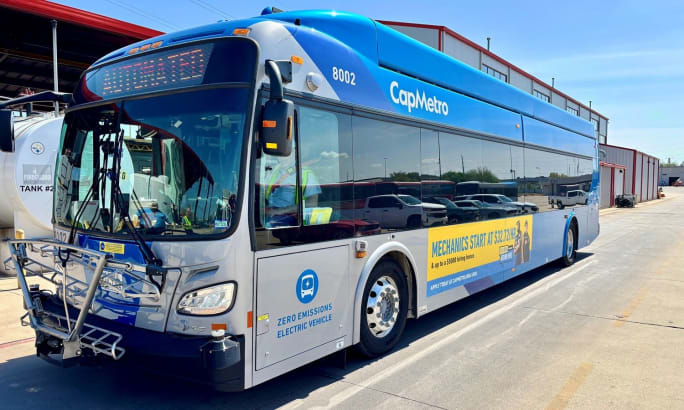
Reducing labor costs while maintaining efficient operations is challenging. Increased automation can help optimize costs, Schwarz says.
Photo: WSP
Taking Lessons from Around the World, Looking Ahead
What lessons can we learn from global transit systems successfully integrating innovative technology?
One example is driverless train initiatives using autonomous vehicles, which have become a global trend. In partnership with technological organizations, WSP led a ground-breaking pilot of autonomous freight trains aiming to revolutionize short-distance transportation from industrial sites in Finland. It showcases the benefits of automation in reducing labor costs and improving operational reliability.
What does the future of public transit look like in 10 to 20 years?
The development of advanced technologies will transform the future of public transportation.
Artificial Intelligence is revolutionizing how agencies analyze traffic patterns, engage with communities, and predict and manage asset maintenance. We will see a higher level of automation for buses and trains, enabling public transit to operate and adjust services in real time based on demand. New constructions will embrace a low-carbon approach from the outset.
The development of biofuel, battery, and hydrogen fuel cell technology presents new options that can support the transition to lower-carbon emissions for transit vehicles in the short, medium, and long term.
Quick Answers
Angela Schwarz highlights issues such as budget constraints, the need for sustainability, and adapting to technological advancements as primary challenges for public transit agencies.
*Summarized by AI
More Management

METRO Opens Submissions for 2026 Motorcoach Awards
Nominations are now being accepted for METRO Magazine’s Operator of the Year and Innovative Operator of the Year awards.
Read More →
New York MTA Advances Final Contract for Second Avenue Subway Expansion
Contract Four is the largest in the Second Avenue Subway Phase 2 project and includes construction of station infrastructure, tracks, and signals for the subway expansion, MTA officials said. Work on Contract Four will begin in 2027.
Read More →
Transit Agencies Highlight Safety Gains at National Summit
Leaders from 15 major transit systems shared crime-reduction results and safety initiatives while discussing the role of continued federal support.
Read More →

NITA Names New Leadership, Expands Reduced-Fare Program at First Board Meeting
The new regional transit authority appointed its first board chair and interim executive director while extending reduced fares across CTA, Metra, and Pace for eligible riders.
Read More →
Beyond the Checklist: A Structured Approach to Transit Maintenance
Reliability-Centered Maintenance helps transit agencies move beyond routine checklists to focus limited resources on the assets and failures that have the greatest impact on safety, reliability, and service.
Read More →
APTA 2026 Nominating Committee Selects Leadership Slate, Names Chair and Vice Chair Nominees
Leadership changes will help shape the association’s priorities and its representation of the transportation industry during the 2026–2027 term.
Read More →
DART Launches Major Security, Fare Enforcement Initiative
The 90-day demonstration will deploy coordinated security teams at five light rail stations while testing controlled access and gathering data to guide future investments.
Read More →
Advancing Fare Collection Through Technology and Innovation
Learn about delivering 1300 gates at 91 stations while managing fare evasion. Explore the large scale deployment, solution customization and real-world results that affect the region. Prepare for deployment in your region now.
Read More →
Game Day in Motion: Moving Millions During the 2026 World Cup
Between packed transit stations and team motorcoaches, see how agencies and operators across North America tackled the transportation demands of the 2026 FIFA World Cup.
Read More →
Surface Transportation Extension Averts Shutdown, Leaves Transit Funding Gap
The stopgap keeps federal transportation programs moving, but missing advance funding could complicate the transit and rail projects agencies are planning next.
Read More →