



Five Questions: IndyGo President/CEO Michael Terry
IndyGo president/CEO joined the agency in August 2003 as director, business development, responsible for marketing, communications, government and community relations, and planning and growth strategies.

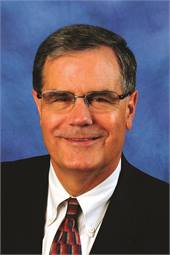
Indianapolis Public Transportation Corp. (IndyGo) President/CEO Michael Terry joined the agency in August 2003 as director, business development, responsible for marketing, communications, government and community relations, and planning and growth strategies. He later assumed the role of president and chief operating officer in 2009. IndyGo, which employs more than 450 people, provides public bus transit services in Marion County, with 30 local fixed routes, 4,000 bus stops and approximately 145 buses. It delivers nearly 30,000 passenger trips each weekday and more than eight million trips a year.
What are some of the challenges IndyGo has faced securing local funds?
IndyGo local funding source is from property taxes. In the past few years, Indiana has capped property taxes, so the hope for increased funding from that source has diminished. Our agency is eligible for County Option Income Tax (COIT), but local elected officials would have to decide whether some of those already allocated funds could be shifted to our budget.
While we’re seeing increases in ridership and a rebound in the local economy, our city and region is faced with the challenge of growing a transit system to better fit our plans for connecting our community, economic development and talent retention. That being said, there has been a regional initiative pushing for state legislation to allow for referenda on a transit tax for central Indiana. While the bill didn’t pass this past legislation, the efforts continue. The referenda would then be a gauge of interest and support for expanded transit in the region that would allow for better bus frequency, express routes, and bus rapid transit/fixed guideway corridors.
The conversation of funding has never been stronger, so the hope of growing the local transit budget and improving service levels is quite positive. The alternative is sustaining current services, which are nominal compared to other similar sized cities.
Discuss hurdles you’ve dealt with regarding fleet replacement.
According to [the] Federal Transit Administration guidelines, more than half of our fleet is past its useful life. Although we have a successful preventive maintenance program, the costs to maintain 1997, 1998 and 2000 buses increases each year, when our operating budget does not. While we have a bus replacement plan, we’ve not been able to use our federal formula dollars for new bus procurement; rather we use most of those funds in our operating budget for preventive maintenance of our assets. This is not a sustainable business model for a capital replacement program. As described earlier, if we had an infusion of new local dollars, improvements to our system would occur, including a more strategic and robust bus procurement schedule.
So, IndyGo relies on competitive federal grants for bus replacement. We were able to apply nearly one-half of our ARRA funds for 22 new buses, and we’ve recently submitted applications for State of Good Repair, Clean Fuels and Livability grants for new fixed-route and paratransit vehicles. In addition to the applications for new buses, we also submit applications for mid-life rebuilds to extend the lifespan of some of our ‘middle-aged’ buses. We secured State of Good Repair last year and are now in the process of refurbishing 2003-year model buses.
Discuss operational efficiencies you’ve implemented to reduce costs and improve performance.
Better management of staffing levels for fixed-route operators has led to a reduction in lost service of more than 50% and a 10 percentage point decrease in total overtime hours worked. These reductions can be attributed to the availability of skilled coach operators, who have completed the IndyGo training course and are anxious to get out on the road to serve the citizens of Marion County.
On our paratransit side, Open Door (IndyGo’s ADA paratransit service) has come in under budget by as much as 12% in recent months. Within the last year, Open Door had an increase in ridership of 3% over 2010 and was still able to maintain a 97% on-time performance. IndyGo provides paratransit service beyond the three-quarters of a mile ADA limits to service our entire county. We attribute much of this success to an upgraded scheduling software and contract management of our service provider.
The vehicle maintenance department’s continuing education program keeps our technicians current on newest technology that helps to reduce mechanical incidents on our aging fleet.
Finally, we are beginning to see positive change in our healthcare costs through a company-wide wellness program and onsite primary healthcare clinic. A healthier workforce and their family members are beginning to drive down costs.
We constantly look for opportunities to fund new technology and standard operating procedures, which will improve performance and reduce expenses. From cameras on our buses to our warranty recovery program, our management team is charged with not only maintaining our systems, but look-ing for more ways to improve.
How has IndyGo built awareness about the benefits its services can bring to the community?
IndyGo reaches out to the community on many levels. We’ve been creative with the use of our communications toolbox by leveraging it for additional exposure as a sponsor or community collaborator. In fact, we just won a local sustainability award for our community collaboration program. The toolbox consists of paid advertising, public relations, event participation and virtual infrastructure such as social media sites, website updates, an external e-newsletter and internal newsletter, and on-board postings. By partnering with organizations, IndyGo promotes positive activities and destinations within the city while educating potential riders about mass transit access in our community to further grow ridership.
Our team is constantly meeting with outside stakeholders, and we have several programs in place to build engagement. Travel Training workshops are held internally and externally, teaching those who work with people needing transportation services. Our ‘Adopt-A-Stop’ program encourages individuals, businesses or community groups to publicly take pride in their neighborhoods, reduce littering and help build capacity for bus stop maintenance.
With all the hard work you are putting in, what do you like to do to clear your head?
I’m thankful to have a team that works so hard and is so committed, but will also take a moment for a chat and some laughter. There’s enough stress to go around, but we do need to talk about other things from time t time. Our community has such great things to offer that there’s always an opportunity for cultural or sporting events, great restaurants and faith-based activities. Work-life balance is important for us all.
More Paratransit

Biz Briefs: RIPTA Unveils New Frontrunners, Clevland RTA Adds New Siemens, and More
In METRO's latest installment, we take a look at recent news from Siemens, Prevost, Dodge, and more partnerships making headlines across the transportation sector.
Read More →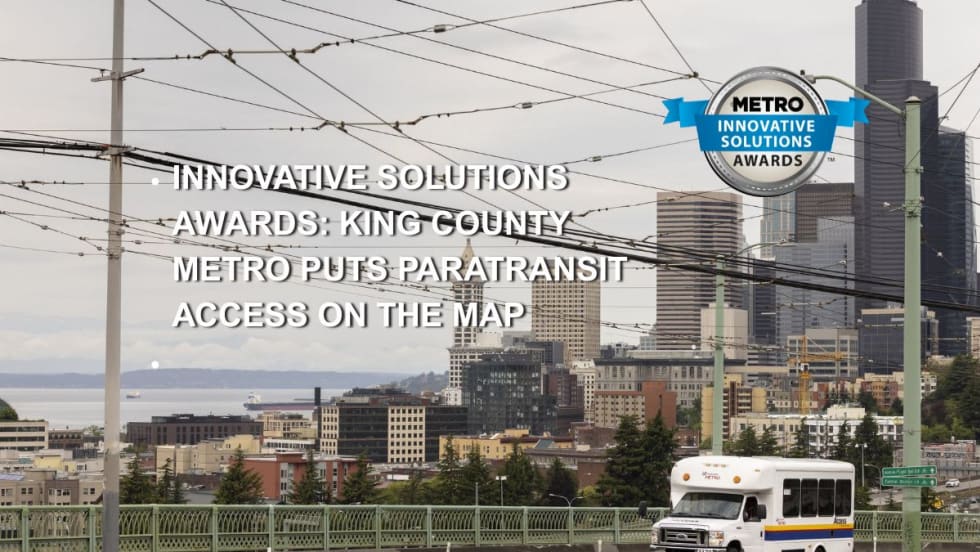
King County Metro Makes ADA Paratransit Easier to Navigate
METRO's Innovative Solutions Award winner replaces complex service-area descriptions with an accessible, interactive map that puts paratransit information directly in customers’ hands.
Read More →
Jacksonville’s NAVI Project Charts a New Course for Autonomous Public Transportation
Through its NAVI program, JTA is showing how autonomous vehicles, intelligent infrastructure, and coordinated operations can work together to deliver everyday public transportation.
Read More →
Driving Smarter Paratransit
John Hanlon shares how AlphaRoute is leveraging AI-powered technology to help paratransit providers optimize operations, support frontline staff, and enhance the rider experience.
Read More →
METRO Magazine Announces 2026 Innovative Solutions Awards Winners
Projects Recognized for Advancing Mobility Through Technology, Accessibility, Workforce Innovation, and Operational Excellence
Read More →
Biz Briefs: STV teams with Amtrak, Motorcoach Operators Boost Fleet and Land Contracts, and More
From manufacturers and suppliers to transit agencies and motorcoach operators, these updates offer a snapshot of the projects, partnerships and business moves driving the industry forward.
Read More →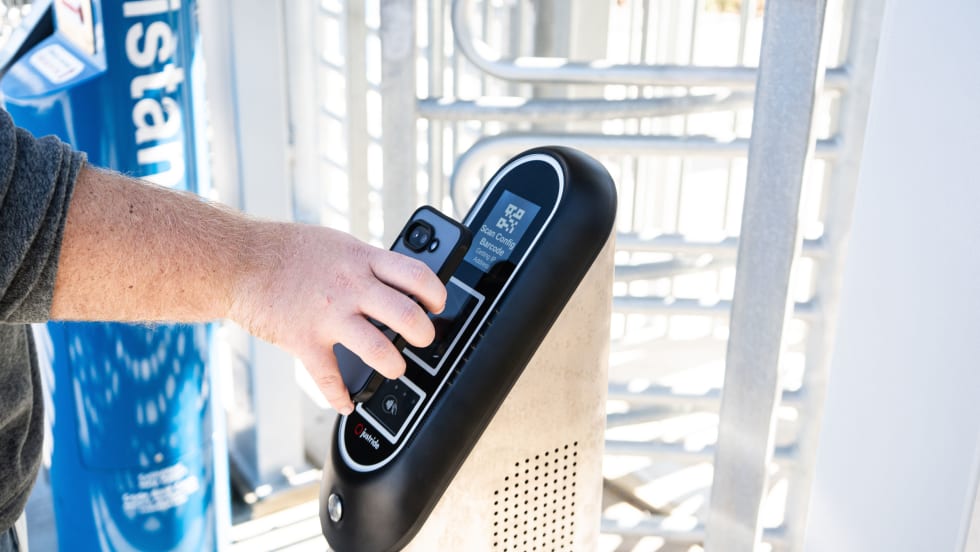
Biz Briefs: Masabi Teams with St. Louis Metro and More
In METRO's latest installment, we take a look at recent news from Transdev, Hitachi, and more partnerships making headlines across the transportation sector.
Read More →
New York MTA Leverages Zoning Program to Advance Station Accessibility
Accessibility enhancements at Nevins St Station will be financed through a development agreement tied to the MTA's Zoning for Accessibility initiative.
Read More →
Reinventing Fleet Maintenance with Real-time Visibility and AI
Transit leaders need to know what needs fixing, where to look, who is responsible, when work is completed, and what it costs without having to chase information across disconnected systems.
Read More →
SamTrans Sets Priorities for Potential Connect Bay Area Revenue
The board-approved framework allocates future funding to maintaining service, rider improvements, equity initiatives, and infrastructure repairs.
Read More →