



Getting out the vote for rail transit initiatives
There are numerous forms of identifying your voters, from door-to-door canvassing to paid phone banks.
Rail transit has become increasingly popular as people in major cities continue seeking ways to reduce traffic and protect the environment. For example, a
ballot initiative authorizing rail transit in Honolulu recently passed as voters sought relief from some of the worst traffic in the nation. The measure passed by a margin of 53 percent to 47 percent in light of a well-organized opposition campaign. The final vote was 155,880 in favor to 140,623 opposed - a difference of 15,257 votes.
This was a hard-fought campaign, with residents bombarded by the scare tactics of opponents claiming that a vote for the measure was a vote for higher taxes and a give-away for developers, which in both cases was not true. This was an especially effective message during the current economic climate and myriad financial crises. Nevertheless, the campaign on behalf of the rail transit measure stayed focused on our message, which centered on reducing traffic congestion, protecting the environment, and promoting smart growth and economic development.
We were fortunate to be part of a team of extremely smart and talented community leaders and transit and political consultants that were seeking to pass this initiative. It was also fortunate that Honolulu Mayor Mufi Hannemann made the rail transit issue the cornerstone of his re-election campaign. However, there was one key element in this campaign that needed much more attention before our arrival. In fact, it's the element that's usually missing from many of the campaigns in which we are engaged. That element is the "Get-Out-The-Vote" effort, which is known as "GOTV" in campaign vernacular.
GOTV is a method of identifying your voters and ensuring that they turn out on Election Day. There are numerous forms of identifying your voters, from door-to-door canvassing to paid phone banks. Deciding which method to employ is usually a question of resources because each method has its own level of efficacy and the costs of each vary significantly.
For instance, there is no more effective way of persuading and identifying voters than in-person contact, or via door-to-door canvassing. This is not only true from our experience but has been independently verified by a group of researchers from Yale University who study campaigns and elections. However, door-to-door canvassing is also the most expensive because it is the most labor intensive. Nevertheless, every campaign should devote as many resources as possible to door-to-door canvassing as it always yields the best results. In fact, the bulk of our efforts on the Honolulu campaign were spent on door-to-door canvassing using local volunteers, which was especially important given the culture of the community.
A good GOTV effort can mean the difference of 3 to 5 percentage points in a campaign, and 5 percentage points was our margin of victory on the Honolulu ballot initiative. In fact, our efforts are widely credited for the success of that measure, although this is not surprising in our experience. According to the Saint Index, The Saint Consulting Group's annual survey of attitudes toward land use and development issues, Americans are twice as likely to actively oppose a real estate development project as to support one and 73 percent do not want anything new built in their communities at all. This means that developers must do their best to educate residents about the merits of their projects and make sure that they identify their voters and turn them out on Election Day.
In addition, since most transit initiative votes are determined by less than a 5 percent margin, an aggressive GOTV campaign can make the difference between success and failure. All too often this key campaign element in most political campaigns for public office is ignored in issue-related campaigns. That is a mistake and an important lesson learned from the Honolulu transit vote.
More Rail
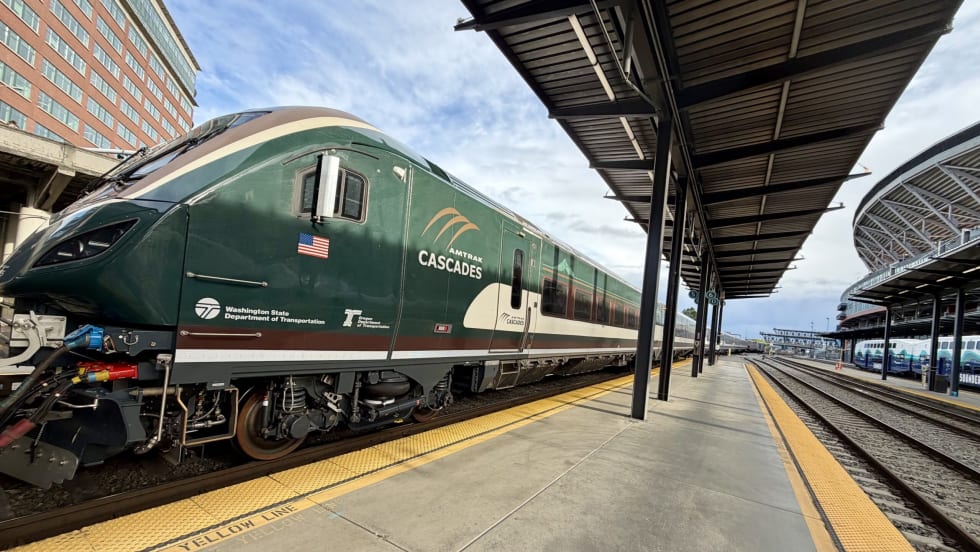
FRA Announces $5.3B in Rail Investments, Including $2B for Amtrak
Funding will support grade-crossing improvements, infrastructure upgrades, and new Amtrak equipment in 23 states.
Read More →
Finding the ‘Happy Medium’: Optimizing Maintenance Without Sacrificing Reliability
The key to maintenance optimization isn’t doing less work—it’s doing the right work at the right time on the right assets.
Read More →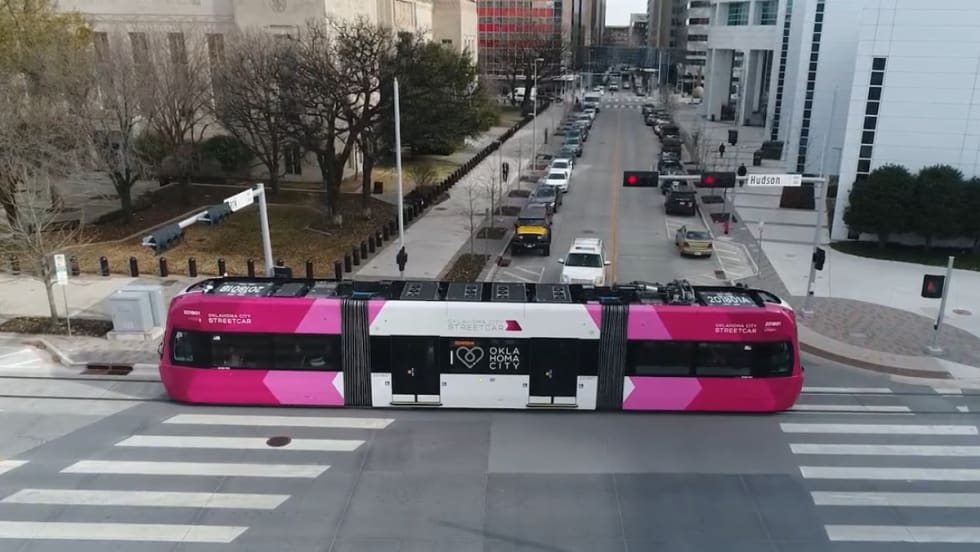
OKC Streetcar Makes Zero-Fare Service Permanent
Ridership increased an average of 71% compared with the same period a year earlier during the fare-free pilot.
Read More →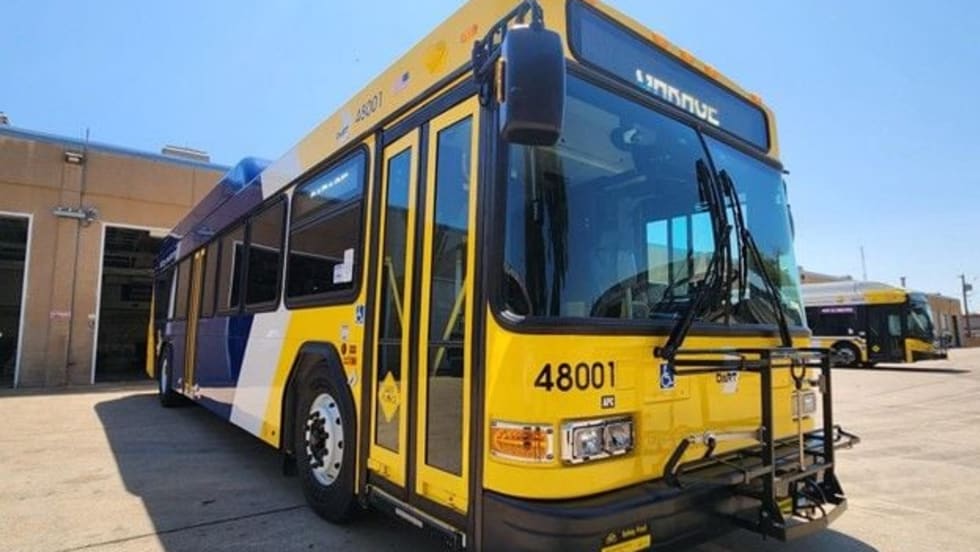
DART Customer Satisfaction Reaches Six-Year High
Overall satisfaction rose to 74.9%, while the agency’s Net Promoter Score reached a record 33.7.
Read More →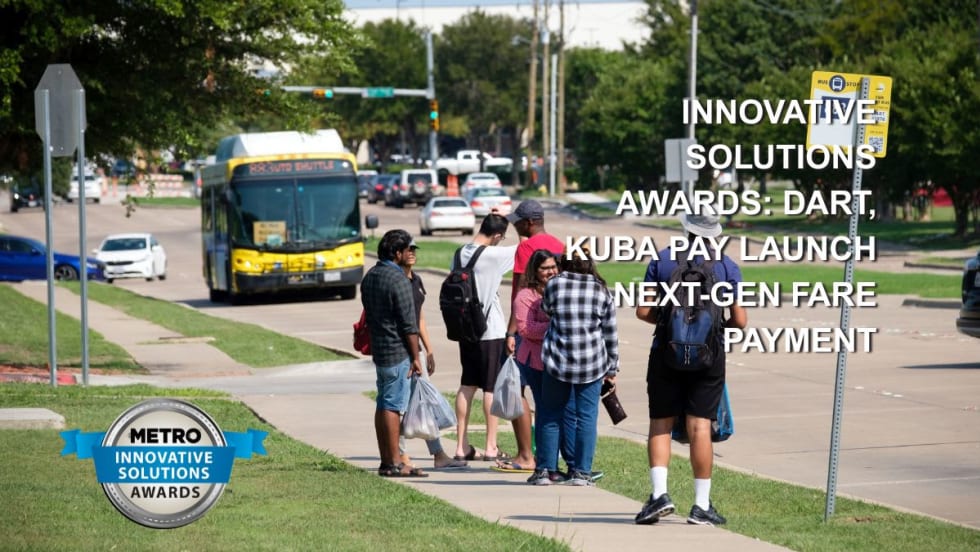
How DART's GoPass Is Redefining Regional Mobility
Serving 14 transit agencies, GoPass simplifies multimodal travel by allowing riders to plan, pay for, and manage an entire trip through one app.
Read More →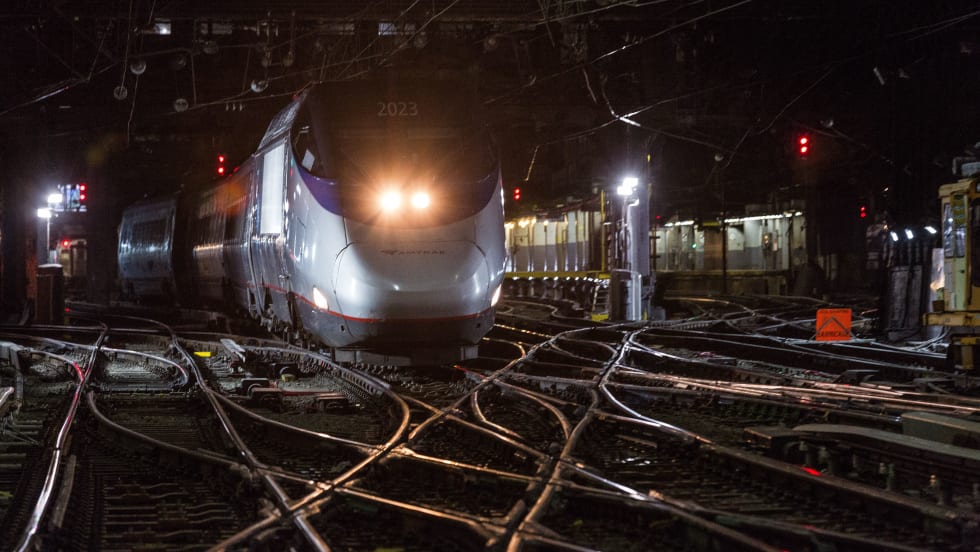
Amtrak Board Advances Plan to Restructure Organization, Seeks Public Input
The proposal, developed by Amtrak management and approved by the board for further consideration, is intended to modernize the organization's structure while improving accountability, operational efficiency, and customer service.
Read More →
Biz Briefs: STV teams with Amtrak, Motorcoach Operators Boost Fleet and Land Contracts, and More
From manufacturers and suppliers to transit agencies and motorcoach operators, these updates offer a snapshot of the projects, partnerships and business moves driving the industry forward.
Read More →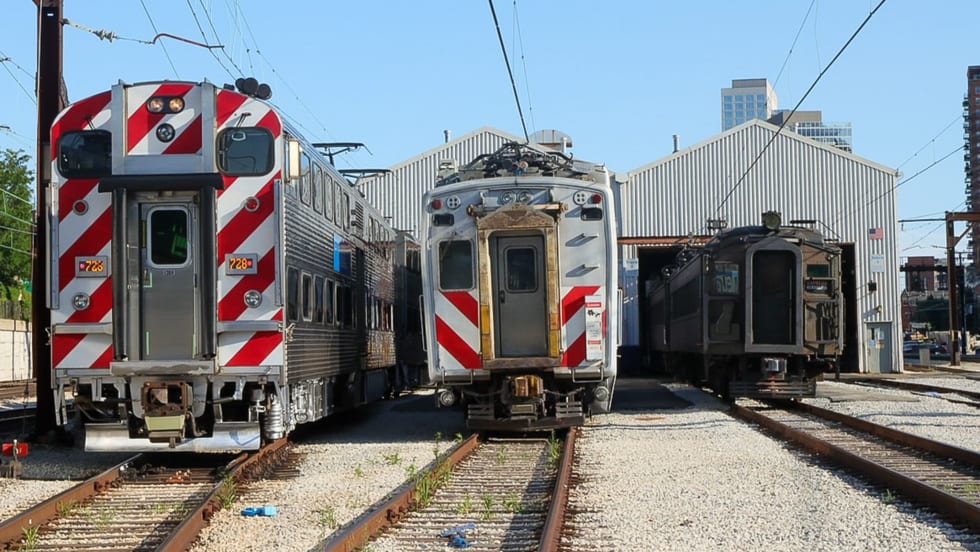
Metra Celebrates 100 Years of Electric Rail, Looks to the Future
The event was also a celebration of recent reforms to public transportation in the Chicago area, changes that could be as transformative in the future as the major civic achievement a century ago, said officials.
Read More →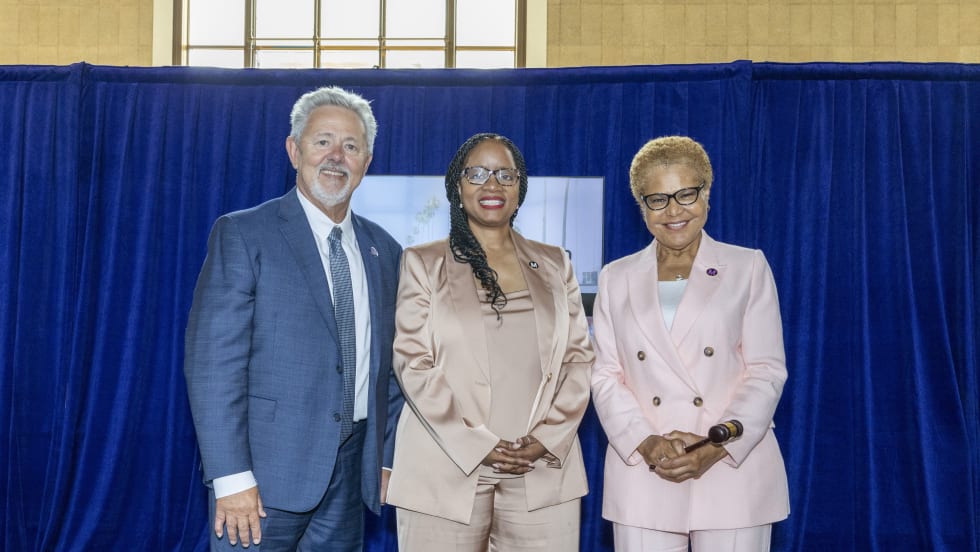
LA Metro Marks Banner Year, Sets Ambitious Goals for New Fiscal Year
Incoming LA Metro Board Chair and Los Angeles Mayor Karen Bass joined outgoing Board Chair Fernando Dutra and LA Metro CEO Stephanie Wiggins to review accomplishments from fiscal year 2026, which included the opening of new rail extensions, advancement of major transit projects, expanded safety programs, and new rider amenities.
Read More →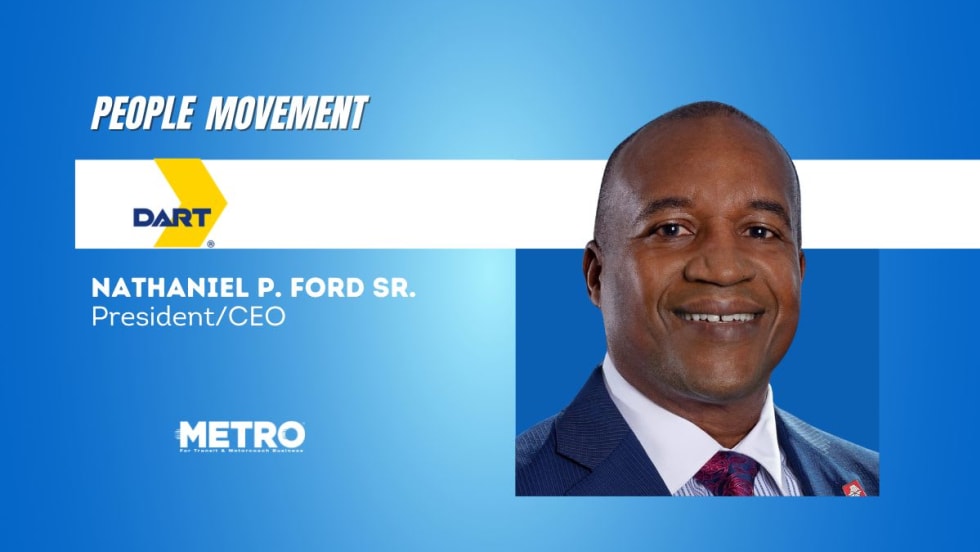
DART Taps Nathaniel P. Ford Sr. as Next President/CEO
Since 2012, Ford has served as the CEO of the Jacksonville Transportation Authority
Read More →