



Maintenance Forum to Focus on Safety, Technology
The show returns in conjunction with BusCon 2019 at the Indiana Convention Center in Indianpolis from Sept. 23 to 25.
Technology, safety, electric bus charging, and more will be discussed at this year’s Transit Maintenance Forum (TMF) for senior transit maintenance professionals, which returns to Indianapolis in conjunction with BusCon.
TMF gives senior transit maintenance professionals the chance to learn about some of the latest trends they are facing in their shops. Holding this event at BusCon also affords transit professionals the unique opportunity to network and share challenges with peers and keep up to date with the newest vehicles, technologies, and products on the market today.
Recently added to the program will be two informative programs by Cummins and Allison Transmission, which will kick off the program on Monday afternoon at 3 p.m.
Slated for this year’s TMF program is an update on Altoona Testing from officials who work on the FTA’s program, which will touch on a host of topics, including how changes have impacted the testing program and how battery-electric buses are currently being tested. The session will also include a Q&A session with the Altoona officials.
This year’s TMF will also focus on the latest in working on all-electric buses, including familiarizing maintenance staff with all-electric high voltage transit vehicles, as well required personal protective equipment, preparations necessary prior to working on or near high-voltage systems, and more.
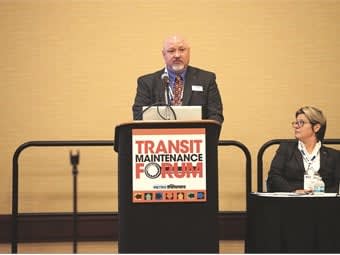
For an economical $115, attendees have the opportunity to not only attend TMF, but also all of BusCon’s networking events and the Keynote Address, as well as visit the extensive show floor.
The focus on technology will continue with a session, “How Cloud-Based Mobile Technology Can Make Maintenance Easier,” which will take a look at how asset maintenance can help you simplify the process, make gains in efficiency, improve compliance, and keep your shop in a state of good repair, as well as look into the future of automated maintenance, digitized maintenance instruction and manuals.
Meanwhile, CURIS’ Frances Grinstead will discuss risk management in the world of emerging outbreaks, including how to mitigate an operation’s liability with staff, ridership, and reputation by learning valuable information to keep your fleet operational during a biological sentinel event.
For an economical $115, attendees have the opportunity to not only attend TMF, but also all of BusCon’s networking events and the Keynote Address, as well as visit the extensive show floor.
More Bus

New York MTA Plans Largest Bus Fleet Upgrade in More Than a Decade
The agency is seeking manufacturers for 650 new CNG buses to replace aging vehicles, improve reliability, and advance its broader fleet modernization strategy.
Read More →
Building a Flexible Path to Transit Electrification
John Hroncich discusses BAE Systems’ modular and scalable approach, lessons learned from decades of real-world operations, and how agencies can identify electrification strategies that fit their fleets.
Read More →
Bus Tech Talk: Keeping Transit Technicians Ahead of the Technology Curve
LA Metro’s Obed Mejia discusses technician training, evolving maintenance technology, fleet replacement, and strategies for getting the most out of today’s transit fleets.
Read More →
Biz Briefs: RIPTA Unveils New Frontrunners, Clevland RTA Adds New Siemens, and More
In METRO's latest installment, we take a look at recent news from Siemens, Prevost, Dodge, and more partnerships making headlines across the transportation sector.
Read More →
People Movement: Holly Arnold Joins Transdev and More
In this edition, we also cover recent appointments and announcements at Pace, CamTran, MCI, and more, showcasing the individuals helping to shape the future of transportation.
Read More →
The High Cost of Transit Buses: Industry Leaders Look to Procurement Reform
Transit leaders and policymakers examine how standardized bus designs, streamlined procurement, and predictable funding could help agencies stretch budgets and deliver better service.
Read More →
The Business Voice Behind Public Transportation
As chair of APTA’s Business Members Board of Governors, Ray Melleady explains how more than 850 business members are partnering with transit agencies to advance funding, innovation, and industry-wide collaboration.
Read More →
From Surviving to Thriving: Building Stronger Transportation Organizations
Bus Business Consultants founder Brian Dickson shares lessons on leadership, organizational health, and creating options for long-term success in a changing transportation industry.
Read More →
Finding the ‘Happy Medium’: Optimizing Maintenance Without Sacrificing Reliability
The key to maintenance optimization isn’t doing less work—it’s doing the right work at the right time on the right assets.
Read More →
LA Metro, City of West Hollywood, and Partners Advance Smarter Bus Lane Enforcement
The award-winning partnership combines AI-powered detection with human oversight to improve bus reliability, accessibility, and enforcement efficiency.
Read More →