



Maintenance Shops: Learning Curve Continues to Grow
Second annual Bus Maintenance Survey finds that many agencies around the nation are experiencing difficulties with alternative propulsion, as they continue to add new equipment in the shop to service as well as learn new ways to make repairs to the vehicles. Meanwhile parts issues, including concerns about availability, lead times and frequent failures, remains the biggest issue.
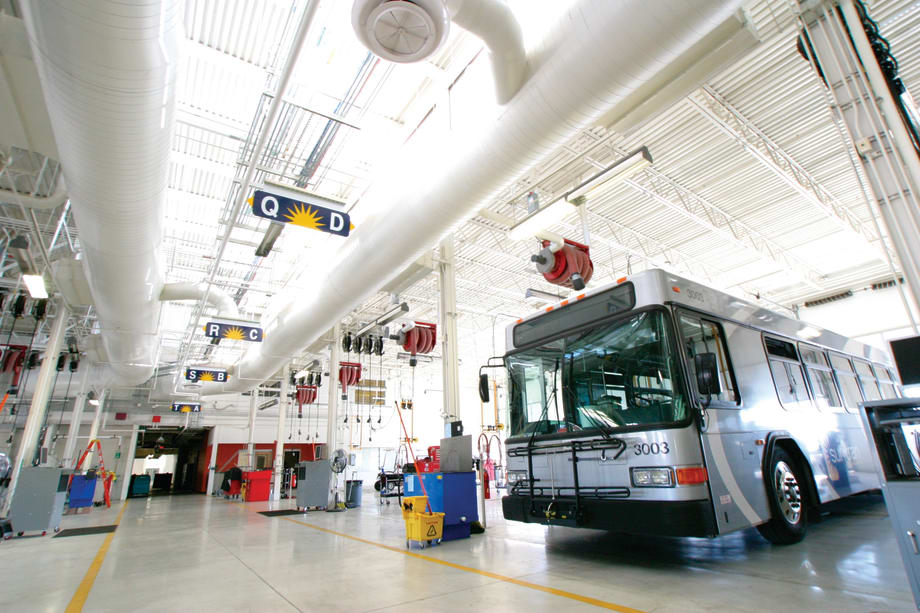
Parts availability and obsolescence is the top concern for maintenance personnel, according to this year’s Bus Maintenance Survey, while just under one-half of respondents say they have difficulty hiring new mechanics. Despite these and other challenges, many report they are adjusting successfully to stay on top of the issues facing them in the shop.
“We are still maintaining service with fewer resources,” reported one respondent. “We utilize teamwork to overcome these adversities.”
For the second year of the survey, METRO sent out more than 200 surveys — with questions ranging from biggest challenges and most frequently seen issues in the shop to training and new ways to perform services — to agencies around the U.S. and Canada, nearly tripling both last year’s scope and response.
Agencies varied in fleet size, with the largest maintaining 5,595 buses and the smallest 35, and in staff, which ranged from 2,147 full-time mechanics to just five. This year’s larger group of respondents also span wide demographics from large metropolitan transit agencies to small, university-focused transportation systems.
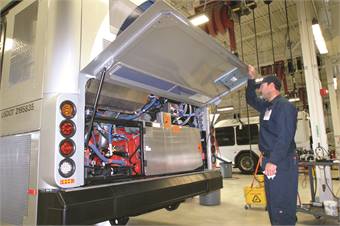
This year’s respondents spanned North America and ranged from large metropolitan transit agencies to university transportation agencies and everything in between, including Tucson, Ariz.-based Sun Tran.
Overall, the most frequent issue in the shop, according to respondents, remains parts, which included concerns about availability, lead times and frequent failures.
“Consistent parts availability and obsolescence avoidance is an ongoing concern being addressed through product testing and alternatives, working closely with manufacturers and vendors,” said one respondent.
Meanwhile, dealing with new cleaner burning engines with alternative propulsion remains the second most cited issue, followed by frequent brake change/failures and electrical (issues/training) swapping spots, while issues with HVAC systems enters the top five.
While last year 61% of those surveyed said they were having difficulty hiring new mechanics, this year’s survey found that 55% are not having issues finding qualified applicants. Of the 45% reporting that they are having issues hiring new mechanics, lack of training in ever-evolving technologies, budget constraints and a large number of baby boomers retiring remain the top reasons why. Part of the reason for the switch could be because of the larger group of respondents, however, many also report instituting programs to actually seek out and train new talent.
For example, at Indianapolis’ IndyGo, the agency has been working with technical high schools and college/trade programs to establish relationships with the new mechanics coming into the workforce. IndyGo is also providing internships for students from high schools to assist these schools in promoting careers in the trade sector. Ohio-based Greater Dayton Regional Transit Authority and Va.-based Fairfax County Department of Transportation have also instituted similar programs with local community colleges, with the latter even donating a training bus.
Meanwhile, many California agencies, including San Bernardino’s Omnitrans, Torrance’s Torrance Transit and Thousand Palms-based SunLine Transit Agency, say that the Southern California Regional Transit Training Consortium (SCRTCC), a partnership between the agencies and local community colleges, has helped them properly train its current workforce as well as develop junior shop workers.
“We utilize the SCRTCC to help with the training of entry level, as well as our journeymen mechanics/technicians; this has been very successful,” explains officials at SunLine.
Through feedback from maintenance personnel around the nation, a few new questions were added this year, including “Is your agency exploring a switch to buses with all-electric components,” with 60% saying that they are. Also, as alternatively-propelled vehicle use continues to grow, we asked “What safety measures have you implemented to work on bus rooftops?”
For more charts and answers to questions personnel wanted to know, click here.
More Bus

New York MTA Plans Largest Bus Fleet Upgrade in More Than a Decade
The agency is seeking manufacturers for 650 new CNG buses to replace aging vehicles, improve reliability, and advance its broader fleet modernization strategy.
Read More →
Building a Flexible Path to Transit Electrification
John Hroncich discusses BAE Systems’ modular and scalable approach, lessons learned from decades of real-world operations, and how agencies can identify electrification strategies that fit their fleets.
Read More →
Bus Tech Talk: Keeping Transit Technicians Ahead of the Technology Curve
LA Metro’s Obed Mejia discusses technician training, evolving maintenance technology, fleet replacement, and strategies for getting the most out of today’s transit fleets.
Read More →
Biz Briefs: RIPTA Unveils New Frontrunners, Clevland RTA Adds New Siemens, and More
In METRO's latest installment, we take a look at recent news from Siemens, Prevost, Dodge, and more partnerships making headlines across the transportation sector.
Read More →
People Movement: Holly Arnold Joins Transdev and More
In this edition, we also cover recent appointments and announcements at Pace, CamTran, MCI, and more, showcasing the individuals helping to shape the future of transportation.
Read More →
The High Cost of Transit Buses: Industry Leaders Look to Procurement Reform
Transit leaders and policymakers examine how standardized bus designs, streamlined procurement, and predictable funding could help agencies stretch budgets and deliver better service.
Read More →
The Business Voice Behind Public Transportation
As chair of APTA’s Business Members Board of Governors, Ray Melleady explains how more than 850 business members are partnering with transit agencies to advance funding, innovation, and industry-wide collaboration.
Read More →
From Surviving to Thriving: Building Stronger Transportation Organizations
Bus Business Consultants founder Brian Dickson shares lessons on leadership, organizational health, and creating options for long-term success in a changing transportation industry.
Read More →
Finding the ‘Happy Medium’: Optimizing Maintenance Without Sacrificing Reliability
The key to maintenance optimization isn’t doing less work—it’s doing the right work at the right time on the right assets.
Read More →
LA Metro, City of West Hollywood, and Partners Advance Smarter Bus Lane Enforcement
The award-winning partnership combines AI-powered detection with human oversight to improve bus reliability, accessibility, and enforcement efficiency.
Read More →