



‘Polar Vortex’ freezes up public transit service
Amtrak suffered some service disruptions and delays, with three trains halted about 80 miles from Chicago, when drifting snow and ice made the tracks impassable.
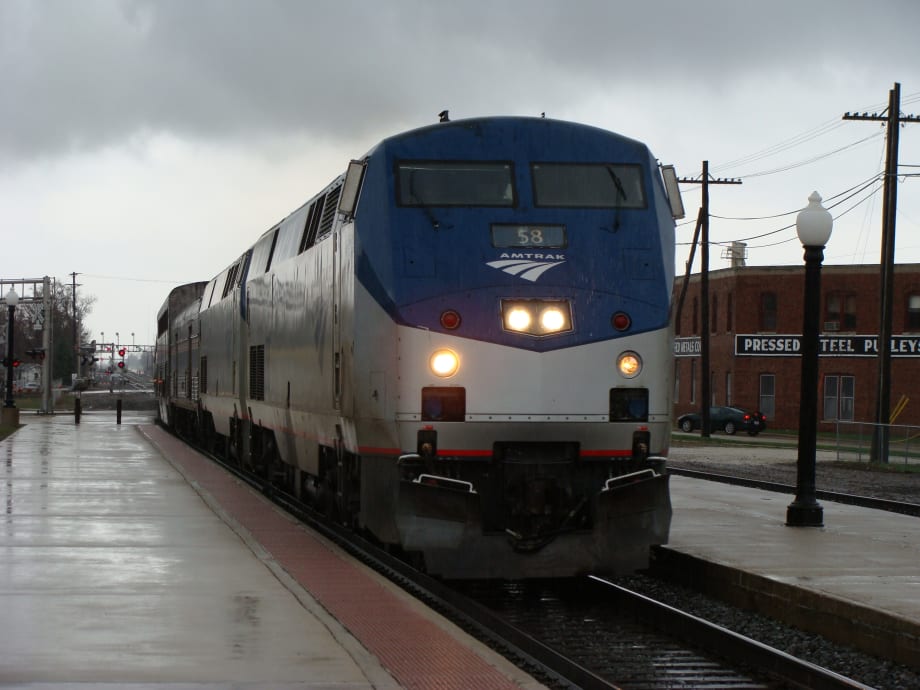
Photo by Jimmie Thomas via Wikimedia Commons

Photo by Jimmie Thomas via Wikimedia Commons
Snow, ice, and an arctic blast of freezing, dense air known as a “polar vortex” severely impacted temperatures and made mass transportation difficult throughout the country in January, particularly in the Midwest.
The snow and sub-zero temperatures began impacting Metra, Amtrak and Chicago Transit Authority (CTA) services over the first weekend of January, with services taking a real hit once the workweek began.
“The storm really had an impact beginning with the Monday commute,” explained Michael Gillis, spokesperson for the Metra commuter rail system. “The main problem here was with switches having moisture, snow and ice accumulate in them, which would then have to be physically cleaned out, leading to cascading delays through the rush hour.”
Although Metra has switch heaters, Gillis added they don’t work as effectively in extreme cold. Metra also had staff at key interlockers around the clock to keep them from being encased in snow, but in some cases, the on-site staff would have to clean out the area before and after each train.
Gillis said that while there were some delays and cancellations, Metra was still able to operate more than 90% of its schedule at the height of the storm.
Meanwhile, Amtrak suffered some service disruptions and delays, with three trains — the Southwest Chief from Los Angeles, the Illinois Zephyr from Quincy and the California Zephyr from the San Francisco Bay Area — halted about 80 miles from Chicago, when drifting snow and ice made the tracks impassable. No injuries were reported, though passengers did have to spend the night aboard the trains, said Marc Magliari, Amtrak spokesman.
“The safest thing to do for those people was to keep them on the trains,” he said. “Taking people off the trains in the middle of the night through a trench full of snow was not anywhere close to the right decision.”
Magliari added Amtrak did have emergency services people stationed outside the train in case a medical or some other type of emergency situation arose.
The more than 500 passengers affected by the delay arrived in Chicago, mostly on charter buses, 20 hours after they were stuck, according to Amtrak.
CTA provided more than 36,000 bus trips during the first two days of the workweek, and all 129 bus routes operated normally with just slight delays. On the rail system, approximately 4,200 train trips were provided and the overwhelming majority of the trips were on time or just slightly delayed, according to a CTA spokesperson.
The extreme temperatures did, however, create issues with track switches and some door problems on trains, which resulted in some longer delays — but each incident was addressed very quickly. On Tuesday, Jan.7, a minor derailment of a Yellow Line train occurred at a terminal, but it was resolved in about two hours, reported officials.
Greyhound’s intercity motorcoach services were also impacted by the storm, with the operation suspending ticket sales and delaying schedules for a few days throughout the Midwest as part of its protocol during inclement weather situations.
“The safety and security of our customers is our top priority, so we only put buses on the road when it is completely safe to do so,” said Alexandra Pedrini, spokesperson for Greyhound. “Once it is deemed safe to travel, we can put those schedules back on the road and get those customers to their destinations as quickly as possible.”
Like Amtrak, Greyhound was able to keep delayed passengers relatively comfortable under the circumstances by offering food vouchers, or in some cases, supplying food and drink right at the stations three times a day.
“We also had sleeper buses, which are running, idling buses that are heated, so customers could actually go sit on a bus with a comfortable, reclining seat,” Pedrini said. “Many times those buses are our newer buses, which are equipped with free Wi-Fi and power outlets, allowing our passengers to stay connected.”
Each of the operations involved said tools like bus and train trackers on their websites, updates at stations and aboard vehicles, and social media were invaluable in assisting customers during their commutes — providing real-time information on arrival times and service delays.
More Bus

More Than a Summer Job: Building the Next Generation of Transit Talent
The Delaware River Port Authority and PATCO have transformed their internship program into a hands-on professional development experience that introduces students to the breadth of transportation careers — and creates a pipeline for future employees.
Read More →
LA Metro Board Awards 220 Battery-Electric Bus Contract to ENC
The contract, which is the largest base award of battery-electric buses by a U.S. transit agency, will be built in Southern California, sustaining good jobs as LA prepares to welcome the world in 2028
Read More →
Public Transit Conference Returning to GFX in 2027, Call for Papers Now Open
The Call for Papers is now open, allowing transit agency professionals and industry experts to help shape the PTC educational program by submitting session ideas for consideration.
Read More →
Indian River Transit’s Community-Focused Approach Earns National Recognition
Named APTA’s 2026 Outstanding Public Transportation System in its size category, Florida’s Indian River County transit system continues to grow ridership through fare-free service and a focus on evolving community needs.
Read More →
ENC Lands MATA Contract and More in Biz Briefs
In this edition of Biz Briefs, we spotlight the latest developments shaping the future of mobility.
Read More →
From Surviving to Thriving: Building Stronger Transportation Organizations
Bus Business Consultants founder Brian Dickson shares lessons on leadership, organizational health, and creating options for long-term success in a changing transportation industry.
Read More →
Everett Transit, Community Transit Outline Consolidation Agreement
The proposed agreement calls for a 50% increase in bus service in Everett, a new microtransit zone, continued paratransit service, and the transfer of Everett Transit operations to Community Transit.
Read More →
SEPTA Details Accelerate Vision for Transit System
The plan outlines investments in trolley modernization, new Metro and Regional Rail vehicles, accessible stations, and more frequent bus and rail service.
Read More →
Report: Transit Bus Manufacturing Supports 34,100 Jobs, $5.1B in GDP
The “Buses Mean Business” report examines the transit bus manufacturing industry’s economic footprint, supply chain, and rising demand for vehicle replacements.
Read More →
Biz Briefs: New Flyer Delivers in Columbus, Houston, Beep and Freebee Merge, and More
In this edition of Biz Briefs, we spotlight the latest developments shaping the future of mobility.
Read More →