



Positive Train Control Promotes Track Safety
The Illinois DOT PTC project is part of a larger effort to make trains safer.
Reducing the probability of collisions between trains, collisions between trains and maintenance-of-way crews and overspeed accidents are top priorities for any rail operation. The Illinois Department of Transportation (IDOT), in conjunction with the Federal Railroad Administration (FRA) and Association of American Railroads (AAR), is working on a way to make those incidents more preventable with its positive train control (PTC) project. The project entails installing a PTC system on a 120-mile segment of a mixed passenger/freight line of the Union Pacific Railroad extending between Springfield and Mazonia, Ill. The line segment is part of a high-speed rail corridor designated by IDOT and the FRA between Chicago and St. Louis. “The primary benefit is increased railway safety,” says Alan Polivka, general manager of the North American Joint Positive Train Control Program, which the IDOT project is part of. “The project is going very well, with great momentum.” On half of the segment, the system is being integrated with the existing railroad traffic control and signaling system. There, the system operates in fixed block mode. Existing signals allow for speeds of up to 79 mph; the PTC system allows for speeds of above 79 mph. The system is being designed so that the authority conveyed by the onboard display is constrained by the wayside signal system in this half of the segment. The other half of the segment uses the PTC as a stand-alone system with moving block operation. It can provide conventional fixed block operation for trains not equipped with PTC onboard functionality, or for which digital data radio communications have been lost. These non-communicating trains will be tracked by track block occupancy status to the office via the data communications network. PTC involves the application of digital data communications, automatic positioning systems, wayside interface units, onboard and control center computers and other advanced technologies. The IDOT project is now halfway through its 30-month development that will be complete at the end of 2002, with revenue operation slated for 2003. The design is being implemented in multiple phases, with each phase adding functions that could stand alone. The primary use for this type of system is on high-speed passenger lines and freight lines, though other types of rail operations can use it. Two keys to the performance of the system are: the ability to locate and monitor movement of trains with precision and the ability of the operators to safely and effectively use the system. Both are being done within the project’s objectives of being cost-effective. For each part of the system built, extensive testing is done before being deployed on the IDOT corridor. Field testing of each build is also performed. The IDOT PTC territory contains 133 crossings — 103 public road crossings, 10 pedestrian crossings and 20 private at-grade crossings. Of those, 94 are equipped with automatic warning systems and many were upgraded to use constant time warning equipment. As part of the project, 74 crossings will be upgraded with advanced activation capabilities to provide for high-speed passenger operation. The system developer/integrator for the IDOT project is a team led by Lockheed Martin Corp. and includes Wabtec Railway Electronics, Union Switch & Signal Inc. and Parsons Brinckerhoff Transit & Rail Systems Inc. The prime contractor for the project is the Transportation Technology Center Inc. Goals of IDOT project The IDOT PTC system will function as a safety-critical train control system independently and in conjunction with the existing Union Pacific CTC system used to control the territory. Several things imperative to the project are: 1. Displaying operating information to rail crews. The IDOT PTC system will continuously display train location, limits of authority, actual train speed, maximum authorized speed and bulletin information. 2. Warning train crews of potential violations. The system will warn of approach to authority limits or reduction in authorized speed. 3. Open standards. The system is being designed to conform with or set new open industry standards, allowing interoperability of trains among different railroads and cost-effective availability of products from multiple vendors. 4. Demonstrate moving block operation. The system will provide moving block operations in PTC stand-alone territory, allowing communicating trains authority to the rear of preceding communicating trains rather than to fixed block limits. 5. Integrating speed limits and restrictions. The system will integrate temporary and permanent restrictions on train movement to determine the most restrictive operation allowed. Other PTC projects The IDOT project is part of the North American Joint Positive Train Control Program (NAJPTC), a five-year, $60 million effort sponsored and funded by the AAR, the FRA and IDOT. The purpose of the program is to develop standards for PTC system components to promote industry interoperability. The NAJPTC consists of three inter-related projects: the IDOT PTC Project, the Eastern PTC Project and the Industry Train Control Standards Project. The projects provide input to and accept outputs from each other as they work toward interoperability. The Industry Train Control Standards Project is developing industry-wide train control standards for cost-effective, interoperable train control and related systems and devices. The project published standards, including the Train Control Standards Data Dictionary that provides a common, core set of data elements to be used in the development of a standard system. The Eastern PTC Project has defined an interoperable onboard platform and is developing a standard approach for integrating it with various types of train control territories. This project already presented an onboard platform prototype and is now working on integrating that with existing wayside train control systems.
More Rail
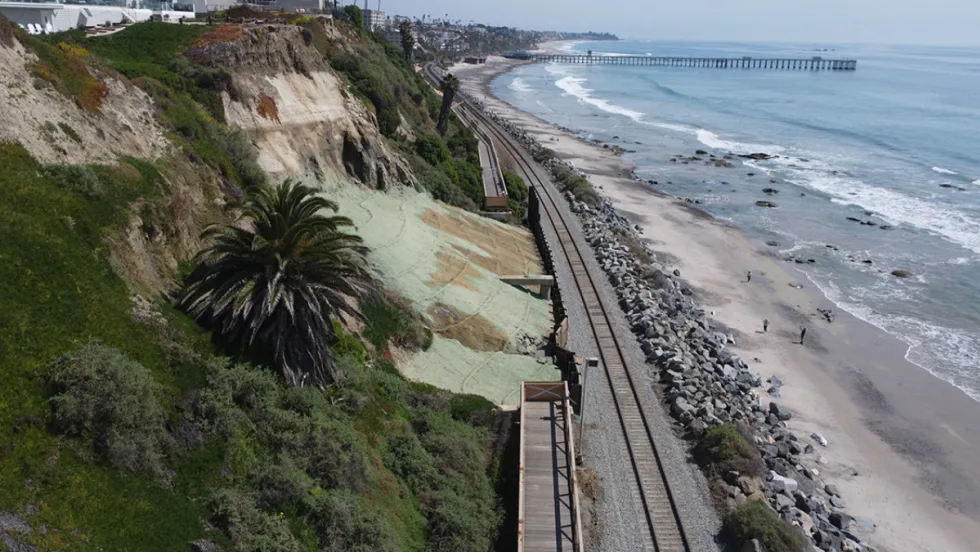
OCTA Declares Emergency to Protect Rail Corridor From Coastal Erosion
The California agency is accelerating shoreline protection and plans to place approximately 690,000 cubic yards of sand along the San Clemente coast to protect a key passenger and freight rail link.
Read More →
More Than a Summer Job: Building the Next Generation of Transit Talent
The Delaware River Port Authority and PATCO have transformed their internship program into a hands-on professional development experience that introduces students to the breadth of transportation careers — and creates a pipeline for future employees.
Read More →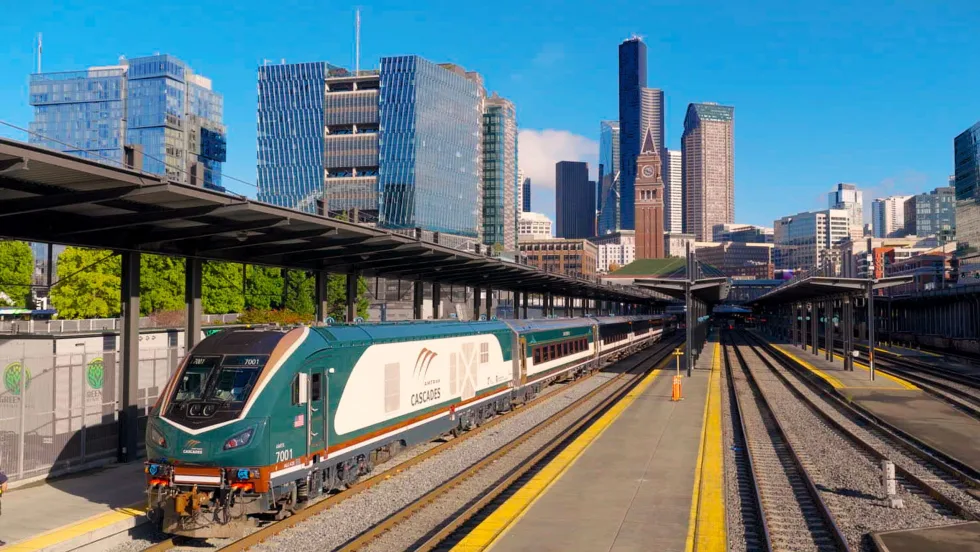
Airo Trains Make Their Amtrak Cascades Debut in the Pacific Northwest
Effective immediately, two cutting-edge Airo trainsets will join the Amtrak Cascades route, operating four daily trips between Vancouver, B.C., Seattle, Portland, and Eugene, Oregon, marking the first introduction of Airo trains into passenger service anywhere in the country.
Read More →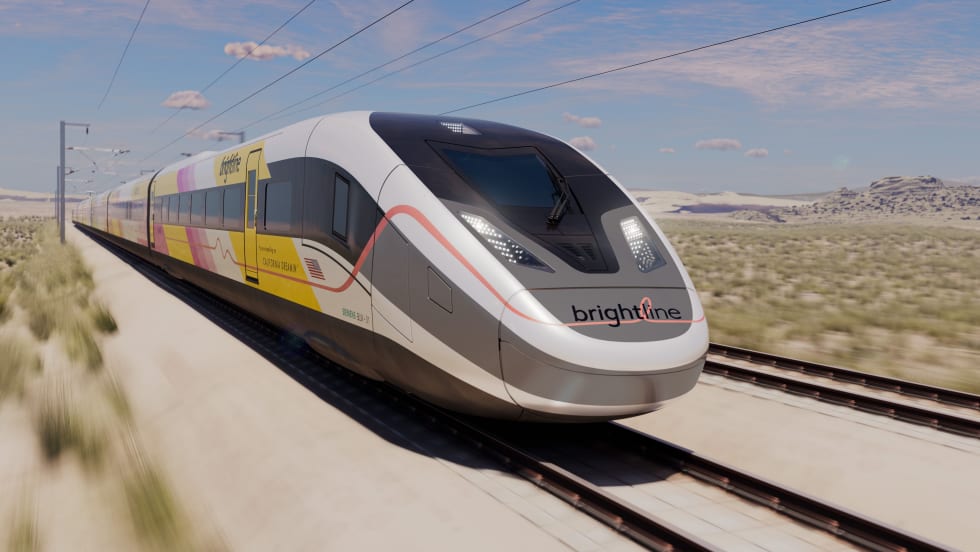
Florida's Brightline Announces Financial Restructuring
Brightline Florida says train operations will continue as normal as certain parent entities enter Chapter 11 and financial stakeholders provide $490 million in new long-term capital.
Read More →
ENC Lands MATA Contract and More in Biz Briefs
In this edition of Biz Briefs, we spotlight the latest developments shaping the future of mobility.
Read More →
Strada360’s Steve Lassey on Turning Transit Data Into Better Decisions
From breaking down data silos to preparing for AI, Strada360 CEO Steve Lassey discusses how transit agencies can use technology to improve operations, customer information, and long-term decision-making.
Read More →
SEPTA Details Accelerate Vision for Transit System
The plan outlines investments in trolley modernization, new Metro and Regional Rail vehicles, accessible stations, and more frequent bus and rail service.
Read More →
FTA Ends Direct Oversight of MBTA Safety Actions
The federal agency closed its remaining special directive to the Massachusetts Department of Public Utilities following a safety review that began in 2022.
Read More →
Amtrak, CN Reach Agreements to Strengthen Passenger Rail Service, Safety
The agreement resolves a more than decade-long proceeding before the Surface Transportation Board concerning the terms and conditions for Amtrak services, such as the City of New Orleans, Illini/Saluki, and Wolverine.
Read More →
New York MTA Advances Final Contract for Second Avenue Subway Expansion
Contract Four is the largest in the Second Avenue Subway Phase 2 project and includes construction of station infrastructure, tracks, and signals for the subway expansion, MTA officials said. Work on Contract Four will begin in 2027.
Read More →