



Princeton arts complex proposal may save historic 'Dinky' train
The university is currently awaiting approval on plans for a new arts complex that could not only save the historic train from being removed, but also increase ridership as well.
Princeton University, Office of Communications: Brian Wilson
Princeton University, Office of Communications: Brian Wilson
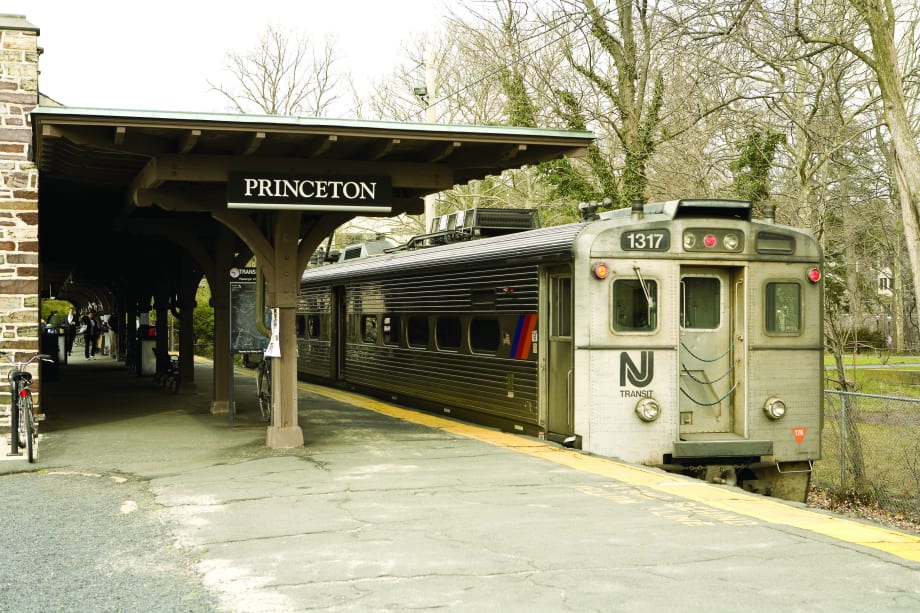
With the support of students and the neighboring community, Princeton University is making great efforts to save the iconic "Dinky" train from being replaced by a new bus line.
Also known as the Princeton Branch and Princeton Junction and Back (PJ&B), the 146-year-old train not only holds a great deal of history for the university, but also serves as an important connection between the school and the Princeton Junction station — the boarding location for trains to New York; Washington, D.C.; and Philadelphia.
Princeton's current $300 million-plus proposal for a new arts complex incorporates plans to save the Dinky by increasing visitors with a new station and convenience store, attractive walkways, shuttle services, additional retail and easier access to parking, among a large number of other new attractions.
"What we're trying to do is everything we can to enhance the experience of the Dinky in the hope that will, over time, increase ridership and, that in turn, will make it more likely that the Dinky will remain," said Bob Durkee, Princeton University vice president and secretary. "There is a very strong consensus on campus and in the community that we ought to do whatever we can to preserve the Dinky."
With such famous riders as Woodrow Wilson and Albert Einstein, the historic Dinky train has become an institution at Princeton and a symbol of the university. The small train travels 2.7 miles back and forth between the university and Princeton Junction, offering about 2,000 rides on a daily basis.
Under the new plan, the train will be re-positioned 460 feet south to move it from the middle of the arts complex and make room for a much-needed parking garage driveway. Princeton is also proposing to create additional housing in the area south of the Dinky station.
"Under our plan, the station does move 460 feet to the south, but that moves it in the direction of where we believe the additional residential properties will be located over time," Durkee said.
The proposal adds about a minute and a half to the current walking time to the train from the north, something that has been met with opposition from members of the community with worries about decreased ridership.
"Our expectation is that people who walk will still walk and, for people who are not walking now — [that are] driving and parking — it will be easier for them to continue to do that," Durkee said. "They will be walking through a much nicer area, there will be a much nicer station for them and there will be more activity going on in the area."
The arts complex proposal is currently being deliberated for zoning approval by the Princeton Township and the Borough of Princeton, the two municipalities that the plan falls under.
"The dividing line between those two goes right through the middle of this project," Durkee said. "I think it will be a couple of months before we know the zoning is in place. Then, it would take at least a number of months, maybe more than a few, before we know whether we have approval for the plan."
The university has strong support from the state of New Jersey, the governor, the commissioner of transportation, and from operator New Jersey Transit who said that, in their view, the best way to preserve the Dinky into the future would be to approve the arts complex plan. "They have been very supportive and they said that very publicly," said Durkee.
At the moment, Durkee anticipates the entire plan to take about six years to finish. As a Princeton alumnus and resident of the community for the last 45 years, Durkee admitted to riding the Dinky at least every other week. "There are a lot of us on campus who really depend on it," he said.
More Rail
Amtrak, CN Reach Agreements to Strengthen Passenger Rail Service, Safety
The agreement resolves a more than decade-long proceeding before the Surface Transportation Board concerning the terms and conditions for Amtrak services, such as the City of New Orleans, Illini/Saluki, and Wolverine.
Read More →
New York MTA Advances Final Contract for Second Avenue Subway Expansion
Contract Four is the largest in the Second Avenue Subway Phase 2 project and includes construction of station infrastructure, tracks, and signals for the subway expansion, MTA officials said. Work on Contract Four will begin in 2027.
Read More →
San Diego MTS Breaks Monthly Trolley Ridership Record
Agency officials said July’s ridership indicates MTS’s continued recovery from the pandemic.
Read More →
Report Examines NJ TRANSIT Reliability, Funding Challenges
The Garden State Initiative analysis examines the roles of Amtrak infrastructure, fleet management, and agency operations while recommending a more performance-based approach to improving reliability.
Read More →
Stadler, CapMetro Sign Long-Term Rail Fleet Support Agreement
Beginning in 2027, Stadler will provide on-site technical expertise, spare parts support, training, and obsolescence management to help extend the reliability and longevity of CapMetro’s GTW fleet.
Read More →
Biz Briefs: Alstom Lands Canadian Contract, LYT to Supply California TSP, and More
In METRO's latest installment, we take a look at recent news from Complete Coach Works, Beep, FlixBus, and more partnerships making headlines across the transportation sector.
Read More →
CATS Gold Line Marks 5 Years of Service, 2.8M Passenger Trips
With a six-mile expansion planned, the Charlotte streetcar is positioned to connect more neighborhoods and major transit hubs across the region.
Read More →
Why Simulating Pedestrian Movement Has Become Essential for Modern Rail Stations
Pedestrian microsimulation is helping rail planners identify bottlenecks, test station designs, and prepare complex transit hubs for growing passenger volumes.
Read More →
Amtrak Begins Major Construction at New York’s Sunnyside Yard
The new maintenance facility will support Amtrak’s Airo trainsets while improving maintenance efficiency and turnaround times in New York.
Read More →
Chicago Leaders Unveil Plans for O’Hare Airport Express Train
The privately developed project would offer a 15-minute trip between downtown and O’Hare’s Terminal 2, with trains operating every 15 minutes on a dedicated track. The service would use battery-electric trains and three existing freight rail rights-of-way.
Read More →