



Q&A with Denton County Transportation Authority's Jim Cline
He speaks about the agency’s new pilot program to help provide low-income families and individuals with alternative mobility options and more.


Cline says the key to moving DCTA forward is his staff’s willingness to try different ideas and to challenge the status quo.
DCTA

Cline says the key to moving DCTA forward is his staff’s willingness to try different ideas and to challenge the status quo.
DCTA
In March, 2010, Jim Cline assumed the duties as president of the Denton County Transportation Authority (DCTA). He is a registered professional engineer; having received Bachelor’s and Master’s degrees in civil engineering from Texas A&M University. His previous experience includes three years with the firm Kimley Horn and Associates, and over 20 years of municipal public works/transportation experience at the Cities of Beaumont and Irving, Texas.
METRO Magazine Managing Editor Alex Roman spoke to Cline about the agency’s new pilot program to help provide low-income families and individuals with alternative mobility options and where he envisions the operation in five years.
DCTA has been out ahead in redefining public transit; how are you working with TNCs and taxicabs to provide more options? What other programs are in the works?
In the past two years, we have launched two key services that have positively impacted the agency — the Collin County Transit taxi voucher program and the Lyft discount program in the city of Highland Village. Both mobility options have enabled us to address either first- or last-mile connections for our rail and bus routes, or complete trips in lower-density areas. DCTA is becoming a ‘broker of services’ to member and contract cities for a variety of vehicle types and technologies.
We are moving to apply some of the concepts from Transportation Network Companies (TNC) to the operation of DCTA-owned vehicles that serve older persons and persons with disabilities. One important area that we are working to incorporate is the TNC’s dispatching concepts that will enable us to provide rides to more customers by linking trips together, and serve multiple passengers at the same time for all or part of their trip. This is a great opportunity to serve this segment of our riding public better and more efficiently.
Why is public transit more nimble to implement changes than they have in the past?
The short answer is that our customers are demanding it. We operate in an area with generally lower density than more traditional public transit systems — and traditional answers do not always apply. There will always be a place for large buses and trains to serve higher-volume corridors, but a more efficient method of delivering service is often necessary with lower demand. This is particularly true in serving the first- and last-mile connection of transit travel.
What is DCTA’s biggest challenge and what how are you doing to try to solve it?
In addition to rebuilding ridership, which is a nationwide trend, our region in North Texas is faced with a significant challenge matching low- to moderate-income workers to jobs and providing the proper mobility access necessary to get to and from work. Our areas of greatest growth are also the most expensive in which to secure housing. This can force long commutes, which provide an opportunity for transit as a solution.
Denton and Collin counties are projected to be the nation’s fastest-growing economies over the next five years, according to a recent Oxford Economics forecast. Providing innovative mobility solutions in a fast-growing region with a ‘patchwork quilt’ of transit service areas adds to the challenge. To provide a more economical option for our passengers travelling beyond the DCTA service area, we plan to implement a significantly reduced fare, when compared to a regional pass, that can be combined with a Dallas Area Rapid Transit or Trinity Metro local pass to save money and remove a potential barrier from riding our system.
In addition to our local fare promotion, we partner with employment centers to learn about their workforce challenges. We’re constantly thinking ahead and strive to be tied into a business development process in our service so that we can best address mobility solutions to get employees to and from work.

Cline
Discuss the LITSP program and the importance that public transit maintains its ability to provide services to ridership.
In April 2018, we partnered with the City of McKinney — one of the fastest-growing cities in the U.S. — and the McKinney Urban Transit District (MUTD) to launch the Low Income Transit Subsidy Pilot (LITSP) program, which is a supplement to our existing Collin County Transit taxi service.
The one-year pilot program will help provide low-income families and individuals with an alternative mobility option within MUTD cities including Celina, Lowry Crossing, McKinney, Melissa, and Princeton. Our philosophy is to provide customized mobility solutions to meet the needs of our partners and riders. Like DCTA, it’s important for other public transit agencies to provide integrated mobility solutions — such as taxi service — to keep up with shifting rider behaviors and demographic changes.
As head of the agency, what ‘tools,’ advice, or best practices have helped you do your job and move the agency forward?
The key to moving DCTA forward is our staff’s willingness to try different ideas and to challenge the status quo. This, combined with supportive community leaders and board members, has created an environment where opportunities can be seized and implemented in a short time frame.
Where would you like to see DCTA in the next five years?
Our vision for the upcoming years is to provide the right array of services to most efficiently and effectively serve the needs of the public. We are expanding our focus to provide ‘mobility’ instead of delivering ‘public transportation’ options for all our riders and communities we serve. Private sector options, such as TNCs, autonomous vehicles, and bike-share, will continue to be integrated with our traditional transit options to provide a full spectrum of mobility options to those we serve in North Texas.
More New Mobility

Public Transit Conference Returning to GFX in 2027, Call for Papers Now Open
The Call for Papers is now open, allowing transit agency professionals and industry experts to help shape the PTC educational program by submitting session ideas for consideration.
Read More →
Everett Transit, Community Transit Outline Consolidation Agreement
The proposed agreement calls for a 50% increase in bus service in Everett, a new microtransit zone, continued paratransit service, and the transfer of Everett Transit operations to Community Transit.
Read More →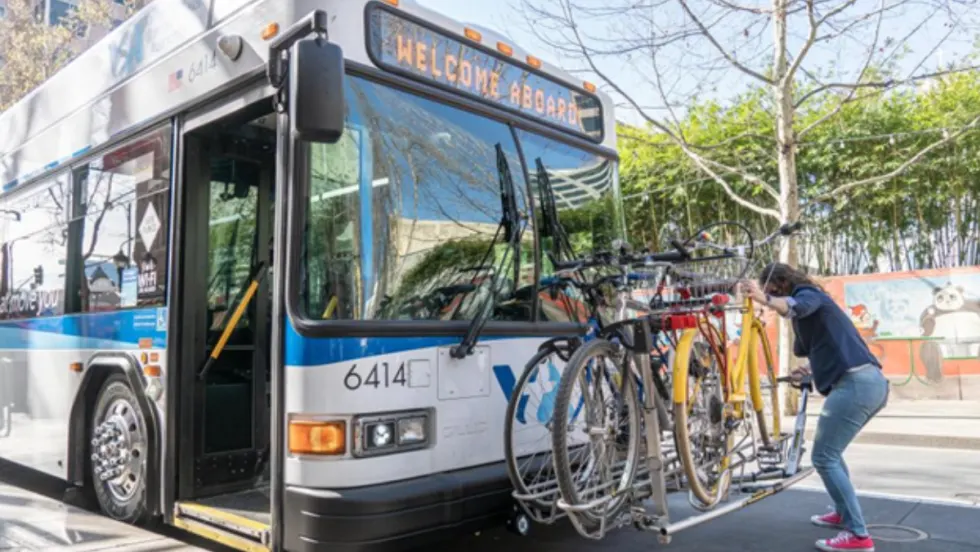
What Multimodal Data Can Tell Transit Agencies About Rider Demand
See how bike-on-bus data is giving transit agencies new insight into rider demand, capacity constraints, and gaps in first- and last-mile connections.
Read More →
From Hardware to Digital Partner: Luminator Charts Its Next Chapter
CEO Magnus Friberg discusses Luminator’s shift toward becoming a digital partner, the growing importance of software and interoperability, and how AI can help agencies improve operations and passenger experience.
Read More →
Biz Briefs: Alstom Lands Canadian Contract, LYT to Supply California TSP, and More
In METRO's latest installment, we take a look at recent news from Complete Coach Works, Beep, FlixBus, and more partnerships making headlines across the transportation sector.
Read More →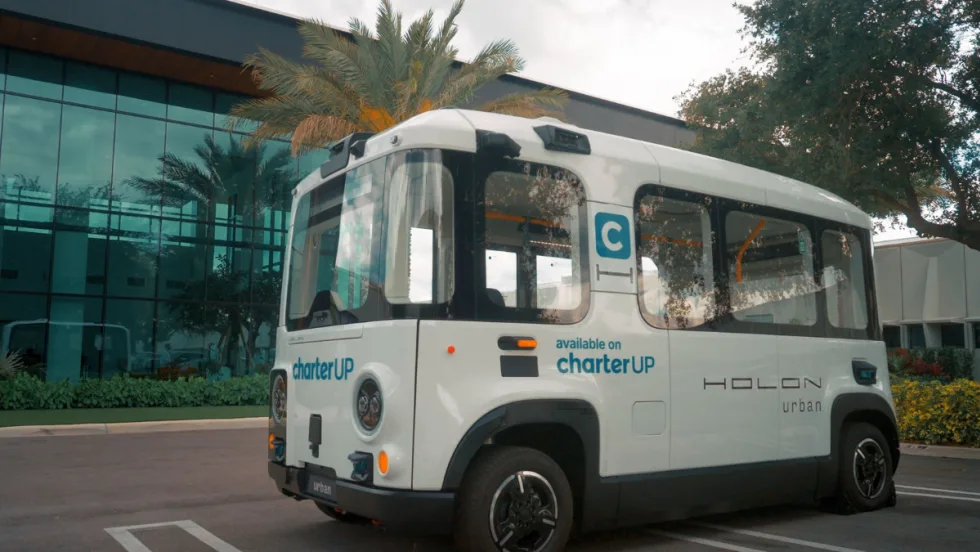
CharterUP’s Armir Harris on Technology, AI, and the Future of Group Mobility
In a recent episode of METROspectives, CharterUP Founder/CEO Armir Harris discussed the company’s evolution from an online charter bus marketplace into a technology platform supporting public- and private-sector mobility and much more.
Read More →
Jacksonville’s NAVI Project Charts a New Course for Autonomous Public Transportation
Through its NAVI program, JTA is showing how autonomous vehicles, intelligent infrastructure, and coordinated operations can work together to deliver everyday public transportation.
Read More →
Biz Briefs: Luminator Marks Milestone and More
From manufacturers and suppliers to transit agencies and motorcoach operators, these updates offer a snapshot of the projects, partnerships and business moves driving the industry forward.
Read More →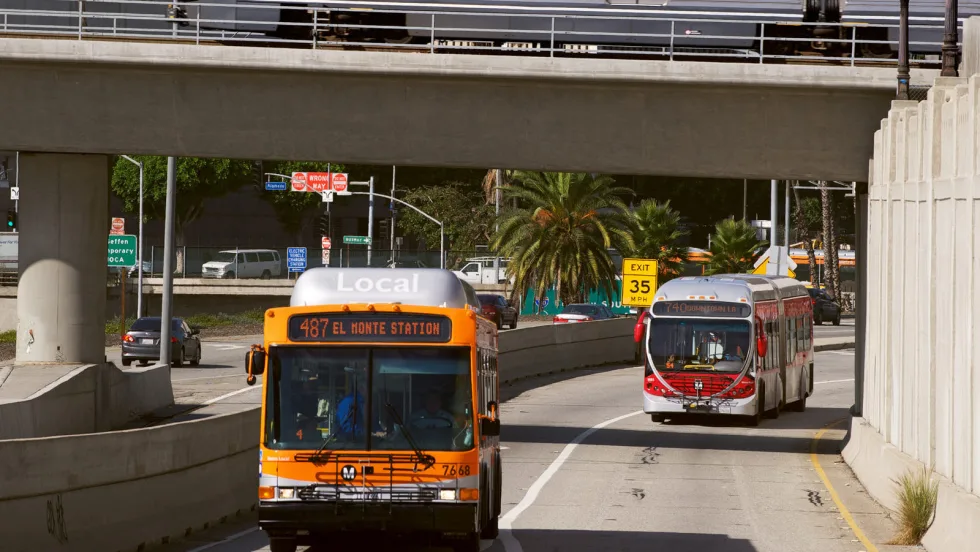
New Tricks for Old Bureaucracies: Joshua Schank on Making Transit Innovation Stick
Former LA Metro Chief Innovation Officer Joshua Schank discusses why good ideas aren't enough, how transit agencies can overcome resistance to change, and why today's challenges demand more innovation.
Read More →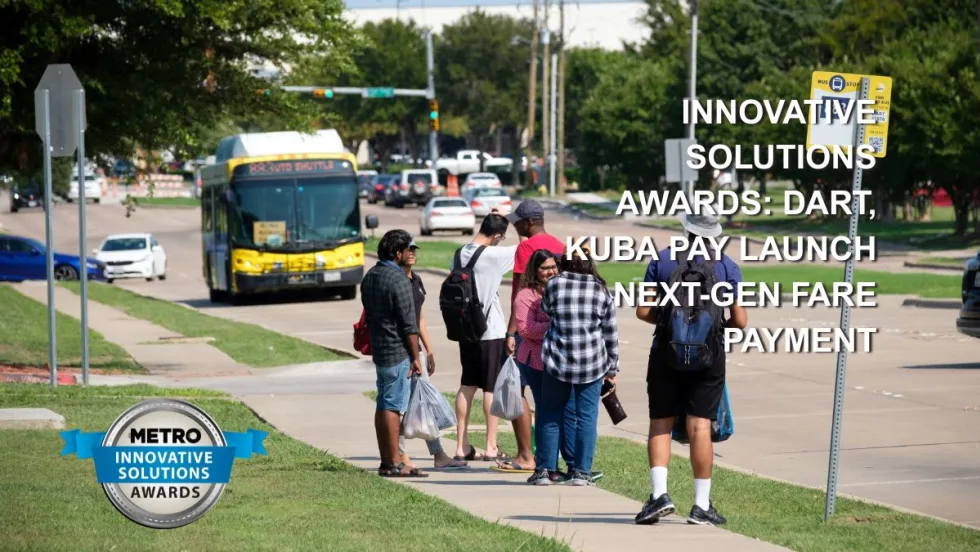
How DART's GoPass Is Redefining Regional Mobility
Serving 14 transit agencies, GoPass simplifies multimodal travel by allowing riders to plan, pay for, and manage an entire trip through one app.
Read More →