



Inside EVaaS: A New Model for Airport Fleet Electrification
Sustainability Partners’ Arnold Albiar discusses how a service-based approach is helping airports and public agencies deploy and manage electric fleets more efficiently.


According to Sustainability Partners, the EVaaS approach bundles vehicle procurement, customization, charging infrastructure coordination, and ongoing maintenance into a single, scalable solution, helping public agencies reduce upfront costs, simplify implementation, and ensure long-term operational reliability.
METRO
- Arnold Albiar from Sustainability Partners explains how a service-based model is enhancing the deployment of electric vehicle fleets at airports.
- This new Electric Vehicle as a Service (EVaaS) approach aids airports and public agencies in managing electric fleets more effectively.
- The strategy focuses on improving operational efficiency and sustainability in airport fleet electrification initiatives.
*Summarized by AI
As airports and public agencies accelerate their transition to zero-emission transportation, innovative delivery models are emerging to help overcome the financial and operational challenges of fleet electrification.
At Honolulu’s Daniel K. Inouye International Airport, Sustainability Partners recently supported the deployment of three electric trams for the Wiki Wiki Shuttle. This intra-airport service moves thousands of passengers daily between terminals and concourses.
Delivered through Sustainability Partners’ Electric Vehicles as a Service (EVaaS) model, the project replaces older, higher-emission vehicles with quieter, more energy-efficient electric units while enhancing the passenger experience.
According to Sustainability Partners, the EVaaS approach bundles vehicle procurement, customization, charging infrastructure coordination, and ongoing maintenance into a single, scalable solution, helping public agencies reduce upfront costs, simplify implementation, and ensure long-term operational reliability.
As part of Hawai‘i’s broader push toward fleet electrification, the project also reflects a growing shift toward programmatic, service-based approaches that allow agencies to scale sustainable transportation initiatives more efficiently.
METRO spoke with Arnold Albiar, managing partner for Hawai‘i at Sustainability Partners, about the deployment, the benefits of the EVaaS model, and how this approach is helping public agencies move forward with electrification while maintaining reliable, day-to-day operations.
About the EVaaS Model and HNL
What does Sustainability Partners’ EVaaS model cover for HNL beyond vehicle delivery?
Sustainability Partners’ EVaaS model delivers a fully bundled infrastructure solution rather than a one-time vehicle purchase. At Daniel K. Inouye International Airport, this includes the electric trams, infrastructure, deployment, training, and ongoing maintenance support to ensure the fleet remains safe, reliable, and performs over time.
EVaaS integrates assets and long-term support into a single package. This allows the airport to focus on passenger mobility and operations, while we provide the underlying infrastructure.
How does EVaaS reduce complexity or risk for public agencies, such as airports?
Sustainability Partners’ model helps public agencies overcome procurement hurdles, capital constraints, and long asset planning cycles. EVaaS simplifies implementation by providing a single solution hub, a quarterback, if you will, bringing together design, construction, OEM coordination, charging systems, and ongoing maintenance under one agreement.
Rather than managing separate contracts with consulting firms, general contractors, engineering firms, equipment providers, and service partners, airports can work with a single partner responsible for delivery and long-term performance. This unified structure reduces administrative burden, limits finger-pointing between vendors, and streamlines communication throughout the project lifecycle.
For airports managing aging fleets, evolving sustainability mandates, and passenger growth, this approach reduces financial uncertainty, enhances operational performance, and strengthens accountability from day one.
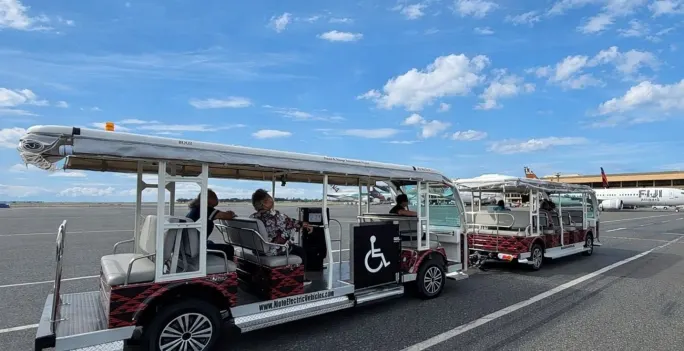
Delivered through Sustainability Partners’ Electric Vehicles as a Service model, the project replaces older, higher-emission vehicles with quieter, more energy-efficient electric units while enhancing the passenger experience.
Sustainability Partners
The Ongoing Partnership and Scalability
What ongoing maintenance, performance monitoring, or lifecycle support is included?
The EVaaS structure ensures vehicles remain operationally dependable and service-ready by facilitating maintenance, repairs, and support, and aligning and maximizing charging infrastructure with performance requirements.
Rather than viewing the trams as a static purchase, the model supports continuous performance and reliability, with planned upgrades over time. This helps avoid deferred maintenance issues and unexpected large capital expenditures that often occur with traditionally procured fleets.
How scalable is this model for other airports or larger transit fleets?
The model is highly scalable and adaptable across a wide range of fleet types and operating environments. EVaaS can support everything from airport shuttle trams and parking transport vehicles to electric buses, vans, light-duty and heavy-duty service vehicles, maintenance fleets, and other specialized transit equipment.
Because EVaaS integrates vehicles, charging infrastructure, and long-term support, it can be tailored to small closed-loop systems like the Wiki Wiki Shuttle or expanded to serve larger municipal transit fleets, regional airport systems, university campuses, ports, and other public-sector mobility networks. The model is designed to grow alongside operational needs, whether that means adding new vehicle classes, expanding charging capacity, or modernizing additional fleet segments over time.
Quick Answers
EVaaS stands for Electric Vehicles as a Service, which is a service-based approach to deploying and managing electric vehicle fleets at airports and other public agencies.
*Summarized by AI
More Zero Emissions

Report: Transit Bus Manufacturing Supports 34,100 Jobs, $5.1B in GDP
The “Buses Mean Business” report examines the transit bus manufacturing industry’s economic footprint, supply chain, and rising demand for vehicle replacements.
Read More →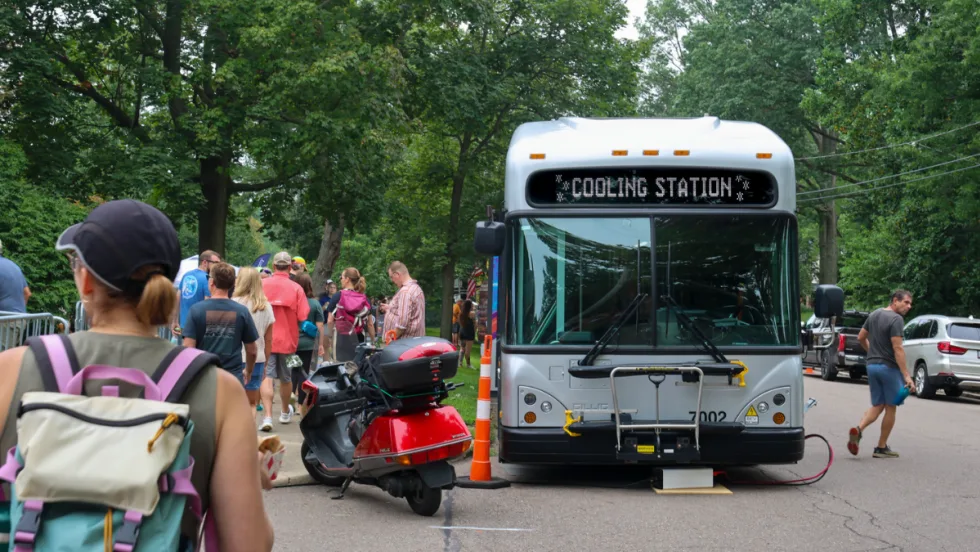
Ohio’s METRO RTA Turns Electric Buses into Mobile Power Sources at PorchROKR
See how three Gillig battery-electric buses powered festival stages while the agency’s new Park & Ride service carried approximately 1,000 attendees, demonstrating another potential use for transit agencies’ electric fleets.
Read More →
CALSTART and Forth Combine to Form Catalyst Mobility
The new name represents a renewed vision for the nonprofit focused on advancing clean, equitable, and affordable transportation solutions that move people and goods.
Read More →
Building a Flexible Path to Transit Electrification
John Hroncich discusses BAE Systems’ modular and scalable approach, lessons learned from decades of real-world operations, and how agencies can identify electrification strategies that fit their fleets.
Read More →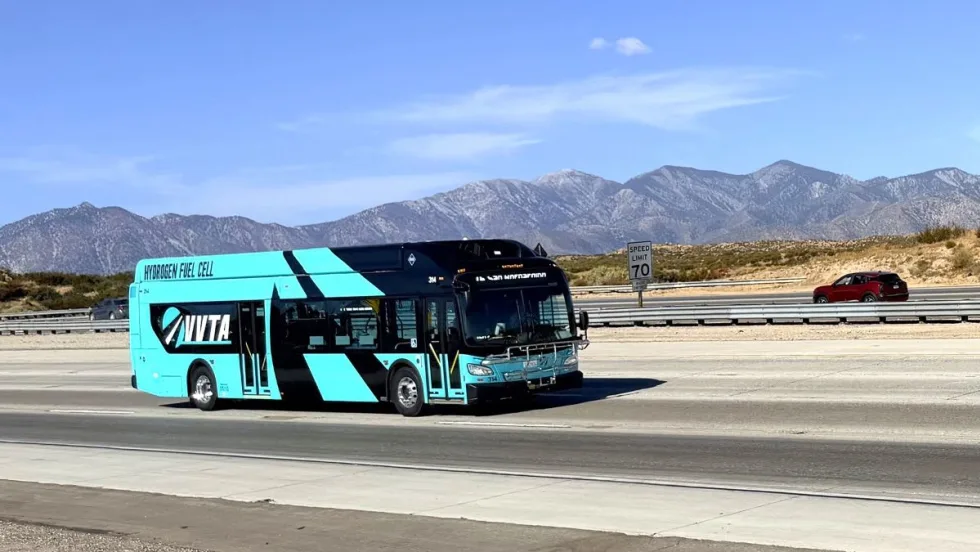
California's VVTA Begins Phased Rollout of Hydrogen Fuel Cell Buses
The agency is introducing 13 zero-emission buses into revenue service while evaluating performance across its urban, rural, and long-distance routes.
Read More →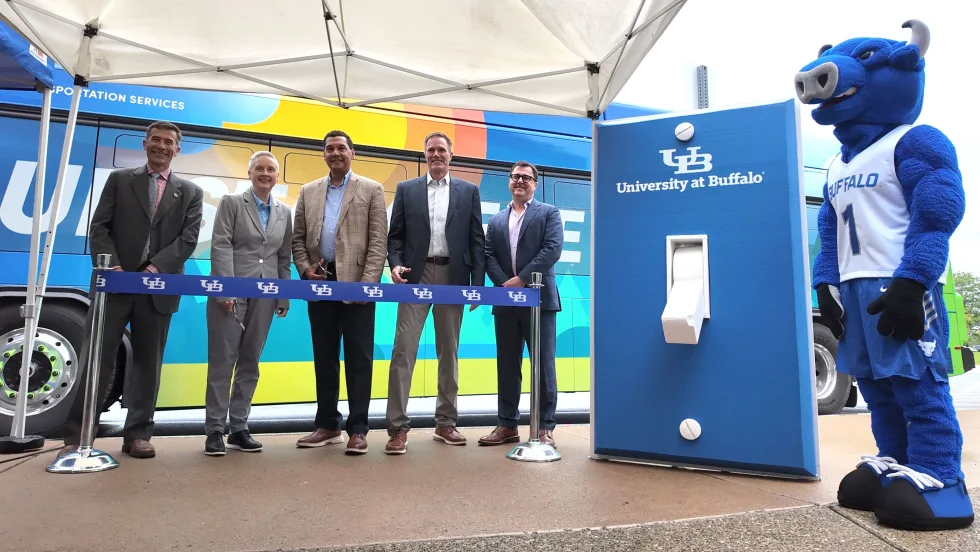
Inside Look: University at Buffalo Puts First 8 Electric Buses Into Stampede Service
UB, transportation solutions provider WeDriveU, and fleet electrification specialist Zenobē marked the deployment in the presence of students, university administrators, and local officials.
Read More →
Biz Briefs: OCTA Taps Clean Energy for Hydrogen Station, Stadler to Supply Via Rail Vehicles, and More
From manufacturers and suppliers to transit agencies and motorcoach operators, these updates offer a snapshot of the projects, partnerships and business moves driving the industry forward.
Read More →
AC Transit’s Cecil Blandon on Building the Next Generation of Transit Maintenance Leaders
The agency’s maintenance chief discusses leadership, workforce development, zero-emission technology, and preparing technicians for the future of public transportation.
Read More →
CTDOT Taps STV for Electric Bus Facility Design
The firm will work with CTDOT and RVT to define the facility layout, operational requirements, and long-term flexibility for RVT’s growing electric fleet.
Read More →
Chicago’s Pace Deploys 24 Hybrid-Electric Buses in Will County
The new buses reduce emissions and fuel consumption while advancing the agency's long-term goal of transitioning to a fully zero-emission fleet.
Read More →