



Riverside Transit tests hydraulic hybrid system
RTA's ElDorado National vehicle is being used to test Eaton's hydraulic hybrid system, which was installed by Riverside, Calif.-based Complete Coach Works.
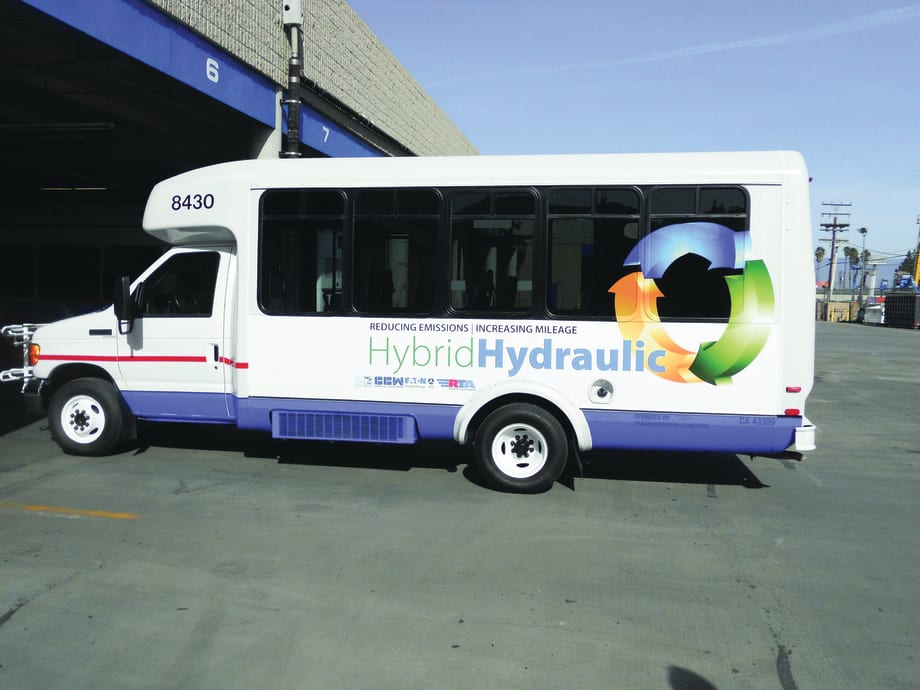
RTA began work in earnest on the project last spring, following nearly three years of collaborating with hydraulic manufacturer Eaton Corp.
Recently, the Calif.-based Riverside Transit Agency (RTA) rolled out a hydraulic hybrid system aboard a 12-seat vehicle that harnesses energy during the braking process to propel the vehicle when it accelerates, resulting in less brake maintenance, reduced operating costs, better fuel economy and fewer harmful emissions.
RTA began work in earnest on the project last spring, following nearly three years of collaborating with hydraulic manufacturer Eaton Corp.
"In regular stop-and-go traffic, when you take your foot off the throttle, the vehicle will slow very quickly and, when you're ready to accelerate, you don't have to put a lot of pressure on the pedal; you just hit it and it's ready to go," said Bob Bach, director of maintenance.
RTA began work in earnest on the project last spring, following nearly three years of collaborating with hydraulic manufacturer Eaton Corp. The installation of the Eaton test unit, which is placed right behind the transmission of an ElDorado National vehicle, was conducted by the Riverside-based bus remanufacturing and retrofit company Complete Coach Works — the company which previously refurbished RTA's trolleys.
"As part of our piece of the pie here, we have to supply a vehicle and report information on the vehicle monthly, whether it's fuel mileage, number of miles run, maintenance difficulties, so on and so forth," Bach said. "The concept has been around for a long time, bus this is one of Eaton's first tests outside of the military."
Eaton is using RTA's test bus in an at-tempt to find out if it is financially feasible to put the solution onto a vehicle and get a beneficial cost of return on it, as well as how much will be saved in emissions, fuel and brake wear. The group also partnered with nearby University of California, Riverside, to conduct testing before, during and after implementation of the hydraulic hybrid system.
"RTA is always exploring new and innovative ways to deliver our service," said RTA Chairman of the Board Bob Buster. "This particular project is the result of RTA's commitment to pushing the limits of technology and making a real difference in terms of reducing harmful emissions."
The bus, which will operate on various routes, was made possible by Congressman Ken Calvert (R-CA), who endorsed a funding request by CALSTART, a California-based clean transportation consortium, for nearly $500,000 in Federal Transit Administration and South Coast Air Quality Management District funding.
Following the one-year test of the bus, RTA will remove the Eaton system and return the vehicle back to normal, with the company supplying the agency with a report of the test results, explained Bach.
"If the technology proves to be something that we find to be valuable, it is possible it could potentially spread to the rest of our fleet," said Bach. "It is quite possible that once you retire the vehicle, you can take this unit off and install it on the next new vehicle. To me, that would really make sense for our return on investment."
This recent test adds to RTA's long alternative-fuel history.
In 1988, prior to today's laws that regulate bus emissions, RTA was among the first transit systems in the nation to operate low-emission methanol buses, including the installation of a separate fueling system for alternative clean fuels when RTA's Riverside headquarters was built in 1986.
Additionally, in 2001, the agency re-placed its entire fleet of diesel buses with compressed natural gas buses.
More Bus

People Movement: Dan Dipert Coaches Adds Third-Generation Leader, Keolis Names New Valley Metro VP/GM, and More
In this edition, we also cover recent appointments and announcements at the Wabtec, SilverRide, HNTB, and more, showcasing the individuals helping to shape the future of transportation.
Read More →
New York MTA Plans Largest Bus Fleet Upgrade in More Than a Decade
The agency is seeking manufacturers for 650 new CNG buses to replace aging vehicles, improve reliability, and advance its broader fleet modernization strategy.
Read More →
Building a Flexible Path to Transit Electrification
John Hroncich discusses BAE Systems’ modular and scalable approach, lessons learned from decades of real-world operations, and how agencies can identify electrification strategies that fit their fleets.
Read More →
Bus Tech Talk: Keeping Transit Technicians Ahead of the Technology Curve
LA Metro’s Obed Mejia discusses technician training, evolving maintenance technology, fleet replacement, and strategies for getting the most out of today’s transit fleets.
Read More →
Biz Briefs: RIPTA Unveils New Frontrunners, Clevland RTA Adds New Siemens, and More
In METRO's latest installment, we take a look at recent news from Siemens, Prevost, Dodge, and more partnerships making headlines across the transportation sector.
Read More →
People Movement: Holly Arnold Joins Transdev and More
In this edition, we also cover recent appointments and announcements at Pace, CamTran, MCI, and more, showcasing the individuals helping to shape the future of transportation.
Read More →
The High Cost of Transit Buses: Industry Leaders Look to Procurement Reform
Transit leaders and policymakers examine how standardized bus designs, streamlined procurement, and predictable funding could help agencies stretch budgets and deliver better service.
Read More →
The Business Voice Behind Public Transportation
As chair of APTA’s Business Members Board of Governors, Ray Melleady explains how more than 850 business members are partnering with transit agencies to advance funding, innovation, and industry-wide collaboration.
Read More →
From Surviving to Thriving: Building Stronger Transportation Organizations
Bus Business Consultants founder Brian Dickson shares lessons on leadership, organizational health, and creating options for long-term success in a changing transportation industry.
Read More →
Finding the ‘Happy Medium’: Optimizing Maintenance Without Sacrificing Reliability
The key to maintenance optimization isn’t doing less work—it’s doing the right work at the right time on the right assets.
Read More →