



Related: How Transit Agencies Can Stay on Track with Cyber Security
Simple Cyber Security Steps for Your Fleet Operation
The Department of Homeland Security provides a free, well-crafted tool-kit designed to fully inform your team about myriad cyber security issues ranging from social media and using public WiFi, to scam tactics and phishing.
by Donald Luey
September 29, 2017
4 min to read

How do you inspire mistrust of the Internet when your colleagues routinely ask it to pay their bills, deliver groceries, and check in on their mom? The bottom line is you can’t, or at least to do so might become counter-productive as we need innovative ideas to move our agencies forward, not cynicism and fear. But in the face of increasingly damaging ransom ware and phishing attacks, how do we safeguard our vital data vaults from the innocent employee mis-click or well-disguised but malicious lures? This is one place where building a proper wall not only makes sense, but doesn’t cost much and won’t significantly inhibit the workflow of your team.
Awareness Reform
The first part of this wall does require a bit of awareness reform. Assumptions about the safety of certain links and files need to be upended, and then replaced with a better understanding of how to identify threats independently. If the end user is the weakest link in your security grid, then building up the end user’s defenses makes a lot of sense.
We did this at Foothill Transit by piggybacking on National Cyber Security Awareness Month, which is every October. The Department of Homeland Security provides a free, well-crafted tool-kit designed to fully inform your team about myriad cyber security issues ranging from social media and using public WiFi, to scam tactics, and phishing. Supplementing regular email tutorials with face-to-face Q&A sessions can drive home the good habits you need people to emulate.
Safeguarding Access
Safeguarding access to the network comes next. Usually entry is governed by a user ID and a password, with the password usually created by the end user. If it’s just one word or a name, it only takes a hacker 1.37 milliseconds to breach it, less, if the word is only one or two syllables. If the word is intentionally misspelled, add nine minutes. Add a capital letter? Now we start to see some traction. A capital letter on a three-syllable word can take a month to breach. Add a number and you start getting into years. Add a symbol like “!” or “@” and the predictions get into decades or even centuries, but we can expect those estimated times to reduce significantly over time as hackers get more savvy and as technology evolves. The point being that right now in 2017, requiring end users to complicate their passwords by just a couple of symbols can create a nearly impenetrable barrier at what is potentially a serious weak point. The cost? A few emails, maybe some well-written protocols and policies, and a little creativity.
The Department of Homeland Security provides a free, well-crafted tool-kit designed to fully inform your team about myriad cyber security issues ranging from social media and using public WiFi, to scam tactics and phishing.
Authentication
In the end though, relying entirely on your end user to buy into policies and procedures still leaves a few gaping holes. Human error and routine being what it is, it makes sense to install another form of authentication outside of end user control that narrows network access even further. At Foothill Transit, this came in the form of randomly generated codes with a short shelf life. Codes could be accessed on a small key ring fob or via an app on a cell phone, only last 60 seconds, and are required prior to entering a personal password. This coded entry point is the gate before the gate, and self-destructs if not used in time. Team members with direct server access add another layer of authentication in the form of a PIN.
All of this adds up to, what we hope, is an unbreachable network — at least for now. In a few months it’s entirely possible that one or all of these tips will be upended and new tactics will have to be employed. In which case keeping isolated in the server room can cripple you as easily as a bad email link. Staying on top of this constant evolution, in the form of training, conference attendance, and sharing strategies and ideas with other security minded professionals isn’t optional and should be baked into your team’s culture and workflow. This can be difficult when the helpdesk piles up. Network wellness is only as robust as the people working it, so make sure you’re paying attention to their needs as well as the network’s.
Donald Luey is the IT Director for Foothill Transit.
Subscribe to Our Newsletter
More Security and Safety

Transit Agencies Highlight Safety Gains at National Summit
Leaders from 15 major transit systems shared crime-reduction results and safety initiatives while discussing the role of continued federal support.
Read More →
DART Launches Major Security, Fare Enforcement Initiative
The 90-day demonstration will deploy coordinated security teams at five light rail stations while testing controlled access and gathering data to guide future investments.
Read More →
RTD Launches NextRide App to Consolidate Trip Planning, Fares, Security Reporting
The app expands on RTD’s existing NextRide web application and allows customers to view real-time vehicle locations and service alerts, purchase and store digital fares, and access customer support.
Read More →

TAPTCO Updates OSHA Compliance Training for Transit Maintenance Operations
The revamped program addresses 26 OSHA standards for maintenance facilities, with TAPTCO pointing to training, documentation, and everyday shop hazards as continuing challenges for transit operations.
Read More →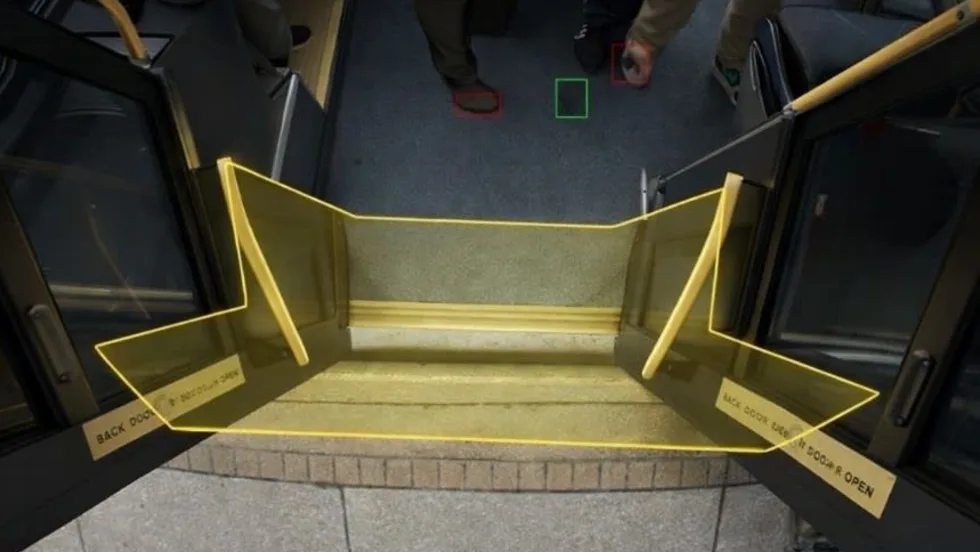
Sponsored•August 18, 2026
How VaporVision Adds Value to Transit Door Systems
Wabtec engineers explain how the system improves doorway detection, strengthens diagnostics and gives transit agencies and OEMs greater operating flexibility.
Read More →
FRA Announces $5.3B in Rail Investments, Including $2B for Amtrak
Funding will support grade-crossing improvements, infrastructure upgrades, and new Amtrak equipment in 23 states.
Read More →
Chicago, Maryland Expand Non-Law-Enforcement Safety, Rider Support
The CTA and MTA are launching new programs aimed at de-escalation, crisis response, rider assistance, and greater transparency.
Read More →
LA Metro, City of West Hollywood, and Partners Advance Smarter Bus Lane Enforcement
The award-winning partnership combines AI-powered detection with human oversight to improve bus reliability, accessibility, and enforcement efficiency.
Read More →
LA Metro Reports 57% Decline in Homelessness on Transit System Since 2024
The agency's latest homelessness count offers new data on how care-based services and cross-sector partnerships can complement traditional transit security strategies.
Read More →
FTA Launches 'Transit Moves America' Dashboard to Highlight Agency Safety and Performance
The online dashboard transforms National Transit Database information into a public-facing resource that allows users to compare transit agencies on key operational and safety metrics.
Read More →