



Spotlight: Bentech meets range of public transit needs with specialized products
Bentech has worked with Bombardier to create aluminum attachment fittings for Toronto Transit Commission railcars being assembled at its Thunder Bay, Ontario plant and several transit agencies on driver's protection doors.
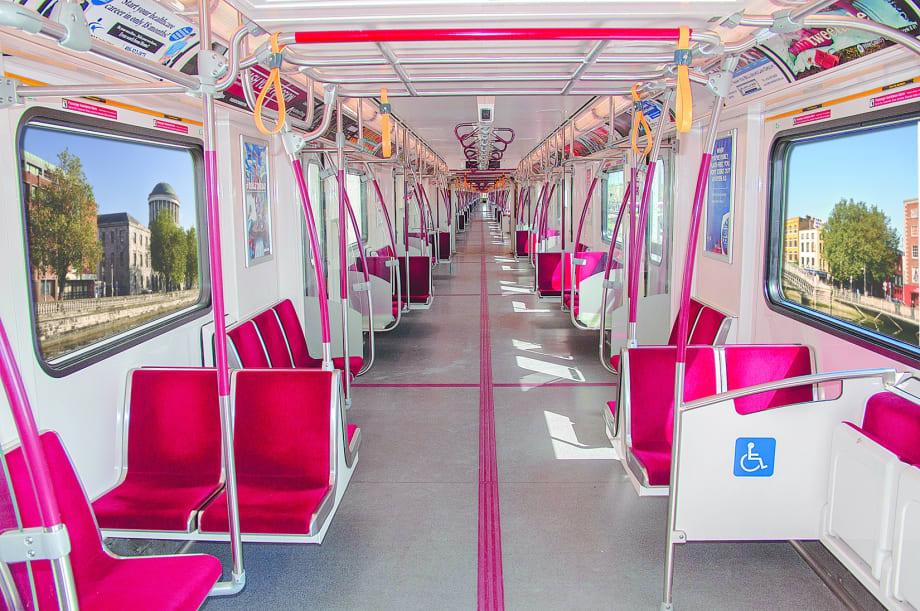
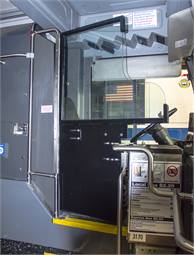
Started as a division of The Philadelphia Pipe Bending Co. in 1985, Bentech designs and manufactures products for the bus, passenger railcar and marine industries. In the public transportation sector, the company has been working on several projects, including driver’s protection doors, handrail assemblies, passenger impact-protecting safety tubing and passenger-assist strap hangers.
Driver’s protection doors
A couple of years ago, the Metropolitan Transportation Authority’s New York City Transit (NYCT) tapped Bentech to prototype several driver’s protection doors, which are now being put into production to retrofit its entire fleet of buses as well as any new buses NYCT adds to its fleet.
“Our product is different than other styles out on the market,” Robert Benninghoff, engineering and sales, Bentech, says. “Usually we build the aluminum frame welded to aluminum sheet metal with a glass top that acts as the protective door. We’ve been looking at different materials, including a coated polycarbonate glass developed by Extech Inc., which gives scratch-resistance to the glazing material, so it basically won’t get scuffed up after a short period of time. You want to get about five to 10 years of life out of the glazing.”
From its work with NYCT, Bentech began to work to create driver’s protection doors as part of a pilot program, with several agencies, including the Milwaukee County Transit System, moving those designs into production to retrofit their bus fleets. Benninghoff says that each driver’s door design requires a certain amount of customization.
“The door has to fit in a space between where the driver sits and the area just behind the driver and the farebox, which is really unique to each transit authority because they have different fareboxes or fare collection methodologies,” he explains. “Several, like Brampton Transit in Ontario, Canada, also have fare readers in the area of the farebox for smart cards. So, each challenge has to be accounted for in the design of the door.”
Benninghoff adds the company has received positive feedback from its customers, including New Jersey Transit and the Kansas City Area Transportation Authority, who say they the doors are extremely effective and durable.
Railcar interiors
For several years, Bentech worked closely with Bombardier Transportation at its Thunder Bay, Ontario plant where it designed a series of aluminum attachment fittings for railcars being built for the Toronto Transit Commission (TTC).
“There were about 15 different styles of attachment fittings being developed throughout the railcars,” Benninghoff says. “The TTC wanted all the attachment fittings to be load tested to make sure they would withstand at least 400 pounds of force.”
To do that work, Bentech developed a series of tests with the University of Pennsylvania’s Mechanical Testing Lab. Bentech and the university also worked together to develop load testing for the actual handrail materials Bombardier was developing for the railcars.
“[Industry standards] determined the handrail has to withstand 300 pounds of load force at the mid-point of the handrail,” Benninghoff explains. “Up until the last few years, the size and thickness of the tubing was all done by calculation, and through our work with the university, we found those calculations to be extremely conservative. Our tests found that you only need half the wall thickness of the handrail material versus the calculations that were being conducted, and Bombardier was really happy with that because it allowed them to save 50 percent on the cost of materials.”
Bentech is also developing new fittings for the Oakland, Calif.-based Bay Area Rapid Transit District’s (BART) new “railcars of the future” being developed by Bombardier. Bentech acquired a 3-D prototyping machine to create new fittings for the railcars.
“BART didn’t want to go with their old design. They wanted something more functional than what they had previously,” Benninghoff says. “They are looking to have these newly designed handrails performance and load-tested. Right now we’re working with Bombardier on a functional test to show that essentially the whole thing will hold together once you start loading the handrails with people.”
Bombardier expects to begin delivering the first 10 pilot railcars with the Bentech fittings next year, with BART planning on purchasing 1,000 railcars over the next 10 years.
More Bus

New York MTA Plans Largest Bus Fleet Upgrade in More Than a Decade
The agency is seeking manufacturers for 650 new CNG buses to replace aging vehicles, improve reliability, and advance its broader fleet modernization strategy.
Read More →
Building a Flexible Path to Transit Electrification
John Hroncich discusses BAE Systems’ modular and scalable approach, lessons learned from decades of real-world operations, and how agencies can identify electrification strategies that fit their fleets.
Read More →
Bus Tech Talk: Keeping Transit Technicians Ahead of the Technology Curve
LA Metro’s Obed Mejia discusses technician training, evolving maintenance technology, fleet replacement, and strategies for getting the most out of today’s transit fleets.
Read More →
Biz Briefs: RIPTA Unveils New Frontrunners, Clevland RTA Adds New Siemens, and More
In METRO's latest installment, we take a look at recent news from Siemens, Prevost, Dodge, and more partnerships making headlines across the transportation sector.
Read More →
People Movement: Holly Arnold Joins Transdev and More
In this edition, we also cover recent appointments and announcements at Pace, CamTran, MCI, and more, showcasing the individuals helping to shape the future of transportation.
Read More →
The High Cost of Transit Buses: Industry Leaders Look to Procurement Reform
Transit leaders and policymakers examine how standardized bus designs, streamlined procurement, and predictable funding could help agencies stretch budgets and deliver better service.
Read More →
The Business Voice Behind Public Transportation
As chair of APTA’s Business Members Board of Governors, Ray Melleady explains how more than 850 business members are partnering with transit agencies to advance funding, innovation, and industry-wide collaboration.
Read More →
From Surviving to Thriving: Building Stronger Transportation Organizations
Bus Business Consultants founder Brian Dickson shares lessons on leadership, organizational health, and creating options for long-term success in a changing transportation industry.
Read More →
Finding the ‘Happy Medium’: Optimizing Maintenance Without Sacrificing Reliability
The key to maintenance optimization isn’t doing less work—it’s doing the right work at the right time on the right assets.
Read More →
LA Metro, City of West Hollywood, and Partners Advance Smarter Bus Lane Enforcement
The award-winning partnership combines AI-powered detection with human oversight to improve bus reliability, accessibility, and enforcement efficiency.
Read More →