



'Summit' shows national interests
The Washington, D.C. "summit" organized by the Community Streetcar Coalition this past March reflected the interest of federal policy-makers as well as local officials and industry leaders in taking urban transportation in a new direction.
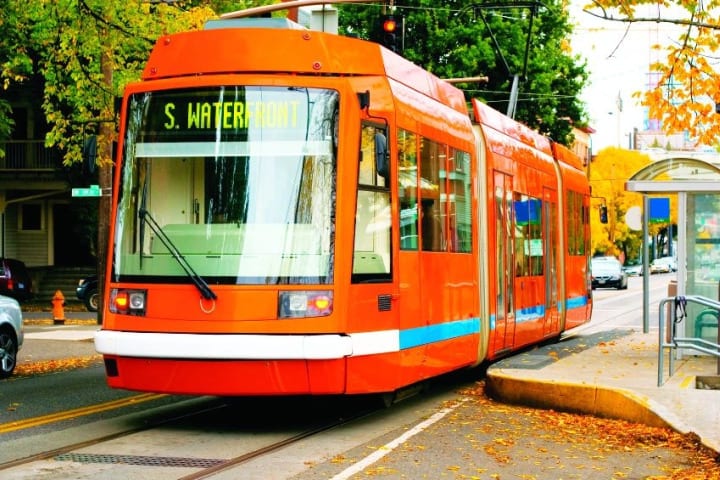
[IMAGE]BTR.jpg[/IMAGE]The Washington, D.C. "summit" organized by the Community Streetcar Coalition this past March reflected the interest of federal policy-makers as well as local officials and industry leaders in taking urban transportation in a new direction. It was attended by officials from 24 streetcar project cities and leaders from both the private sector and industry associations.
As another index of the growing popularity of streetcars, FTA Administrator Peter Rogoff pointed out the nearly seven-to-one oversubscription ratio of the Urban Circulator program launched this past winter ($890 million in applications for $130 million in available funding). By the time you read this, awards in this program should have been announced, but an equal or even larger second round will have been or will soon be put forward.
Streetcar projects popular
Portland was recently awarded a TIGER grant for its project, which involves additional buildout of the city's streetcar network and the creation of a U.S.-based streetcar industry.
This program is remarkable in that it spreads the money around to a large number of cities, because it is governed by the "exempt" category of federal New Starts policy: a maximum grant size of $25 million, with NEPA and simple evaluation criteria.
This, and the Secretary of Transportation's handling of the Transportation Investments Generating Economic Recovery (TIGER) grant process in the wake of the stimulus bill, provides a window to the popularity of streetcars in President Obama's administration as well. This is particularly true since the TIGER grant evaluation process was "very handmade," meaning a work in progress, according to the point man on the TIGER program, Roy Kienitz, under secretary for policy, at the U.S. Department of Transportation. He says it will also be so for another round of TIGER grants that are expected soon, as well as a successor program enacted by Congress last year called the National Infrastructure Investment (NII) program. In all three, Kienitz says that "what we tried to do was make a 'meaningful difference' to the project going forward or not," and not necessarily the most meritorious project in terms of strict evaluation criteria.
Thus, TIGER grants were awarded to projects in Tucson, Ariz. and Dallas, as well as one to Portland involving additional buildout of that city's streetcar network and the creation of a U.S.-based streetcar industry.
As with Urban Circulator and TIGER grants, the size of awards will be small and targeted. "There will likely be no $100 million grants," Kienitz believes. In fact, they are more likely to be around the Urban Circulator size ($25 million), and they must be ready to go. "Dirt must turn," Kienitz says.
The follow-up program to TIGER (NII) also contains a $35 million planning grant program, rules for which were just issued. Also announced was an advance notice of funding availability for a companion program at the Department of Housing and Urban Development (HUD). This and HUD's support for streetcars and other transit oriented development projects will be the subject of a future column.
Policy corner turned?
However, it appears that a corner has been turned on connecting urban and transportation policies, and streetcars figure prominently in that turning. "This administration is well aware that 80 percent of population and 70 percent of GDP is in cities," says David Agnew, an official at the White House Office of Urban Affairs. To that end, the administration will be looking at other supportive policies than the ones already announced beyond the Livable Communities Initiative that has been previously discussed here. Ultimately, they are looking at making that initiative's working relationship between HUD, DOT and the Environmental Protection Agency a permanent one, and will have additional announcements later on this subject.
More Rail

Strada360’s Steve Lassey on Turning Transit Data Into Better Decisions
From breaking down data silos to preparing for AI, Strada360 CEO Steve Lassey discusses how transit agencies can use technology to improve operations, customer information, and long-term decision-making.
Read More →
SEPTA Details Accelerate Vision for Transit System
The plan outlines investments in trolley modernization, new Metro and Regional Rail vehicles, accessible stations, and more frequent bus and rail service.
Read More →
FTA Ends Direct Oversight of MBTA Safety Actions
The federal agency closed its remaining special directive to the Massachusetts Department of Public Utilities following a safety review that began in 2022.
Read More →
Amtrak, CN Reach Agreements to Strengthen Passenger Rail Service, Safety
The agreement resolves a more than decade-long proceeding before the Surface Transportation Board concerning the terms and conditions for Amtrak services, such as the City of New Orleans, Illini/Saluki, and Wolverine.
Read More →
New York MTA Advances Final Contract for Second Avenue Subway Expansion
Contract Four is the largest in the Second Avenue Subway Phase 2 project and includes construction of station infrastructure, tracks, and signals for the subway expansion, MTA officials said. Work on Contract Four will begin in 2027.
Read More →
San Diego MTS Breaks Monthly Trolley Ridership Record
Agency officials said July’s ridership indicates MTS’s continued recovery from the pandemic.
Read More →
Report Examines NJ TRANSIT Reliability, Funding Challenges
The Garden State Initiative analysis examines the roles of Amtrak infrastructure, fleet management, and agency operations while recommending a more performance-based approach to improving reliability.
Read More →
Stadler, CapMetro Sign Long-Term Rail Fleet Support Agreement
Beginning in 2027, Stadler will provide on-site technical expertise, spare parts support, training, and obsolescence management to help extend the reliability and longevity of CapMetro’s GTW fleet.
Read More →
Biz Briefs: Alstom Lands Canadian Contract, LYT to Supply California TSP, and More
In METRO's latest installment, we take a look at recent news from Complete Coach Works, Beep, FlixBus, and more partnerships making headlines across the transportation sector.
Read More →
CATS Gold Line Marks 5 Years of Service, 2.8M Passenger Trips
With a six-mile expansion planned, the Charlotte streetcar is positioned to connect more neighborhoods and major transit hubs across the region.
Read More →