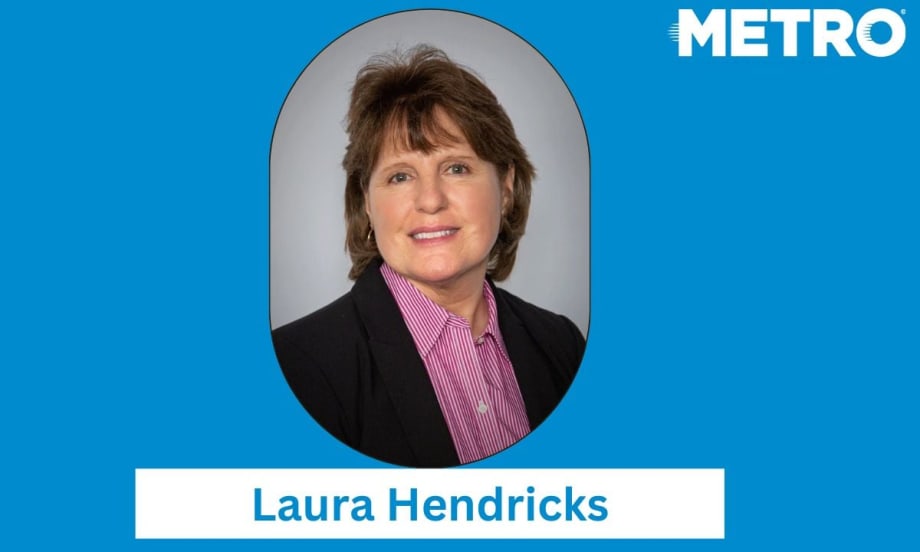
As CEO for Transdev U.S., Laura Hendricks is responsible for all Transdev activities and operations in the U.S.
Photo: Transdev
4 min to read
Laura Hendricks came to Transdev in 2019, where she now serves as CEO of its US division, with a diverse background of experience that includes executive leadership roles at Paint Drop, Coach America, and Cintas, as well as at FedEx.
She says starting out in the service industry more than helped prepare her for her life now in public transit.
Ad Loading...
“If you think about what we do to make a difference in the lives of others and transporting individuals to essential services, my time in the service industry helped tremendously,” she says. “My experience allowed me to bring what I learned in the past and bring that to Transdev where we are very much aligned in providing efficient services across all of our properties.”
Building A Legacy
Hendricks grew up in a rural area in a family with nine siblings and saw first-hand the struggles her parents went through to not only get equal access, but also provide for their large family.
She says the access public transit, and companies like Transdev provide, could have made a difference in their lives back then. So, when the chance arose to move to a career in public transit, it was sort of a no brainer.
“When an opportunity presented itself here at Transdev, I didn't hesitate to accept because when I think about my upbringing, and now my children and eight grandchildren, I want them to know I made a difference in the lives of others,” she says. “When you have experienced a lack of access in your own background, I think that personal experience comes in and you become very purpose-driven to provide access that helps make things equal for all. That is something we do in public transit that I am very proud of.”
Building an Effective Culture
As CEO for Transdev U.S., Hendricks is responsible for all Transdev activities and operations in the U.S., which includes contracts for providing mobility options through bus, paratransit, shuttle, rail, and more across 400 cities and communities, encompassing a workforce of close to 32,000 employees.
Ad Loading...
A crucial component of Transdev’s success has been to build a culture that permeates all locations across the U.S.
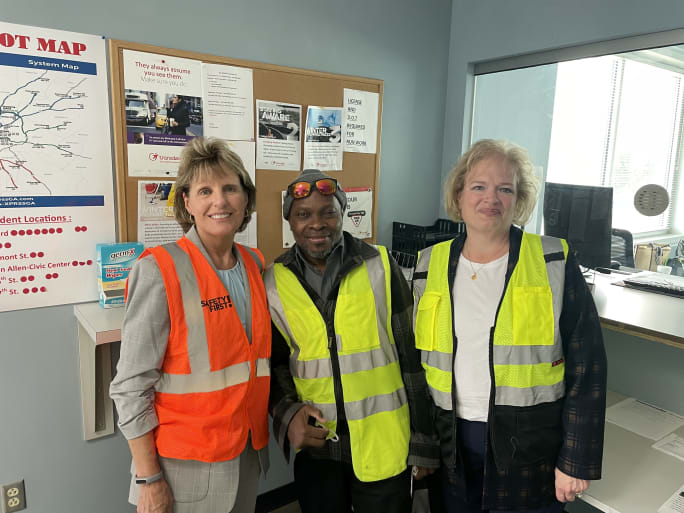
Hendricks says that one key to building that culture has been all the dedicated people that work at Transdev.
“We continue to build on connecting all of our frontline team members to the purpose we serve,” she says. “Transdev has a very clear purpose to provide safe, reliable solutions to serve the common good. With that, it is about the work of our people, both union and non-union here in the U.S. and throughout the world, who make sure we deliver top service at all times.”
For Hendricks, a key driver at Transdev is to ensure that all team members understand the company’s end goal.
“They are not just bus operators, dispatchers, or safety managers, they are really here to make a difference in the communities and the people we serve,” she says. “As we create our culture and truly connect all of our frontline team members to our goals, that is when we'll see our services delivered in a safe, effective manner, which is what’s important to us. Our goal, internally then, is to make sure that culture is carried out through every level of our organization.”
Ad Loading...
Laura Hendricks says that one key to building that culture has been all the dedicated people that work at Transdev.
Photo: Transdev
Being Whatever You Want to Be
As a way to focus on unifying its workforce to achieve its end goals, Transdev initiated its Diversity, Equity, & Inclusion Council several years ago — an employee-led advisory committee whose goal is to foster DEI awareness and serve as active change agents for Transdev.
It is just one of the ways the company tries to continue to push the importance of DEI both as a corporation itself, as well as at its individual transit agency properties.
Reflecting on her own path to becoming the first female GM at her organization in 1980, Hendricks says as a child she had to move often, which put her in a position to always dive in, start over, and speak up to prove herself. A process, she believes, that helped her build character and make her who she is today.
With today’s workforce, she believes it’s important to continue building diversity and inclusion so that the industry can continue to grow.
One key in building the workforce of tomorrow, she says, is building a workforce of today that reflects the company’s purpose and dedication to DEI.
Ad Loading...
“When you think about how important it is to bring people into this industry with the purpose and the opportunities that we had, diversity and inclusion really helps make our jobs attractive and shows diverse communities they can be anything they want to be in this industry,” Hendricks says. “To do that, we have to really listen to our customers and team members, treat them how they want to be treated, and then build on our goal of inclusion, because people will be the best they can be when they truly feel they are part of the team.”
Contract Four is the largest in the Second Avenue Subway Phase 2 project and includes construction of station infrastructure, tracks, and signals for the subway expansion, MTA officials said. Work on Contract Four will begin in 2027.
The new regional transit authority appointed its first board chair and interim executive director while extending reduced fares across CTA, Metra, and Pace for eligible riders.
Reliability-Centered Maintenance helps transit agencies move beyond routine checklists to focus limited resources on the assets and failures that have the greatest impact on safety, reliability, and service.
The 90-day demonstration will deploy coordinated security teams at five light rail stations while testing controlled access and gathering data to guide future investments.
Learn about delivering 1300 gates at 91 stations while managing fare evasion. Explore the large scale deployment, solution customization and real-world results that affect the region. Prepare for deployment in your region now.
Between packed transit stations and team motorcoaches, see how agencies and operators across North America tackled the transportation demands of the 2026 FIFA World Cup.
The stopgap keeps federal transportation programs moving, but missing advance funding could complicate the transit and rail projects agencies are planning next.