



Utah creates Google Glass transit tracking app
A small group of UTA riders who are part of Google’s Glass Explorer Program are testing OnTime for Glass, which provides customized real-time arrival information.

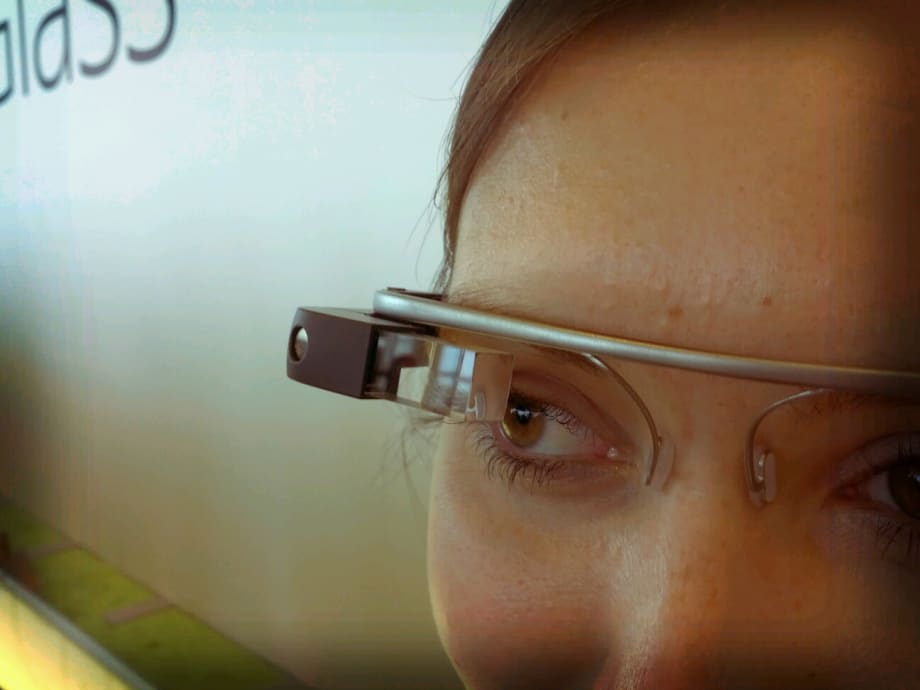
Photo courtesy Antonio Zugaldia via Wikimedia Commons
Photo courtesy Antonio Zugaldia via Wikimedia Commons
Some Utah Transit Authority (UTA) bus and train riders are getting a sneak peek at wearable technology now that Utah.gov has launched “OnTime for Glass,” a transit tracking app for Google Glass.
Google Glass users will be able to receive real-time information alerts for an approaching bus or train, view route information and track transit vehicle locations in real time. Riders use voice and tap commands to view the real-time information that they customize on a screen in front of the right eye.
Although Google Glass is currently only available to people whom Google invites to join its Glass Explorer Program, according to the Google.com website, the state of Utah decided to test the capabilities of the device as a way to get more experience working with what could be the next popular technology, David Fletcher, chief technology officer, Utah Department of Technology Services (DTS) said.
DTS already had in place the operating system and tools to enable developers to create the software applications and the transit data to create the app, so it was easy and inexpensive to experiment with Google Glass and see how a small set of users interacts with it, Fletcher explained.
“When people start developing for wearables, they’re going to find that it doesn’t require big development projects, if they’ve already got systems in place that do this for mobile,” he added.
DTS was able to enlist many entrepreneurs who are both testing the technology as part of Google’s program and use the UTA transit system.
“That gave us some experience to interact with wearable technology and get our developers’ feet wet with [it], and with a fairly small development cost,” Fletcher said.
DTS is working on the app with Utah Interactive, which created the Utah.gov portal and some of its online and mobile services.
The number of people currently using the app in Google Glass is only in the hundreds, Fletcher says.
“Normally, we wouldn’t do an app like that for that small of a group. This is just a test case for us, something that we wanted to interact with the interface.”
The feedback has been positive so far, and those who are road-testing the OnTime for Glass use it on a daily basis, Fletcher said.
In the meantime, DTS is taking a wait-and-see attitude with further development, depending on the future of the technology.
“We don’t have any follow-up in mind until Google Glass or an iWatch goes into production and becomes a widely-used device,” Fletcher said.
The agency’s next move also depends on the preferences of its users.
“Our goal is to provide the best service for our largest number of users,” Fletcher added. “As we see things grow, we want to be able to respond quickly. When we did our first iPhone app, it took off pretty quickly, so we want to be ready when the wearables market takes off.”
More Bus

New York MTA Plans Largest Bus Fleet Upgrade in More Than a Decade
The agency is seeking manufacturers for 650 new CNG buses to replace aging vehicles, improve reliability, and advance its broader fleet modernization strategy.
Read More →
Building a Flexible Path to Transit Electrification
John Hroncich discusses BAE Systems’ modular and scalable approach, lessons learned from decades of real-world operations, and how agencies can identify electrification strategies that fit their fleets.
Read More →
Bus Tech Talk: Keeping Transit Technicians Ahead of the Technology Curve
LA Metro’s Obed Mejia discusses technician training, evolving maintenance technology, fleet replacement, and strategies for getting the most out of today’s transit fleets.
Read More →
Biz Briefs: RIPTA Unveils New Frontrunners, Clevland RTA Adds New Siemens, and More
In METRO's latest installment, we take a look at recent news from Siemens, Prevost, Dodge, and more partnerships making headlines across the transportation sector.
Read More →
People Movement: Holly Arnold Joins Transdev and More
In this edition, we also cover recent appointments and announcements at Pace, CamTran, MCI, and more, showcasing the individuals helping to shape the future of transportation.
Read More →
The High Cost of Transit Buses: Industry Leaders Look to Procurement Reform
Transit leaders and policymakers examine how standardized bus designs, streamlined procurement, and predictable funding could help agencies stretch budgets and deliver better service.
Read More →
The Business Voice Behind Public Transportation
As chair of APTA’s Business Members Board of Governors, Ray Melleady explains how more than 850 business members are partnering with transit agencies to advance funding, innovation, and industry-wide collaboration.
Read More →
From Surviving to Thriving: Building Stronger Transportation Organizations
Bus Business Consultants founder Brian Dickson shares lessons on leadership, organizational health, and creating options for long-term success in a changing transportation industry.
Read More →
Finding the ‘Happy Medium’: Optimizing Maintenance Without Sacrificing Reliability
The key to maintenance optimization isn’t doing less work—it’s doing the right work at the right time on the right assets.
Read More →
LA Metro, City of West Hollywood, and Partners Advance Smarter Bus Lane Enforcement
The award-winning partnership combines AI-powered detection with human oversight to improve bus reliability, accessibility, and enforcement efficiency.
Read More →