



Virginia, L.A. step up rail track safety
In two distinct projects, the Virginia Department of Rail and Public Transportation (VDRPT) and the Los Angeles County Metropolitan Transit Authority (LACMTA) are tackling the issue of illegal pedestrian crossings at railroad tracks.

In two distinct projects, the Virginia Department of Rail and Public Transportation (VDRPT) and the Los Angeles County Metropolitan Transit Authority (LACMTA) are tackling the issue of illegal pedestrian crossings at railroad tracks. At the end of last year, the VDRPT erected nine billboards around the state to remind residents that trespassing on railroad tracks and property is both unsafe and illegal. Prior to the billboards being displayed, there were five deaths and four injuries during the first 10 months of 2000. During the process of producing the billboards, three people died by illegally crossing the tracks, said Kevin Page, rail development programs engineer for the VDRPT. “Our target is dealing specifically with casual offenders who don’t really think they’re trespassing,” said Page, who claims most offenders are either walking the dog or driving dirt bikes. “It makes the person walking the dog realize they’re breaking the law.” The billboards are placed in strategic locations near railroad facilities to alert those violators nearing the tracks, Page said. Displaying the posters cost the VDRPT $9,000, paid for with a grant from the Virginia Department of Transportation. The cost was kept low through a partnership with Lamar Advertising, which provided free ad space. The billboards are intentionally blurry to add some motion to them to make the message ring a little louder, Page said. “Most people who’ve been involved in an accident will say, ‘Everything is a blur except what I’m about to hit,’” he said. “We wanted to make time stand still.” Created in a safety partnership with Operation Lifesaver, the billboards were offered to any rail property in the country. So far, North Carolina, Colorado, Arizona and the Burlington Santa Fe Railroad all requested them, Page said. The LACMTA is currently doing an active test of the “second train coming” sign it installed last year. The sign, measuring three feet by four feet, is only activated when two or more trains are approaching the crossing. The train and arrow symbols on the sign alternate from left to right, warning the pedestrian a train is approaching from either direction. The sign was installed with a $200,000 grant as part of a Transit Cooperative Research Project sponsored by the Transportation Research Board, said Zijay Khwani, project manager at the LACMTA. The sign was installed at the Vernon Avenue crossing on the LACMTA’s Blue Line, which has had the highest level of pedestrian accidents (17) since the line’s opening in 1990. “We’ve seen a 75% reduction in risky behavior,” Khwani said. Pedestrian traffic is monitored with a video camera placed near the sign. Once an evaluation on the sign is completed in a few months, the LACMTA may install the sign at additional locations, Khwani said. The prototype sign, including initial design and procurement, cost about $175,000, and additional installments would probably cost around $45,000, he said. The LACMTA also installed a pedestrian gate to block access to the tracks at four other crossings. “It presents a physical barrier,” Khwani said. “It’s easy for people to disregard a sign.” Operation Lifesaver also began a new public service advertising campaign in Texas, California and Illinois, the states with the highest number of collision and trespass incidents nationwide. The “Take Safety to Heart” television campaign emphasizes the importance of caution at grade crossings and railroad property by showing drivers and pedestrians who, after experiencing close calls with trains, realize they risk hurting their loved ones. The campaign, done in a partnership with the Federal Railroad Administration, the Federal Highway Association, the Association of American Railroads and others in transportation safety, emphasizes personal responsibility. The Washington (D.C.) Metropolitan Area Transit Authority (WMATA) retrofitted nearly 100% of its 758 revenue-service railcars with gap reducers to reduce the amount of space between the platform and the door. The reducers, rubber strips placed at the threshold of the doors, decrease the vertical gap by half an inch. They are beveled at a 45 degree angle and extend in a horizontal direction one and a half inches beyond the railcar door. “It’s not only for wheelchairs, but for women and children with smaller feet,” said Cheryl Johnson, a spokeswoman for WMATA. The reducers were installed on the six doors of each railcar, with a total of more than 4,500 installed. The project was part of an Emergency Rail Rehabilitation Project that began last year and was funded at $985,000. “Even though we were in compliance with American with Disabilities Act regulations, we thought this would further enhance safety for our passengers,” Johnson said. Federal Transit Administration (FTA) regulations read: “In light rail, rapid rail and commuter rail key stations, the platform or a portion thereof and the vehicle floor shall be coordinated so that the vertical difference, measured when the vehicle is at rest, is within plus or minus one and a half inches under all normal passenger load conditions, and the horizontal gap, measured when the vehicle is at rest, is no greater than three inches for at least one door of each vehicle or car required to be accessible.” Art Lopez, head of the Civil Rights Office at the FTA, said that gaps are generally an issue at transit agencies, and that they all solve the problem in their own ways. The Metropolitan Atlanta Regional Transit Authority installed a reducer similar to WMATA’s. “Having that little piece in there really helps a lot,” Lopez said. “It’s the type of modification that ADA is all about—it should not just help people with disabilities, it should help everyone.” Before installing the reducers, WMATA had public hearings and got input from the wheelchair and visually impaired communities, Lopez said. “It’s a good example of the community and a transit property working together to create a solution,” he said. The Office of Civil Rights is responsible for ADA compliance at key stations nationwide, of which there are 685. The office has done assessments at more than two-thirds of those, Lopez said.
More Rail

Scenes from APTA TRANSform & EXPO 2026
Transit leaders, manufacturers, and industry professionals gathered in Chicago to explore new technologies, share ideas, and discuss the future of public transportation.
Read More →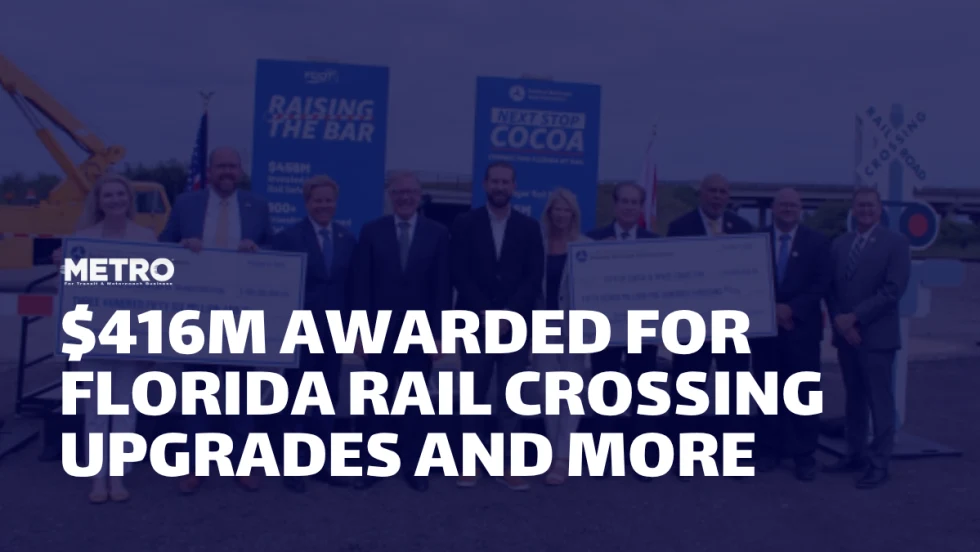
USDOT Awards $416 Million for Florida Rail Crossing Safety Upgrades, New Brightline Station
The projects aim to reduce risks for motorists and pedestrians at rail crossings while expanding passenger rail access along Florida’s Space Coast.
Read More →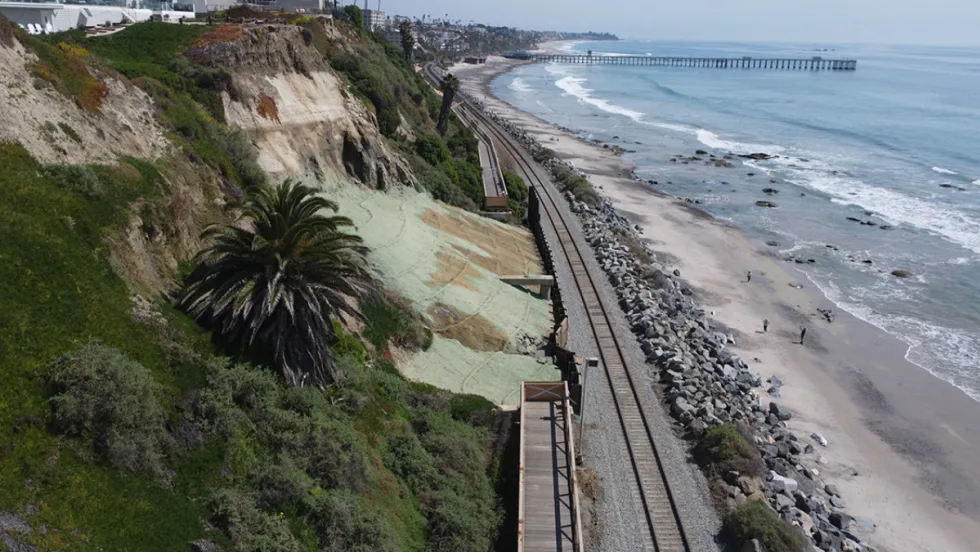
OCTA Declares Emergency to Protect Rail Corridor From Coastal Erosion
The California agency is accelerating shoreline protection and plans to place approximately 690,000 cubic yards of sand along the San Clemente coast to protect a key passenger and freight rail link.
Read More →
More Than a Summer Job: Building the Next Generation of Transit Talent
The Delaware River Port Authority and PATCO have transformed their internship program into a hands-on professional development experience that introduces students to the breadth of transportation careers — and creates a pipeline for future employees.
Read More →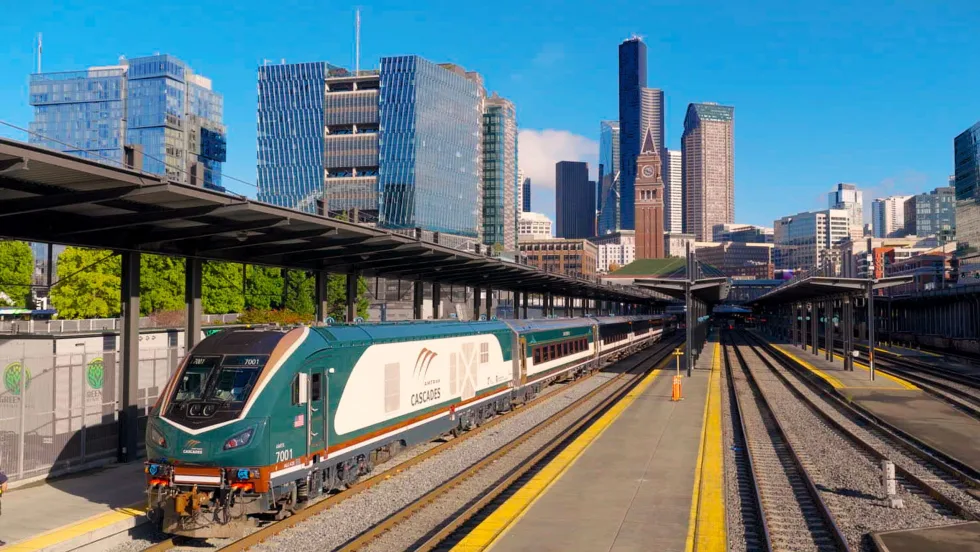
Airo Trains Make Their Amtrak Cascades Debut in the Pacific Northwest
Effective immediately, two cutting-edge Airo trainsets will join the Amtrak Cascades route, operating four daily trips between Vancouver, B.C., Seattle, Portland, and Eugene, Oregon, marking the first introduction of Airo trains into passenger service anywhere in the country.
Read More →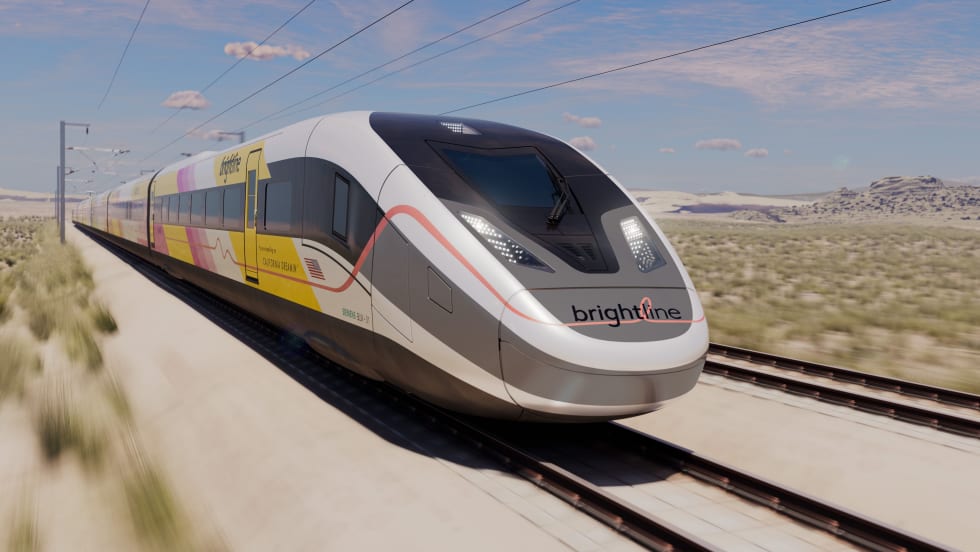
Florida's Brightline Announces Financial Restructuring
Brightline Florida says train operations will continue as normal as certain parent entities enter Chapter 11 and financial stakeholders provide $490 million in new long-term capital.
Read More →
ENC Lands MATA Contract and More in Biz Briefs
In this edition of Biz Briefs, we spotlight the latest developments shaping the future of mobility.
Read More →
Strada360’s Steve Lassey on Turning Transit Data Into Better Decisions
From breaking down data silos to preparing for AI, Strada360 CEO Steve Lassey discusses how transit agencies can use technology to improve operations, customer information, and long-term decision-making.
Read More →
SEPTA Details Accelerate Vision for Transit System
The plan outlines investments in trolley modernization, new Metro and Regional Rail vehicles, accessible stations, and more frequent bus and rail service.
Read More →
FTA Ends Direct Oversight of MBTA Safety Actions
The federal agency closed its remaining special directive to the Massachusetts Department of Public Utilities following a safety review that began in 2022.
Read More →