



What You Need to Know Before Financing a Vehicle
Buyer's remorse is a term that should not be in an operator's vocabulary. While making a sound decision on which vehicle to purchase is huge for an operation, the process of financing that vehicle can be incredibly stressful for the operator.


Buyer’s remorse is a term that should not be in an operator’s vocabulary. While making a sound decision on which vehicle to purchase is huge for an operation, the process of financing that vehicle can be incredibly stressful for the operator.
METRO Magazine gathered a few financing tips to consider from two of the industry’s leaders.
1 / Choose a lender familiar with the industry.
It might be natural for some people to think they should simply deal with the local bank where they have their personal checking or savings accounts, but financing a shuttle bus or other mid-sized vehicle may not be the type of business banks typically deal in. For this reason, it is best to select a lender, such as Advantage Funding or TCF Equipment Finance, that is familiar with your industry.
“There is no widely known Blue Book on buses, so banks don’t know their value. Therefore, banks may walk an operator through a lot of unnecessary hoops and questions,” explains Dan Boie, finance manager/assistant VP, at TCF. “On the flipside, you can come to a lender like TCF or others familiar with the business and get a half-million dollar deal done in a day with one-tenth of the questions.”
Boie adds because a bank is not familiar with the equipment being purchased, many times operators may not receive a favorable interest rate, or get offered such short terms that the financing of the vehicle is unaffordable.
“Anything the bank doesn’t understand they become very conservative on, so the speed in which they need to move is challenged at best,” adds Don Coolbaugh, VP, sales, at Advantage Funding. “Many times their conservative approach will lead to them to not be able to give an operator the structure, the type of funding, and/or the service they need because they just don’t want to fund to the collateral.”
A lenders familiarity with the vehicles and the industry also allows them to be able to sit down with an operator and discuss such things as lifecycle costs versus financing terms, and for larger operators, develop a fleet purchasing plan.
“If you are running 50, 60 or 70 pieces of equipment, you really need to have a thoughtful approach to how you repurchase or purchase new or replacement equipment and how that gets financed and put on your books, in terms of financing, cash flow, taxing and overall exposure, so you don’t get caught up getting to the top line of your banks’ lending limits,” adds Coolbaugh.
Aside from experience and knowledge, another key to selecting a lender with knowledge of the industry is developing a partnership that will make the purchase of your next vehicle that much simpler.
2 / Know your credit score and history…and be honest.
As with any loan process, it is important to know how good or bad your own credit is as well as the credit history of any partner(s) you may have.
“If you are going to partner with somebody know their credit history,” says Boie. “Many times, I’ve seen that people will partner, go through the legwork of forming a corporation and even secure contracts, only to come in to purchase their first bus and find out their partner has horrible credit. It may be a difficult conversation to approach, but if you have good credit and you partner with someone with bad credit, you will never get your business off the ground.”
At www.annualcreditreport.com you can attain your credit scores from all three of the major credit bureaus — Experian, TransUnion and Equifax — free of charge. Once you know your credit standing, as well as your partners, another tip is to be straightforward with your lender.
Both Boie and Coolbaugh say if you or your partner has had issues in the past, such as a bankruptcy, a foreclosure or tax liens, it is best to be honest with your lender and explain the situation and what you are doing to get back on track.
“You can’t just hope that those things will mysteriously not show up when we pull credit,” says Boie. “It is always best to just be upfront and honest about who and what you are.”
3 / Know what you’ll need to provide and prepare a clean package.
Each lender will differ slightly, but typically if an established operation is looking to borrow up to around $200,000 to $250,000 they will need to provide a credit application and three months of business bank statements. As that amount goes up, so does the information an operation will need to provide. It is important at that point to be organized and present a nice, clean package to the lender.
“The completeness and neatness of your package is so important,” says Coolbaugh. “The bank is going to take about as much care of your application as you did.”
Both Boie and Coolbaugh also add that as the amount an operator is hoping to finance goes up, having the additional information you’ll need on hand could go a long way in the lender deciding to finance the vehicle or not.
“Having good financials available and being able to provide that information in a timely manner is all important,” Boie says. “Not having filed the previous year’s tax return, for example, could limit you when you get into the high dollar amounts.”
Says Coolbaugh: “As you get into the larger dollars, having updated financials and being able to provide those records to the bank is a clear sign to the lender that they have a reputable company on their hands that they will want to get deeper in bed with. For the operator, of course, that means they have a lender or banker on their hands that’s willing to give them money to purchase equipment.”
More Management

Bus Tech Talk: Keeping Transit Technicians Ahead of the Technology Curve
In this episode of Bus Tech Talk, Complete Coach Works’ Business Development Manager Mark Hollenbeck and METRO’s Executive Editor Alex Roman sit down with Obed Mejia, Senior Technical Trainer for Bus Maintenance, at LA Metro to discuss how rapidly evolving bus technology is changing the maintenance shop — and the skills technicians need to keep pace.
Read More →
Michael Schneider Joins Paslay Group to Expand Transportation Practice
The longtime transportation executive will help Paslay Group grow its advisory and program management work across transit, highway, and other infrastructure sectors.
Read More →
People Movement: Connectpoint Expands Leadership Team, Stadler Names New Group CEO, and More
In this edition, we also spotlight recent personnel moves at Burns, UZURV, and more, highlighting the people taking on new roles across the transportation industry.
Read More →
More Than a Summer Job: Building the Next Generation of Transit Talent
The Delaware River Port Authority and PATCO have transformed their internship program into a hands-on professional development experience that introduces students to the breadth of transportation careers — and creates a pipeline for future employees.
Read More →
LA Metro Board Awards 220 Battery-Electric Bus Contract to ENC
The contract, which is the largest base award of battery-electric buses by a U.S. transit agency, will be built in Southern California, sustaining good jobs as LA prepares to welcome the world in 2028
Read More →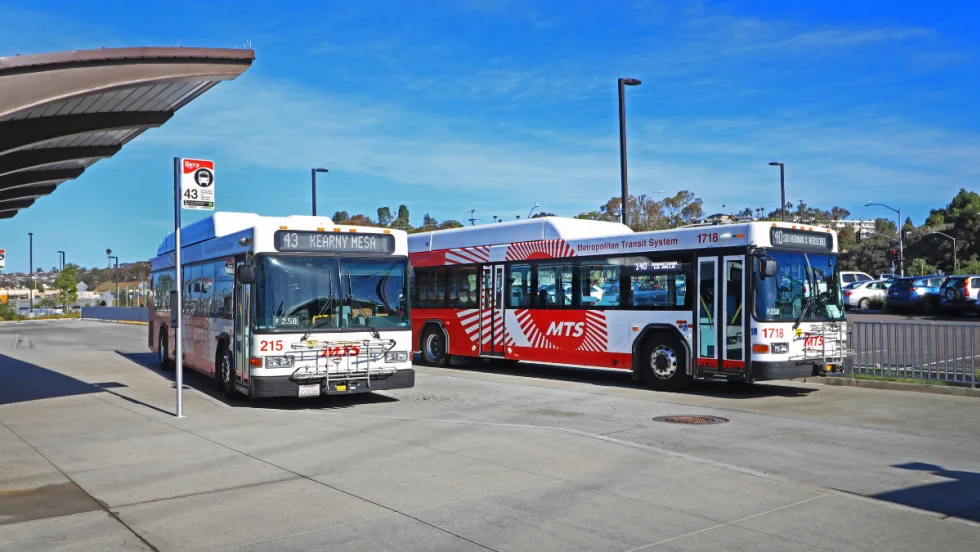
What’s Behind San Diego MTS’s Award-Winning Transit Strategy
Named one of APTA’s 2026 Outstanding Public Transportation Systems with 50 million or more annual passenger trips, California’s San Diego Metropolitan Transit System points to gains in ridership, safety, technology, and reliability as foundations of its success.
Read More →
Public Transit Conference Returning to GFX in 2027, Call for Papers Now Open
The Call for Papers is now open, allowing transit agency professionals and industry experts to help shape the PTC educational program by submitting session ideas for consideration.
Read More →
Indian River Transit’s Community-Focused Approach Earns National Recognition
Named APTA’s 2026 Outstanding Public Transportation System in its size category, Florida’s Indian River County transit system continues to grow ridership through fare-free service and a focus on evolving community needs.
Read More →
ENC Lands MATA Contract and More in Biz Briefs
In this edition of Biz Briefs, we spotlight the latest developments shaping the future of mobility.
Read More →From Surviving to Thriving: Building Stronger Transportation Organizations
Bus Business Consultants founder Brian Dickson shares lessons on leadership, organizational health, and creating options for long-term success in a changing transportation industry.
Read More →