



Wheelchair accessible taxis coming to NYC
Terry Moakley is an accessible transportation advocate. He was employed at United Spinal Association in East Elmhurst, N.Y., for 36 years and he continues to serve on its board of directors. Moakley also is past-president of the Association of Travel Instruction, whose members primarily are public transportation travel trainers or mobility specialists. He can be contacted at tmoakley@unitedspinal.org.
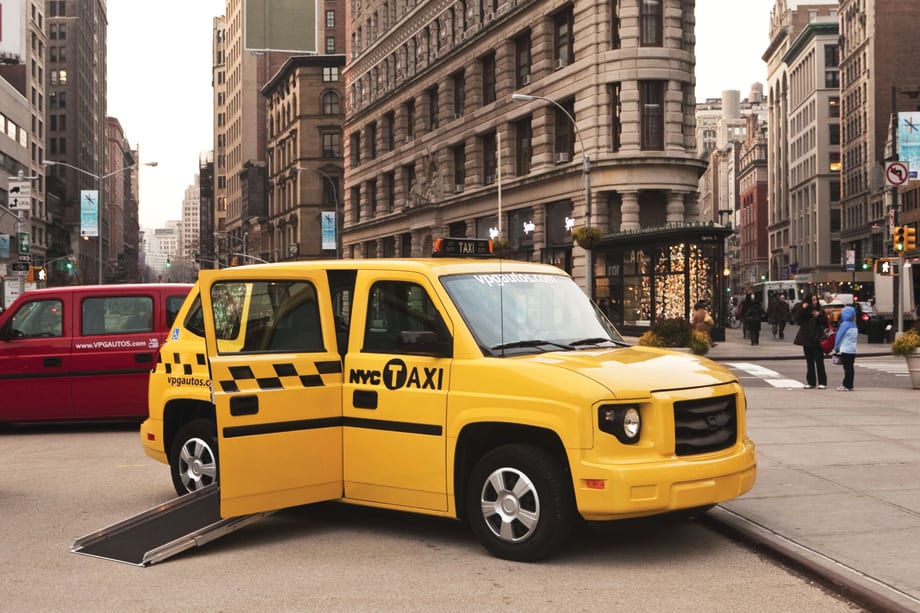
The Vehicle Production Group LLC's MV-1 wheelchair accessible vehicle, which was recently approved for use as a taxi in New York City, was unveiled at Madison Square Park in January.
As a member of the Stakeholder Advisory Committee in the development of the New York City area "Coordinated Public Transit-Human Services Plan" in 2008-2009, I was startled to learn that the city's ADA paratransit costs more than doubled between 2000 and 2005, with this trend expected to continue. It did, to the point that New York's ADA paratransit tab approaches one-half billion dollars per year.
Recently, New York State Gov. Andrew M. Cuomo put together several days of negotiations among his staff and representatives from the New York City Taxi and Limousine Commission, the taxi and livery industries, and the disability community that resulted in an agreement to expand the number of accessible cabs here.
Three days following the negotiations, the judge in an ADA case filed in Manhattan by two individual wheelchair users and five disability groups, ruled the Taxi and Limousine Commission discriminated against wheelchair and scooter users and ordered the commission to develop a plan to provide "meaningful access" to New York's yellow taxis.
The state bill authorizes the sale of 2,000 new yellow taxi medallions, all of which can be used only on wheelchair-accessible yellow cabs. Currently, only 232 of the city's 13,327 yellow taxis are accessible to New York's residents and tourists. In addition, the Taxi and Limousine Commission must prepare a Disabled Accessibility Plan and submit it for approval to the New York State Department of Transportation. This plan will result in the gradual conversion of the yellow taxi fleet to full accessibility.
Livery vehicle system
Since yellow taxis operate primarily in Manhattan below 96th Street and to and from the area airports, the state bill also mandates accessibility to New York's livery vehicle system, which provides car and/or van service throughout the city. A new type of livery service, named "street-hail" liveries, is created in the same bill. It allows such livery vehicles to either pick up street hails or be radio-dispatched. Among 18,000 street-hail livery permits to be sold by the city, 20%, or 3,600 of them must be used only on wheelchair-accessible street-hail livery vehicles.
The reality in New York City is that the livery system is at the low end of the total taxi universe, so the bill contains a provision that requires the city to pay for the accessibility features of accessible street-hail livery vehicles, via a fund that will be created from the sale of the 2,000 new yellow taxi medallions.
In the ADA court case, the judge recently denied a motion from the city's legal team to stay his earlier decision ordering "meaningful" taxi access because of the pending state legislative agreement. The judge reasoned that if he granted the stay, the city might auction new medallions for non-accessible taxis. The state bill allows the auction of just 400 new taxi medallions prior to the approval of the Disabled Accessibility Plan.
In January, Gov. Cuomo announced that he would renew a state tax credit for businesses that purchase wheelchair-accessible taxis or liveries. Other long-standing tax incentives that can be used in combination to offset acquisition costs of wheelchair-accessible taxis anywhere around the nation include Federal Sections 44 and 190.
While we are still awaiting the state legislature's action on the agreed-upon accessible taxi/livery bill and possible additional legal challenges by the city in federal court, we believe that the greater availability of on-demand, wheelchair-accessible taxis across this country can slow or even reverse the growth of ADA paratransit service.
More Paratransit

King County Metro Makes ADA Paratransit Easier to Navigate
METRO's Innovative Solutions Award winner replaces complex service-area descriptions with an accessible, interactive map that puts paratransit information directly in customers’ hands.
Read More →
Jacksonville’s NAVI Project Charts a New Course for Autonomous Public Transportation
Through its NAVI program, JTA is showing how autonomous vehicles, intelligent infrastructure, and coordinated operations can work together to deliver everyday public transportation.
Read More →
Driving Smarter Paratransit
John Hanlon shares how AlphaRoute is leveraging AI-powered technology to help paratransit providers optimize operations, support frontline staff, and enhance the rider experience.
Read More →
METRO Magazine Announces 2026 Innovative Solutions Awards Winners
Projects Recognized for Advancing Mobility Through Technology, Accessibility, Workforce Innovation, and Operational Excellence
Read More →
Biz Briefs: STV teams with Amtrak, Motorcoach Operators Boost Fleet and Land Contracts, and More
From manufacturers and suppliers to transit agencies and motorcoach operators, these updates offer a snapshot of the projects, partnerships and business moves driving the industry forward.
Read More →
Biz Briefs: Masabi Teams with St. Louis Metro and More
In METRO's latest installment, we take a look at recent news from Transdev, Hitachi, and more partnerships making headlines across the transportation sector.
Read More →
New York MTA Leverages Zoning Program to Advance Station Accessibility
Accessibility enhancements at Nevins St Station will be financed through a development agreement tied to the MTA's Zoning for Accessibility initiative.
Read More →
Reinventing Fleet Maintenance with Real-time Visibility and AI
Transit leaders need to know what needs fixing, where to look, who is responsible, when work is completed, and what it costs without having to chase information across disconnected systems.
Read More →
SamTrans Sets Priorities for Potential Connect Bay Area Revenue
The board-approved framework allocates future funding to maintaining service, rider improvements, equity initiatives, and infrastructure repairs.
Read More →
Chicago's NITA Act Moves Into Next Phase as Service Improvements Begin
Rider-focused improvements will begin rolling out across the system immediately as CTA, Metra, and Pace increase service this summer in the six-county region.
Read More →