




RELATED: California mandates fleets to operate zero-emission buses by 2040
Electric utilities can accelerate electric bus and truck deployment
Electric utilities are an important early investor in charging programs for all EVs, including trucks and buses for several reasons.
April 11, 2019

Utilities across the country are starting to take a serious look at EV programs to support the growing demand for electric cars, trucks, and buses.
BYD
5 min to read
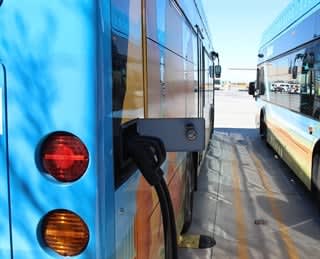
Utilities across the country are starting to take a serious look at EV programs to support the growing demand for electric cars, trucks, and buses.
BYD
This was originally published on the Union of Concerned Scientists blog.
Today, in my inaugural blog post, I am excited to share a set of recommendations for electric utility investments in electric bus and truck charging programs.
Swapping diesel trucks and buses for electric models is a critical strategy for both reducing greenhouse gas emissions to mitigate climate change and reducing local air pollution to improve public health. The good news is that high-performance electric trucks and buses are becoming increasingly available for many vehicle uses, notably medium-duty delivery vehicles, cargo equipment, transit buses, and school buses. The challenge is that widespread deployment of those vehicles requires a large-scale, coordinated effort by policymakers, private investors, and—you guessed it—electric utilities.
For their part, electric utilities are an important early investor in charging programs for all EVs, including trucks and buses for several reasons. First, grid-related investments to support electricity demand from EVs are well within utilities’ wheelhouse. Second, utilities’ expertise in managing the grid make them an important partner in managing electric truck and bus loads to maximize potential benefits to the grid. For example, smart charging of EVs can make renewable energy easier to incorporate into the grid. Finally, utilities have access to debt and capital to make investments that kick-start the comparative market for private investments.
Utilities across the country are starting to take a serious look at EV programs to support the growing demand for electric cars, trucks, and buses. Many utilities are moving forward with vehicle electrification proposals to state utility regulators, some of which include consideration for heavy-duty vehicles. Proactive state regulators and electric utilities can take advantage of the growing availability of models to accelerate electric truck and bus deployment to help realize the health, climate, and grid benefits from medium and heavy-duty vehicles.
UCS has laid out the principles for how electric utilities should invest in EV charging. The recommendations we release today, Utility Investment in Truck and Bus Charging: A Guide for Utilities, build on those principles by providing high-level guidance on the design of utility programs for truck and bus charging.
How should utilities go about designing programs, and what should state regulators look for when evaluating programs?
Consider various strategies to address barriers to truck and bus charging.
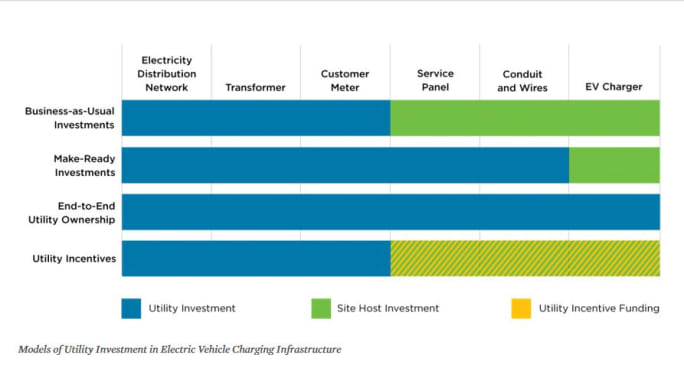
Different electric truck and bus uses may require different program strategies, depending on vehicle model availability and the business case for electrification in a specific service territory. For charging infrastructure, this means utilities may need to make use of a variety of ownership models in order to effectively accelerate EV deployment. These ownership models extend beyond “business as usual” up to “end-to-end” utility ownership from the customer meter to the charger (see figure).
Diagram showing models of utility investment in EV charging infrastructure
Set fair commercial rates that account for truck and bus charging and provide incentives for grid services.
Operating costs are one of the most important factors vehicle operators, particularly those who operate fleets, consider when deciding whether to switch to electric models. Fair, sensible rates for commercial EV charging will ensure that vehicle operators have an opportunity to save on fuel costs and provide an incentive for charging at beneficial times for the electric grid.
Scale up programs based on their potential impact and the readiness of vehicles for electrification.
Vehicle applications such as transit buses, medium-duty delivery trucks, and cargo equipment have the potential to positively impact climate emissions and public health and are highly ready for electrification. As such, those vehicles are ready for large-scale utility programs. Utilities can also advance more nascent vehicle applications through pilot projects.
Prioritize serving communities overburdened by air pollution.
Diesel pollution and the consequential human health impacts are not distributed uniformly. Utility programs can have maximum impact for each charger deployed by focusing on areas that suffer disproportionately large amounts of diesel pollution. However, prioritizing overburdened communities is not just a best practice for cost-effectiveness. Because low-income communities and communities of color are overrepresented in overburdened areas, prioritizing charger and EV deployment in these areas is an important way to reduce public health inequities.
Coordinate and leverage multiple funding sources.
While utilities are well-suited to be an early investor in the EV charging space, other funds for EV charging are available. As UCS has previously discussed, the VW settlement and other funds fall short of providing the scale of investment needed for widespread electrification of truck and buses. Even so, those funds are an important resource for accelerating EV adoption. Utilities can maximize the reach of their own programs by coordinating with and leveraging other funding sources.
Consider fleet programs that accelerate electrification across vehicles classes.
Utilities can identify opportunities to include trucks and buses alongside passenger vehicles in fleet programs to make the most of synergies in information sharing between the utility and fleet customers.
Consult with truck and bus fleet managers when developing programs.
Utilities’ customer relationships with fleet managers can become strategic partnerships for the development of utility charging programs. Utilities can collaborate with fleet operators to understand the use and charging needs of electric trucks and buses in order to inform infrastructure programs and rate designs.
Set minimum charging system capabilities to enable managed charging.
Managed charging of truck and bus loads is critical to realizing the greenhouse gas benefits and fuel cost savings those vehicles can offer. A “smart” system in which chargers can communicate with a network system is necessary to enable managed charging. Requiring such capabilities for chargers supported by utility programs will enable managed charging, while also making it easier to upgrade charger software over time.
Future-proof investments by preparing charger sites for additional deployments.
It is important to take a long-term view of electric truck and bus deployment when designing programs. Utilities can future-proof “make-ready” investments — the upgraded panels, new conduit and wires to make the site ready for chargers — by considering expected future charging demand when determining the capacity of the make-ready installation.
I am encouraged to see some utilities already step up to support truck and bus electrification. We need many more to follow suit with significant investments to make timely progress on climate and public health. These recommendations will help make utility investments more effective in meeting these urgent goals.
For a fuller discussion of each recommendation, including program examples, be sure to check out the full policy brief.
Samantha Houston is an analyst for the Clean Vehicles program at the Union of Concerned Scientists.
Subscribe to Our Newsletter
More Blog Posts
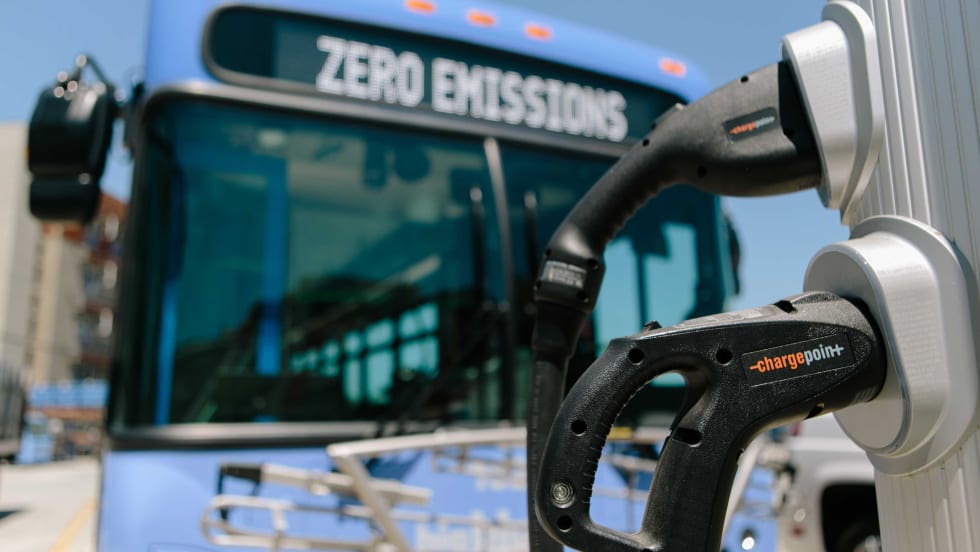
Electrifying transportation: A holistic approach
Clean the grid, electrify transportation, reduce miles-traveled, and ensure access for all.
Read More →
Sustainable transit is about much more than saving the environment
Sustainable transit continues to be a hot topic among city leaders and transit officials, but more often than not, equitability is left out of the conversation.
Read More →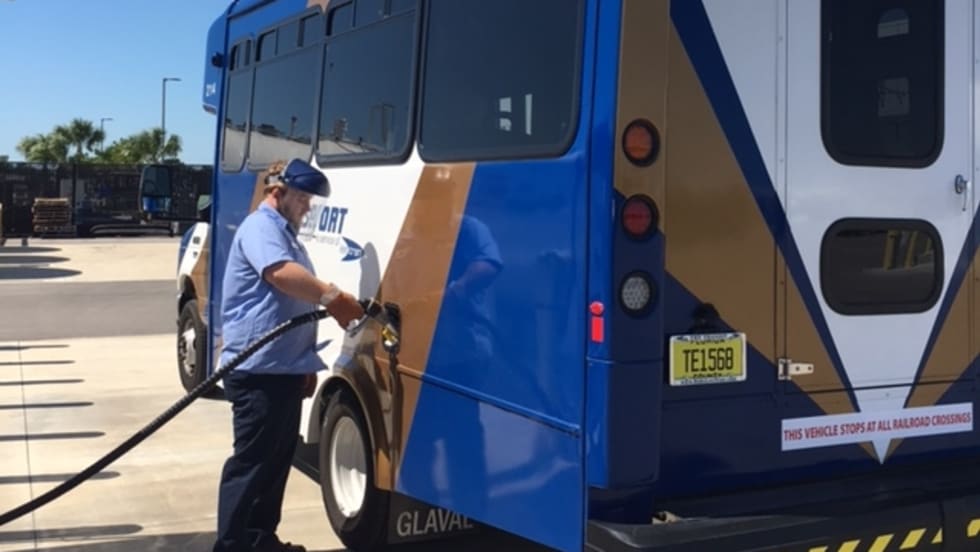
Transit Agencies Could Benefit from VW Funding
Volkswagen was found guilty and agreed to pay up to $14.7 billion to settle allegations of cheating emissions. As part of the lawsuit, Volkswagen is required to establish and fund an Environmental Mitigation Trust, known as EMT. Over the next 10 years, $2.9 billion from the VW settlement will fund environmental mitigation projects that reduce emissions of NOx.
Read More →
How to pick the right sustainability ratings certification for your transit agency
Rating systems have become the currency of sustainability. The right sustainability ratings system provides an important third-party verification of your agency’s commitment to creating facilities that reduce carbon emissions, save water, create healthier work environments for your employees and have a positive impact on the communities they serve.
Read More →
5 Transit Facility Design Elements to Boost Employee Health, Well-Being
Everyone needs to take a mental and physical break at some point in the workday, whether they’ve been concentrating on a computer screen, the road, or the underside of a bus, truck or train car. The tricky part for transit agencies is that each of these activities takes place in different surroundings, lighting conditions, room temperature and noise levels. With that in mind, consider the following factors in your facility design.
Read More →
How Lighting Design Can Impact Transportation's Shift Workers
Shifts are long and varying, and facilities are often inadequate for transit employees to truly recharge and stay sharp on the job. But it doesn’t have to be that way. The quality of the environment within facilities can be designed to support shift workers and those with jobs that don’t follow traditional 9-to-5 schedules. Two key elements that can be utilized to support vehicle operator health; creating spaces with adaptability for varied activities and quality lighting that supports the adaptability of the space.
Read More →
How Transit Facility Design Empowers Employees, Supports Active Lifestyles
Most transit facilities have a break room for operators to use between shifts — typically an artificially lit space with a TV, vending machines, and cafeteria-style tables and chairs. The trouble is, every person has a different way of relaxing. Besides exposure to daylight and nature, key components of wellbeing are social cohesion and a sense of empowerment. The key here then is to empower employees to choose the best way to relieve their own stress around shifts.
Read More →
The Benefits of Taking a Leadership Role in Transit Workplace Well-Being
A health and wellness revolution is underway in America. Concurrently, there is a growing public health initiative to promote safer, more accessible recreation facilities and active transit options. Transit agencies are uniquely positioned in the overlap of these two movements. By promoting health and well-being, agencies have an opportunity to show leadership and innovation in a truly holistic approach to total worker health, while benefiting workforce productivity and happiness.
Read More →
Va. transit fleet kicks off major CNG transition
GRTC is a member of the Virginia Clean Cities (VCC) coalition, which over the years has hosted a variety of workshops, webinars and other training opportunities for fleets interested in transitioning to CNG. Another coalition member — the City of Richmond — inaugurated its fleet of CNG refuse haulers in 2011, which set the stage for GRTC’s transition. View the YouTube video to see how VCC helped the city implement its CNG fleet.
Read More →
Riverside Transit Agency Buses Fill up on Natural Gas, Provide Free Rides for Students
A long-time champion of cleaner, greener technologies, the Riverside Transit Agency (RTA) has provided public bus service to California’s Western Riverside County since 1977.
Read More →