



ABA urges Congress to fund intercity bus security grant program
In the wake of Sept. 11, 2001, Congress recognized the need to address security risks threatening the surface transportation network, specifically identifying the intercity bus industry as a vital mode of transportation through establishment of the IBSGP in the Implementing Recommendations of the 9/11 Commission Act of 2007.

American Bus Association (ABA) President Peter Pantuso sent letters to the chairmen of the Senate and House Appropriations Committees urging them to adequately fund the Intercity Bus Security Grant Program for Fiscal Year 2018.
In his letter, Pantuso said:
"I write to respectfully request that you fund the Intercity Bus Security Grant Program (IBSGP) for FY2018. Terrorist related incidents involving large commercial vehicles, like the recent tragedy in New York City, continue to threaten our transportation network. A critical component to mitigating this threat for the passenger motorcoach industry is the IBSGP; however, the FY 2018 Department of Homeland Security appropriations bill has not yet been reported out of your Committee. There is still time to properly fund this critical program, and I urge you to act.
"Following the recent vehicle attack in New York City, your colleague, Sen. Cassidy (R-La.), acted by introducing the Vehicular Terrorism Prevention Act. But this is not enough, and our industry calls on you, too, to do your part by supporting funding for the IBSGP. Please consider adequately funding the program for FY18 when negotiating the year-end spending bill with the House. The intercity bus industry must stay prepared in this ever-changing threat environment, and IBSGP funding is critical to meeting this need."
In the wake of Sept. 11, 2001, Congress recognized the need to address security risks threatening the surface transportation network, specifically identifying the intercity bus industry as a vital mode of transportation through establishment of the IBSGP in the Implementing Recommendations of the 9/11 Commission Act of 2007. Our world today has not changed much from the initial threats provoking this action. In fact, the threat is even more apparent today. According to the National Terrorism Advisory System Bulletin released by the Department of Homeland Security on Nov. 9, 2017, terrorist groups continue to actively promote the use of vehicles for ramming attacks against civilian populations. Numerous incidents have occurred both in this country and abroad.
More Motorcoach

METRO Opens Submissions for 2026 Motorcoach Awards
Nominations are now being accepted for METRO Magazine’s Operator of the Year and Innovative Operator of the Year awards.
Read More →
Biz Briefs: Alstom Lands Canadian Contract, LYT to Supply California TSP, and More
In METRO's latest installment, we take a look at recent news from Complete Coach Works, Beep, FlixBus, and more partnerships making headlines across the transportation sector.
Read More →
Biz Briefs: RIPTA Unveils New Frontrunners, Clevland RTA Adds New Siemens, and More
In METRO's latest installment, we take a look at recent news from Siemens, Prevost, Dodge, and more partnerships making headlines across the transportation sector.
Read More →
People Movement: Holly Arnold Joins Transdev and More
In this edition, we also cover recent appointments and announcements at Pace, CamTran, MCI, and more, showcasing the individuals helping to shape the future of transportation.
Read More →
ABA Report: Motorcoach Travel Generates $161.6B Economic Impact
The 2025 analysis finds motorcoach travel supported nearly 900,000 jobs and generated $28 billion in federal, state, and local taxes.
Read More →
CharterUP’s Armir Harris on Technology, AI, and the Future of Group Mobility
In a recent episode of METROspectives, CharterUP Founder/CEO Armir Harris discussed the company’s evolution from an online charter bus marketplace into a technology platform supporting public- and private-sector mobility and much more.
Read More →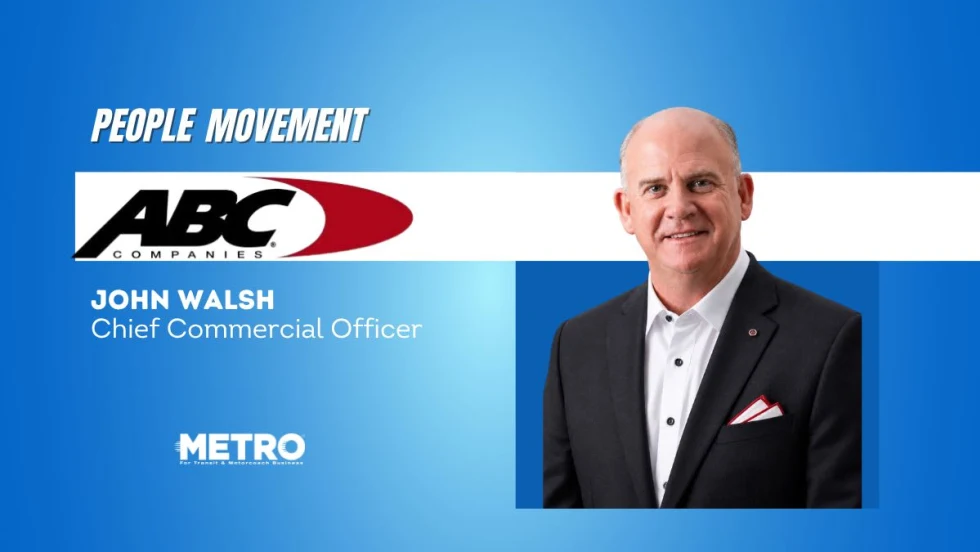
People Movement: ABC Names John Walsh as Chief Commercial Officer
In this edition, METRO also covers recent appointments and announcements at the DART, STV, and more, showcasing the individuals helping to shape the future of transportation.
Read More →
From Surviving to Thriving: Building Stronger Transportation Organizations
Bus Business Consultants founder Brian Dickson shares lessons on leadership, organizational health, and creating options for long-term success in a changing transportation industry.
Read More →
Biz Briefs: Luminator Marks Milestone and More
From manufacturers and suppliers to transit agencies and motorcoach operators, these updates offer a snapshot of the projects, partnerships and business moves driving the industry forward.
Read More →
ABAF Study Reveals Growing Insurance Crisis for Motorcoach Operators
Preliminary findings show 98% of operators faced premium increases over the past five years, while shrinking insurer participation is putting added pressure on businesses and customers.
Read More →