




RELATED: Alstom receives first order for Aptis electric buses
Alstom debuts electric bus in Chile inspired by tram design
In 2017, Aptis was awarded the Innovation Award at Busworld, the main international bus fair now being held in Brussels, Belgium.
May 3, 2019
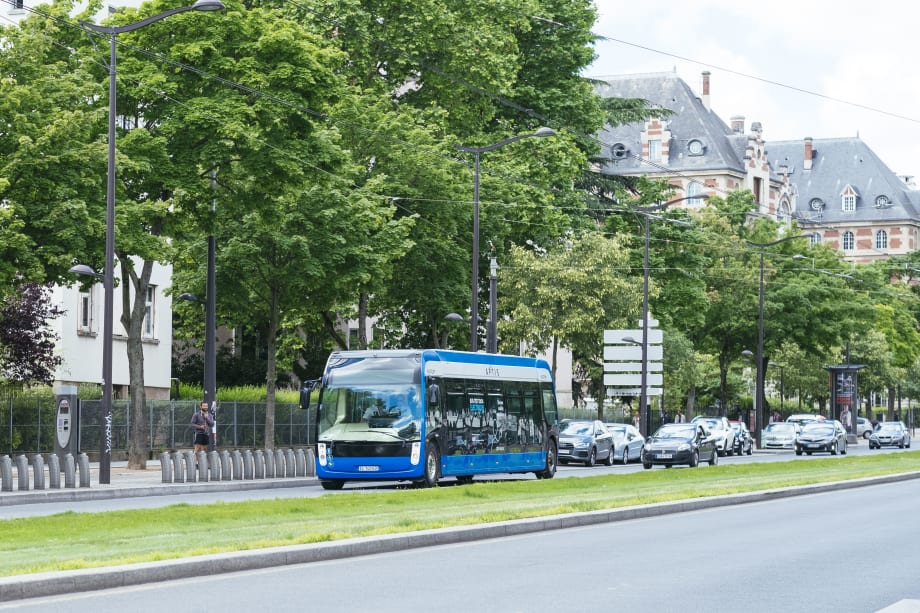
In 2017, Aptis was awarded the Innovation Award at Busworld, the main international bus fair now being held in Brussels, Belgium.
Alstom
2 min to read

In 2017, Aptis was awarded the Innovation Award at Busworld, the main international bus fair now being held in Brussels, Belgium.
Alstom
Aptis, the electric bus developed by Alstom that offers the advantages of a tram, will soon begin running on the streets of Santiago, Chile. The 100% electric vehicle is already in Chile being prepared for a pilot within Red Metropolitana de Movilidad, the city’s metropolitan transport system, operated by Redbus Urbano, a Transdev’s subsidiary present in Chile since 2007.
The pilot aims to demonstrate the bus’s benefits to the city’s travelers for a period of three months. It will be the first time that Aptis has been tested outside of Europe.
In 2017, Aptis was awarded the Innovation Award at Busworld, the main international bus fair now being held in Brussels, Belgium. Aptis already been successfully tested in cities such as Paris, Versailles, Lyon, Strasbourg and Marseille in France, Hamburg and Berlin in Germany, and Barcelona, Madrid and Vigo in Spain, among others, where it has stood out thanks to its tram-inspired design, its maneuverability and its outstanding passenger experience, according to company officials.
Aptis features include up to three double doors on both sides for easy boarding and alighting. Its modular interior arrangement allows adjustments to requirements over time. The addition of 20% more glass surface area — compared to a conventional bus — offers panoramic views, and Aptis’s electric traction virtually eliminates noise and vibration in the vehicle.

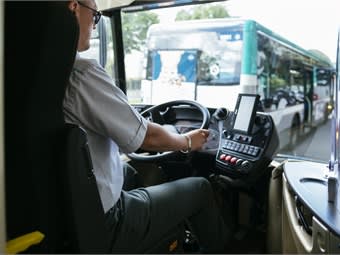
The addition of 20% more glass surface area — compared to a conventional bus — offers panoramic views.
Alstom
“We are proud to bring to Chile this futuristic new solution for sustainable mobility, designed to meet the growing global demand for intelligent, inclusive, efficient and clean means of urban transport,” said Denis Girault, Managing Director of Alstom in Chile, Uruguay, Paraguay and Bolivia.
In March 2019, Alstom received the first order for Aptis: an order of 12 buses from the Strasbourg transport company CTS (Communauté des Transports Strasbourgeois).
Alstom
More Bus
Biz Briefs: New Flyer Delivers in Columbus, Houston, Beep and Freebee Merge, and More
In this edition of Biz Briefs, we spotlight the latest developments shaping the future of mobility.
Read More →
People Movement: Dan Dipert Coaches Adds Third-Generation Leader, Keolis Names New Valley Metro VP/GM, and More
In this edition, we also cover recent appointments and announcements at the Wabtec, SilverRide, HNTB, and more, showcasing the individuals helping to shape the future of transportation.
Read More →
New York MTA Plans Largest Bus Fleet Upgrade in More Than a Decade
The agency is seeking manufacturers for 650 new CNG buses to replace aging vehicles, improve reliability, and advance its broader fleet modernization strategy.
Read More →
Building a Flexible Path to Transit Electrification
John Hroncich discusses BAE Systems’ modular and scalable approach, lessons learned from decades of real-world operations, and how agencies can identify electrification strategies that fit their fleets.
Read More →
Bus Tech Talk: Keeping Transit Technicians Ahead of the Technology Curve
LA Metro’s Obed Mejia discusses technician training, evolving maintenance technology, fleet replacement, and strategies for getting the most out of today’s transit fleets.
Read More →
Biz Briefs: RIPTA Unveils New Frontrunners, Clevland RTA Adds New Siemens, and More
In METRO's latest installment, we take a look at recent news from Siemens, Prevost, Dodge, and more partnerships making headlines across the transportation sector.
Read More →
People Movement: Holly Arnold Joins Transdev and More
In this edition, we also cover recent appointments and announcements at Pace, CamTran, MCI, and more, showcasing the individuals helping to shape the future of transportation.
Read More →
The High Cost of Transit Buses: Industry Leaders Look to Procurement Reform
Transit leaders and policymakers examine how standardized bus designs, streamlined procurement, and predictable funding could help agencies stretch budgets and deliver better service.
Read More →
The Business Voice Behind Public Transportation
As chair of APTA’s Business Members Board of Governors, Ray Melleady explains how more than 850 business members are partnering with transit agencies to advance funding, innovation, and industry-wide collaboration.
Read More →
From Surviving to Thriving: Building Stronger Transportation Organizations
Bus Business Consultants founder Brian Dickson shares lessons on leadership, organizational health, and creating options for long-term success in a changing transportation industry.
Read More →