




Video: The Transdev, Easy Mile autonomous vehicle experience
Alstom invests in driverless vehicle co. Easy Mile
In parallel, Alstom and EasyMile have signed a commercial partnership agreement aiming at joining their forces to provide integrated solutions for urban transportation. Alstom will be present at EasyMile’s board.
January 19, 2017
Easy Mile_Metropolia1
2 min to read
Easy Mile_Metropolia1
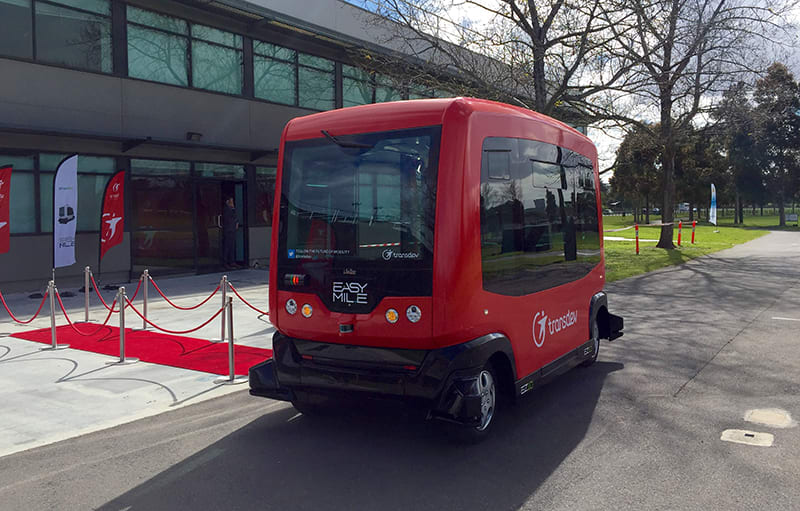
Alstom is investing $14.8 million, and thus taking a minority stake, in EasyMile, an innovative start-up company developing the EZ10 electric driverless shuttle. The investment forms part of the start-up’s ongoing capital increase.
In parallel, Alstom and EasyMile have signed a commercial partnership agreement aiming at joining their forces to provide integrated solutions for urban transportation. Alstom will be present at EasyMile’s board.
The EZ10 provides shared driverless transportation for the last mile. EasyMile electrical shuttles operate from a transport hub to a final destination within a precinct or confined area. EasyMile shuttles transport up to 12 passengers. Since April 2015, the EZ10 has been deployed in more than 50 sites in 14 countries in Asia, North-America, Middle-East, and Europe. The exceptional experience and lessons learned through all these projects is continuously integrated in EasyMile products and solutions.
“In the frame of its 2020 strategy, Alstom has decided to explore adjacent businesses, especially in the context of digitalization. Through this investment, Alstom expands its knowledge into the driverless technologies and pursues its development in the growing field of smart mobility. We are confident in the success of the EZ10, already tested in different climates and conditions,” declares Bruno Marguet, head of strategy at Alstom.
The funds provided by Alstom will be used to accelerate the company growth and support the R&D program. Additionally, EasyMile will benefit from Alstom’s network to increase its global reach.
Founded in 2014, EasyMile is a high-tech start-up specialized in providing both software powering autonomous vehicles and smart mobility solutions. It is based in Toulouse, Singapore, and Denver and employs today 60 employees.
More New Mobility

From Hardware to Digital Partner: Luminator Charts Its Next Chapter
CEO Magnus Friberg discusses Luminator’s shift toward becoming a digital partner, the growing importance of software and interoperability, and how AI can help agencies improve operations and passenger experience.
Read More →
Biz Briefs: Alstom Lands Canadian Contract, LYT to Supply California TSP, and More
In METRO's latest installment, we take a look at recent news from Complete Coach Works, Beep, FlixBus, and more partnerships making headlines across the transportation sector.
Read More →
CharterUP’s Armir Harris on Technology, AI, and the Future of Group Mobility
In a recent episode of METROspectives, CharterUP Founder/CEO Armir Harris discussed the company’s evolution from an online charter bus marketplace into a technology platform supporting public- and private-sector mobility and much more.
Read More →
Jacksonville’s NAVI Project Charts a New Course for Autonomous Public Transportation
Through its NAVI program, JTA is showing how autonomous vehicles, intelligent infrastructure, and coordinated operations can work together to deliver everyday public transportation.
Read More →
Biz Briefs: Luminator Marks Milestone and More
From manufacturers and suppliers to transit agencies and motorcoach operators, these updates offer a snapshot of the projects, partnerships and business moves driving the industry forward.
Read More →
New Tricks for Old Bureaucracies: Joshua Schank on Making Transit Innovation Stick
Former LA Metro Chief Innovation Officer Joshua Schank discusses why good ideas aren't enough, how transit agencies can overcome resistance to change, and why today's challenges demand more innovation.
Read More →
How DART's GoPass Is Redefining Regional Mobility
Serving 14 transit agencies, GoPass simplifies multimodal travel by allowing riders to plan, pay for, and manage an entire trip through one app.
Read More →
Biz Briefs: OCTA Taps Clean Energy for Hydrogen Station, Stadler to Supply Via Rail Vehicles, and More
From manufacturers and suppliers to transit agencies and motorcoach operators, these updates offer a snapshot of the projects, partnerships and business moves driving the industry forward.
Read More →CharterUP Expands Into New Mobility and Autonomous Transportation
Vice President of New Mobility Stephen Joos discusses how CharterUP is leveraging its nationwide transportation network, technology platform, and autonomous vehicle partnerships to expand into workforce mobility, campus shuttles, and transit solutions.
Read More →
METRO Magazine Announces 2026 Innovative Solutions Awards Winners
Projects Recognized for Advancing Mobility Through Technology, Accessibility, Workforce Innovation, and Operational Excellence
Read More →