



ameriTRAM ends year-long tour at EXPO
Vehicle is a 100 percent low-floor streetcar powered by e-Brid, a propulsion technology that enables operation powered by overhead catenary or on-board lithium-ion batteries.

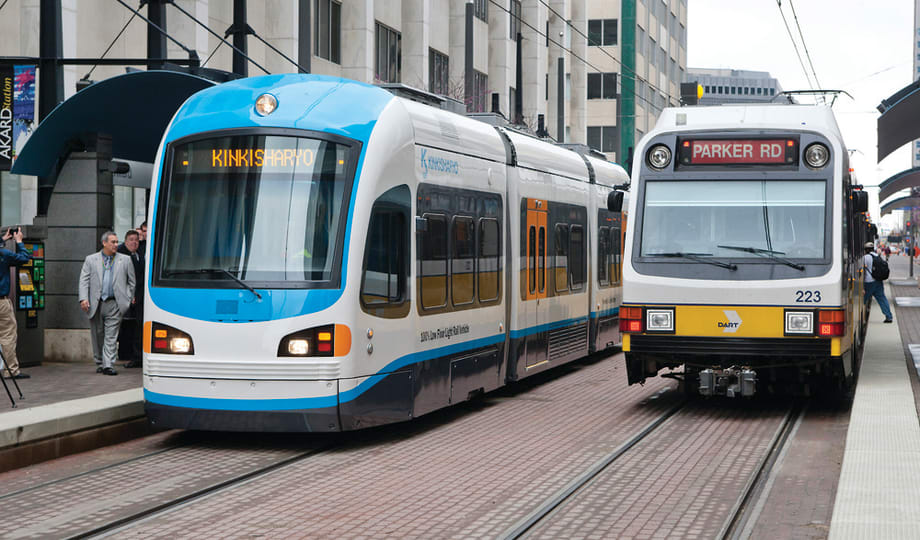
Kinkisharyo International LLC will have ameriTRAM — its prototype of the 100 percent low-floor, electro-hybrid streetcar specifically designed for North America — in booth #5732 at EXPO. This will be the final destination of a year-long tour that included stops in Charlotte, N.C.; Dallas; Austin, Texas; Kansas City, Mo.; Phoenix and Tempe, Ariz.
"We have had enthusiastic support and response from local government, transit officials and the public everywhere we have been with ameriTRAM," said Bill Kleppinger, project manager of Kinkisharyo International. "Plus, we also drew attendees from cities all over the country to the various events. Being on the show floor at APTA will give everyone who was unable to make any of the city events a chance to see this revolutionary vehicle up close and get all their questions answered."
ameriTRAM is a 100 percent low-floor streetcar powered by e-Brid, a propulsion technology that enables operation powered by overhead catenary or on-board lithium-ion batteries.
e-Brid charges the batteries while running on catenary power and when braking. In battery mode, it uses the stored electricity to operate at full performance without overhead wires. Depending on conditions, ameriTRAM can run on battery power for up to five miles.
The propulsion system offers compelling advantages. Less electrification equipment and maintenance means that e-Brid saves municipalities millions of dollars in capital investment and operational costs, including $5 million to $6 million for every mile of catenary avoided. Eliminating overhead catenary wires allows ameriTRAM to serve sensitive historic preservation areas and areas where installing overhead wires is just not practical, such as under low bridges.
Also, because e-Brid enables battery-powered operation for up to five miles, ameriTRAM delivers immediate savings through lower power consumption and also eliminates harmful greenhouse gas emissions.
ameriTRAM was specifically engineered for North America and complies with the Americans with Disabilities Act, Buy America, NFPA-130 and ASME RT-1.
More Rail
Amtrak, CN Reach Agreements to Strengthen Passenger Rail Service, Safety
The agreement resolves a more than decade-long proceeding before the Surface Transportation Board concerning the terms and conditions for Amtrak services, such as the City of New Orleans, Illini/Saluki, and Wolverine.
Read More →
New York MTA Advances Final Contract for Second Avenue Subway Expansion
Contract Four is the largest in the Second Avenue Subway Phase 2 project and includes construction of station infrastructure, tracks, and signals for the subway expansion, MTA officials said. Work on Contract Four will begin in 2027.
Read More →
San Diego MTS Breaks Monthly Trolley Ridership Record
Agency officials said July’s ridership indicates MTS’s continued recovery from the pandemic.
Read More →
Report Examines NJ TRANSIT Reliability, Funding Challenges
The Garden State Initiative analysis examines the roles of Amtrak infrastructure, fleet management, and agency operations while recommending a more performance-based approach to improving reliability.
Read More →
Stadler, CapMetro Sign Long-Term Rail Fleet Support Agreement
Beginning in 2027, Stadler will provide on-site technical expertise, spare parts support, training, and obsolescence management to help extend the reliability and longevity of CapMetro’s GTW fleet.
Read More →
Biz Briefs: Alstom Lands Canadian Contract, LYT to Supply California TSP, and More
In METRO's latest installment, we take a look at recent news from Complete Coach Works, Beep, FlixBus, and more partnerships making headlines across the transportation sector.
Read More →
CATS Gold Line Marks 5 Years of Service, 2.8M Passenger Trips
With a six-mile expansion planned, the Charlotte streetcar is positioned to connect more neighborhoods and major transit hubs across the region.
Read More →
Why Simulating Pedestrian Movement Has Become Essential for Modern Rail Stations
Pedestrian microsimulation is helping rail planners identify bottlenecks, test station designs, and prepare complex transit hubs for growing passenger volumes.
Read More →
Amtrak Begins Major Construction at New York’s Sunnyside Yard
The new maintenance facility will support Amtrak’s Airo trainsets while improving maintenance efficiency and turnaround times in New York.
Read More →
Chicago Leaders Unveil Plans for O’Hare Airport Express Train
The privately developed project would offer a 15-minute trip between downtown and O’Hare’s Terminal 2, with trains operating every 15 minutes on a dedicated track. The service would use battery-electric trains and three existing freight rail rights-of-way.
Read More →