



Amtrak expands pets program across U.S.
More than 2,700 pets have traveled with their human companions along the Northeast Corridor since the pilot launched in October 2015.

Amtrak

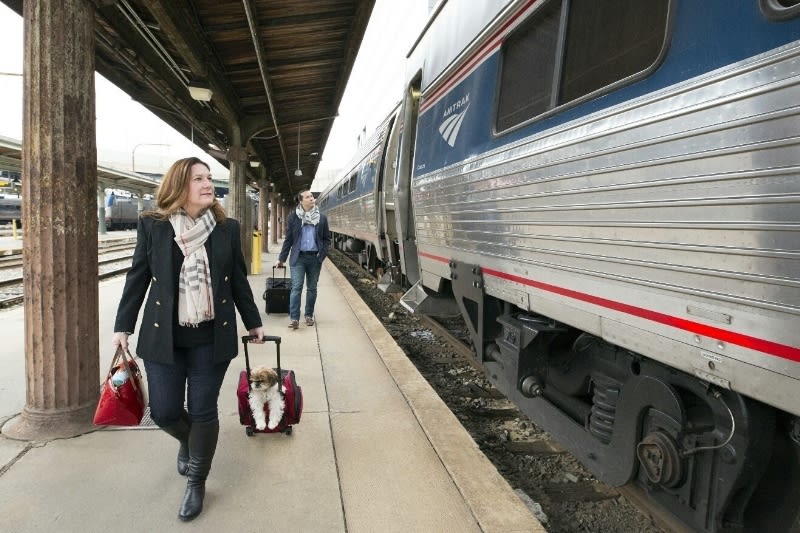
Amtrak announced it has extended and expanded its pets program, allowing customers to continue traveling with their small pets on many eastern corridor trains. Amtrak has also added this service for trips up to 7 hours in length to most long distance trains beginning Feb. 16, and is starting a weekend-only pilot program on Acela Express starting, Feb. 20.
As a result of the success of its pilot test, Amtrak has made its program permanent on eastern and select mid-western corridor trains and expanded the program to its long-distance trains throughout the nation (with the exception of the Auto Train). More than 2,700 pets have traveled with their human companions along the Northeast Corridor since the pilot launched in October 2015. Boston, New York, Philadelphia and Washington, D.C. were the top departure cities.
Pet service is available at all stations (staffed and unstaffed). Only one cat or one small dog are allowed in an enclosed carrier on trips up to seven hours in length. Both pet and carrier must be a combined weight of 20 pounds. Advance reservations are required and a surcharge of $25, each way, will be assessed for travel.
"We are excited to bring this service to more of our passengers throughout the country who want to travel with these cherished family members," said Amtrak president/CEO Joe Boardman. "We listened to our passengers and delivered on this program, which will also help increase ridership and revenue."
The Acela Express pilot program, which is initially scheduled through June 12, 2016, will be regularly reviewed for possible improvements or continuation beyond that date.
Amtrak continues to welcome service animals on board at no charge. For more information about Amtrak's Pet policy, visit Amtrak.com.
More Rail
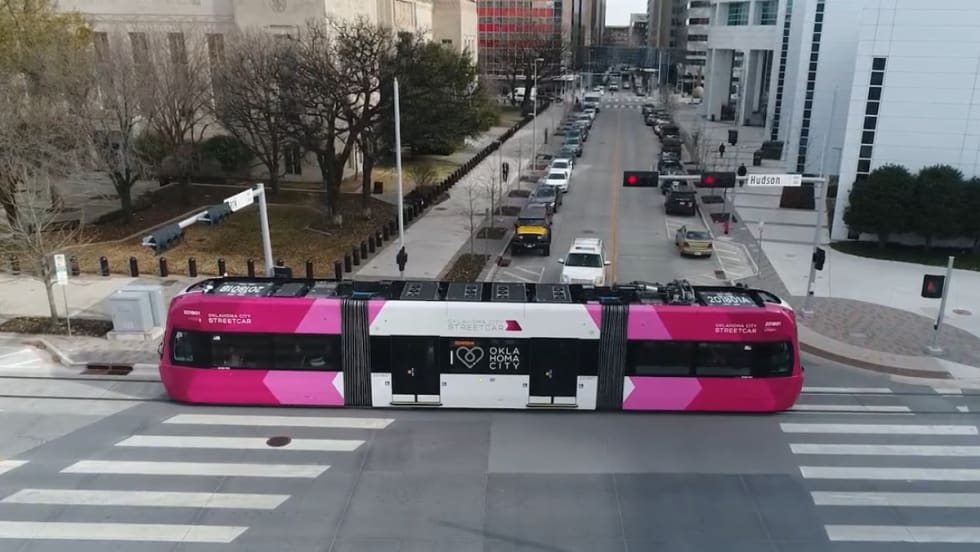
OKC Streetcar Makes Zero-Fare Service Permanent
Ridership increased an average of 71% compared with the same period a year earlier during the fare-free pilot.
Read More →
DART Customer Satisfaction Reaches Six-Year High
Overall satisfaction rose to 74.9%, while the agency’s Net Promoter Score reached a record 33.7.
Read More →
How DART's GoPass Is Redefining Regional Mobility
Serving 14 transit agencies, GoPass simplifies multimodal travel by allowing riders to plan, pay for, and manage an entire trip through one app.
Read More →
Amtrak Board Advances Plan to Restructure Organization, Seeks Public Input
The proposal, developed by Amtrak management and approved by the board for further consideration, is intended to modernize the organization's structure while improving accountability, operational efficiency, and customer service.
Read More →
Biz Briefs: STV teams with Amtrak, Motorcoach Operators Boost Fleet and Land Contracts, and More
From manufacturers and suppliers to transit agencies and motorcoach operators, these updates offer a snapshot of the projects, partnerships and business moves driving the industry forward.
Read More →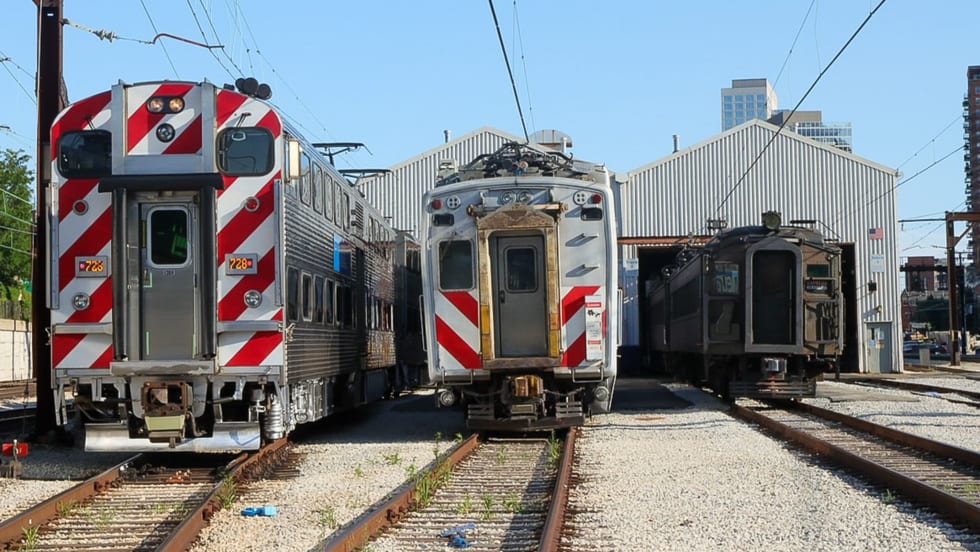
Metra Celebrates 100 Years of Electric Rail, Looks to the Future
The event was also a celebration of recent reforms to public transportation in the Chicago area, changes that could be as transformative in the future as the major civic achievement a century ago, said officials.
Read More →
LA Metro Marks Banner Year, Sets Ambitious Goals for New Fiscal Year
Incoming LA Metro Board Chair and Los Angeles Mayor Karen Bass joined outgoing Board Chair Fernando Dutra and LA Metro CEO Stephanie Wiggins to review accomplishments from fiscal year 2026, which included the opening of new rail extensions, advancement of major transit projects, expanded safety programs, and new rider amenities.
Read More →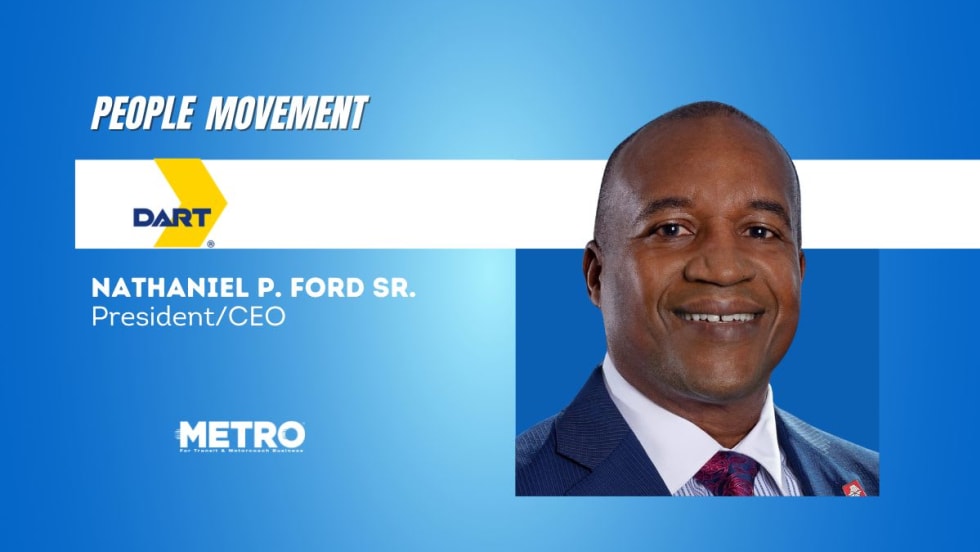
DART Taps Nathaniel P. Ford Sr. as Next President/CEO
Since 2012, Ford has served as the CEO of the Jacksonville Transportation Authority
Read More →
California High-Speed Rail Authority Signs MOU to Advance High Desert Corridor
The agreement deepens collaboration between the California High-Speed Rail Authority and the High Desert Corridor Joint Powers Agency, supporting design integration, cost savings, and faster delivery of a key Southern California rail link.
Read More →
Building the Next Generation of Transit Technology
In this edition of METROspectives, Luminator CEO Magnus Friberg discusses the company's transformation, the growing role of AI and software, and what's next for transit technology.
Read More →