




RELATED: Bestmile joins Renovo's automated mobility ecosystem
Bestmile launches consulting service to help deploy new mobility
Enables mobility providers to accurately plan and analyze service performance in advance, accelerating time to market and reducing risks.
October 29, 2018

Bestmile, a mobility services platform for autonomous and human-driven vehicle fleets, unveiled its new consultancy to help fleets deploy new mobility services. Photo: Bestmile
2 min to read
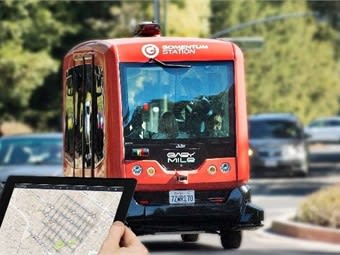
Bestmile, a mobility services platform for autonomous and human-driven vehicle fleets, unveiled its new consultancy to help fleets deploy new mobility services. Photo: Bestmile
Bestmile, a mobility services platform for autonomous and human-driven vehicle fleets, unveiled its new consultancy to help fleets deploy new mobility services.
The Professional Consulting Service is based on its Mobility Services Platform and advanced simulation capabilities. Called the Service Design Offering, the consulting service enables mobility providers to accurately plan and analyze service performance in advance, accelerating time to market and reducing risks associated with deploying new mobility services.
Mobility service providers considering unprecedented new on-demand services face questions that they can’t answer without testing the actual service. Common questions include: how many vehicles will they need, where should they be deployed, and how will the fleet perform in specific areas with unique demand profiles? For many new shared, on-demand services, there is little available in the way of a recipe for success.
The company’s Mobility Services Platform uses advanced scheduling, dispatching, and ride-matching algorithms that make it possible to optimize key performance indicators (KPIs) such as waiting times, demand-fulfillment, vehicle/asset-utilization, and more to find the right balance between the number of vehicles needed, demand characteristics, and service area requirements.
Bestmile’s Service Design Offering uses the same platform that is used for commercial deployments to simulate planned services using actual or expected demand data for a specific service area. This allows mobility service providers to test multiple variables like fleet size, vehicle positioning, vehicle capacity, and waiting and ride time limits, with the goal of optimizing KPIs such as vehicle utilization, excess ride times, and pickup time deviations, all prior to launch.
To demonstrate the capabilities of the consulting service, Bestmile utilized demand data from Chicago taxi companies and tested the performance of three services in three different areas: microtransit in Lincoln Park, shuttle service to and from O’Hare Airport, and citywide ride-sharing. Each test used multiple fleet sizes and sharing scenarios to view impacts on ride acceptance rates, ride times and waiting times, and other passenger and operator KPIs.
The new offering is available now to all existing and prospective customers.
More New Mobility

From Hardware to Digital Partner: Luminator Charts Its Next Chapter
CEO Magnus Friberg discusses Luminator’s shift toward becoming a digital partner, the growing importance of software and interoperability, and how AI can help agencies improve operations and passenger experience.
Read More →
Biz Briefs: Alstom Lands Canadian Contract, LYT to Supply California TSP, and More
In METRO's latest installment, we take a look at recent news from Complete Coach Works, Beep, FlixBus, and more partnerships making headlines across the transportation sector.
Read More →
CharterUP’s Armir Harris on Technology, AI, and the Future of Group Mobility
In a recent episode of METROspectives, CharterUP Founder/CEO Armir Harris discussed the company’s evolution from an online charter bus marketplace into a technology platform supporting public- and private-sector mobility and much more.
Read More →
Jacksonville’s NAVI Project Charts a New Course for Autonomous Public Transportation
Through its NAVI program, JTA is showing how autonomous vehicles, intelligent infrastructure, and coordinated operations can work together to deliver everyday public transportation.
Read More →
Biz Briefs: Luminator Marks Milestone and More
From manufacturers and suppliers to transit agencies and motorcoach operators, these updates offer a snapshot of the projects, partnerships and business moves driving the industry forward.
Read More →
New Tricks for Old Bureaucracies: Joshua Schank on Making Transit Innovation Stick
Former LA Metro Chief Innovation Officer Joshua Schank discusses why good ideas aren't enough, how transit agencies can overcome resistance to change, and why today's challenges demand more innovation.
Read More →
How DART's GoPass Is Redefining Regional Mobility
Serving 14 transit agencies, GoPass simplifies multimodal travel by allowing riders to plan, pay for, and manage an entire trip through one app.
Read More →
Biz Briefs: OCTA Taps Clean Energy for Hydrogen Station, Stadler to Supply Via Rail Vehicles, and More
From manufacturers and suppliers to transit agencies and motorcoach operators, these updates offer a snapshot of the projects, partnerships and business moves driving the industry forward.
Read More →CharterUP Expands Into New Mobility and Autonomous Transportation
Vice President of New Mobility Stephen Joos discusses how CharterUP is leveraging its nationwide transportation network, technology platform, and autonomous vehicle partnerships to expand into workforce mobility, campus shuttles, and transit solutions.
Read More →
METRO Magazine Announces 2026 Innovative Solutions Awards Winners
Projects Recognized for Advancing Mobility Through Technology, Accessibility, Workforce Innovation, and Operational Excellence
Read More →