




RELATED: MBTA expands Uber, Lyft subsidized paratransit rides
Boston transportation plan touts 58 projects to improve mobility
Plan includes policies for restructured bus routes, autonomous vehicles and development of 'microhubs' with access to bike- and carshare options.
March 7, 2017
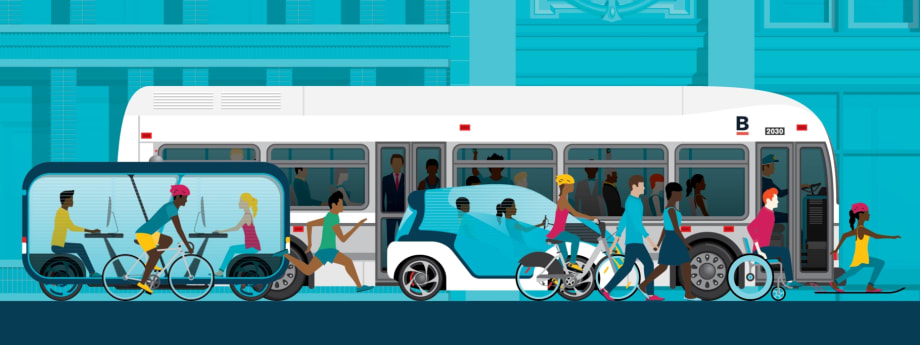
Go Boston 2030 image via Facebook
3 min to read

Go Boston 2030 image via Facebook
The City of Boston's newly released transportation plan is comprised of 58 transportation projects and policies that are designed to expand access to a variety of connected transportation options, improve traffic-related safety on Boston's streets, and ensure reliability of service for the City's residents, commuters and visitors. The Go Boston 2030 Vision and Action Plan, unveiled by Mayor Martin J. Walsh today, highlights projects already underway and presents a blueprint for the City to direct its capital plan funding.
The "Top Policies and Projects" of the Go Boston 2030 Vision and Action Plan include:
Top Policies
Vision Zero Safety Initiatives - continue to implement innovative measures to reduce traffic-related fatalities and severe injuries due to crashes on Boston's local streets.
State of Good Repair - investments by the City to repair and maintain Boston's roadways and bridges for the decades ahead.
Restructure Bus Routes - work with the MBTA and local communities to develop a new network of bus routes that better match the travel needs of Bostonians.
Autonomous Vehicles - develop policies to prepare for self-driving vehicles and support on-street testing of autonomous vehicles.
Top Projects:
Walking and Bicycle Friendly Main Street Districts - improve access into and around Boston's neighborhood commercial districts for people traveling on foot and by bike.
Fairmount Line Service Improvements and Urban Rail - provide improved connections for Dorchester and Mattapan with an increase to the frequency of service and better payment systems, and then introduce new rail cars to create a rapid transit line.
Columbia Road Greenway - create a neighborhood friendly street for those walking, biking, or traveling by bus along this corridor, that connects to Franklin and Moakley Parks.
Neighborhood Mobility microHUBs - develop prominent neighborhood access points to help residents select from a range of connected travel choices including subway, bus, bike-share and car-share.
Smart Signal Corridors and Districts - program traffic lights to work together to facilitate movement in congested parts of the City.
Mattapan to LMA Rapid Bus - design high-quality stops, signal priority, all-door boarding, and some exclusive lanes to create direct access from Mattapan and Southwest Dorchester to jobs and medical care in Roxbury, Mission Hill, and the Longwood Medical and Academic Area.
North Station to South Boston Waterfront Rapid Bus and Ferry - introduce direct bus service in exclusive lanes between the Seaport and northern commuter rail in tandem with ferry service.
Five thousand ideas were submitted to the City during the first round of the public engagement process, helping to set the project's goals and metrics. Moving forward from goals to specific projects, the public submitted another 3,500 policy and project ideas. After analyzing these ideas, nearly 4,000 Boston residents and others helped to prioritize them by voting for their top choices of projects.
Several Go Boston 2030 projects are already underway and are having a positive impact on the City's streets, including:
-Vision Zero
-Neighborhood Slow Streets
-ParkBoston
-Performance Pricing Parking Meter Pilot Program
-Boston's Safest Driver Contest
-Autonomous Vehicle Testing
-DriveBoston car-share Program
-Expansion of Hubway bike-share Program
-Installation of protected bike lanes.
Information on all of these programs can be found at www.boston.gov/transportation.
The Go Boston 2030 Vision and Action Plan provides a blueprint for the City of Boston to direct its capital plan spending and to work with state transportation agencies to begin implementation.
More New Mobility

From Hardware to Digital Partner: Luminator Charts Its Next Chapter
CEO Magnus Friberg discusses Luminator’s shift toward becoming a digital partner, the growing importance of software and interoperability, and how AI can help agencies improve operations and passenger experience.
Read More →
Biz Briefs: Alstom Lands Canadian Contract, LYT to Supply California TSP, and More
In METRO's latest installment, we take a look at recent news from Complete Coach Works, Beep, FlixBus, and more partnerships making headlines across the transportation sector.
Read More →
CharterUP’s Armir Harris on Technology, AI, and the Future of Group Mobility
In a recent episode of METROspectives, CharterUP Founder/CEO Armir Harris discussed the company’s evolution from an online charter bus marketplace into a technology platform supporting public- and private-sector mobility and much more.
Read More →
Jacksonville’s NAVI Project Charts a New Course for Autonomous Public Transportation
Through its NAVI program, JTA is showing how autonomous vehicles, intelligent infrastructure, and coordinated operations can work together to deliver everyday public transportation.
Read More →
Biz Briefs: Luminator Marks Milestone and More
From manufacturers and suppliers to transit agencies and motorcoach operators, these updates offer a snapshot of the projects, partnerships and business moves driving the industry forward.
Read More →
New Tricks for Old Bureaucracies: Joshua Schank on Making Transit Innovation Stick
Former LA Metro Chief Innovation Officer Joshua Schank discusses why good ideas aren't enough, how transit agencies can overcome resistance to change, and why today's challenges demand more innovation.
Read More →
How DART's GoPass Is Redefining Regional Mobility
Serving 14 transit agencies, GoPass simplifies multimodal travel by allowing riders to plan, pay for, and manage an entire trip through one app.
Read More →
Biz Briefs: OCTA Taps Clean Energy for Hydrogen Station, Stadler to Supply Via Rail Vehicles, and More
From manufacturers and suppliers to transit agencies and motorcoach operators, these updates offer a snapshot of the projects, partnerships and business moves driving the industry forward.
Read More →CharterUP Expands Into New Mobility and Autonomous Transportation
Vice President of New Mobility Stephen Joos discusses how CharterUP is leveraging its nationwide transportation network, technology platform, and autonomous vehicle partnerships to expand into workforce mobility, campus shuttles, and transit solutions.
Read More →
METRO Magazine Announces 2026 Innovative Solutions Awards Winners
Projects Recognized for Advancing Mobility Through Technology, Accessibility, Workforce Innovation, and Operational Excellence
Read More →