




RELATED: Brookville Liberty Streetcar wins award for onboard storage system
Brookville to restore, modernize streetcars for El Paso project
The contract, valued at $18.8 million, includes completely stripping down the vehicle frames, repairing and replacing structural carbody components, a complete rewiring, truck remanufactures, door upgrades, and integration of modern technologies to provide a modern transit solution wrapped in a nostalgic, historical package.
October 27, 2015
City-Data.Com
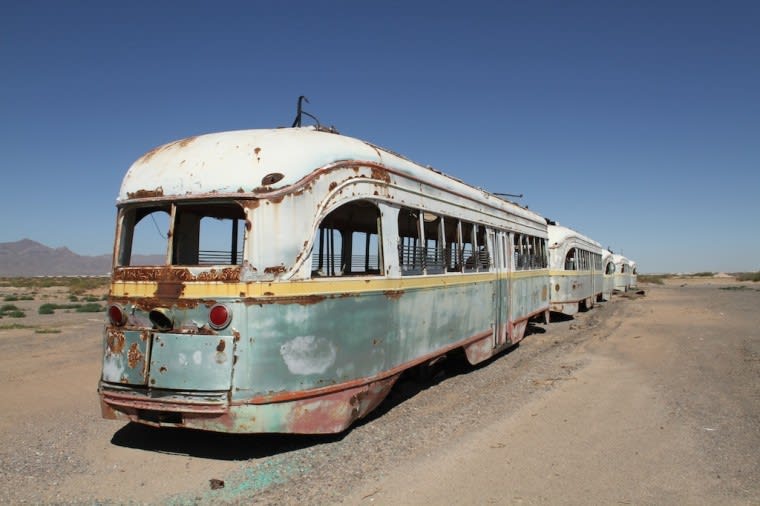
El Paso’s fleet of PCC streetcars was originally manufactured in 1937 by the St. Louis Car Co. for the City of San Diego. Later, the cars serviced El Paso and crossed into Ciudad Juárez, Mexico, before being removed from service in 1974.
2 min to read
City-Data.Com
El Paso’s fleet of PCC streetcars was originally manufactured in 1937 by the St. Louis Car Co. for the City of San Diego. Later, the cars serviced El Paso and crossed into Ciudad Juárez, Mexico, before being removed from service in 1974.
The Camino Real Regional Mobility Authority (CRRMA), working with the City of El Paso, Texas, signed an agreement with Brookville Equipment Corp. for the complete overhaul, restoration, and modernization of six Presidents’ Conference Committee (PCC) streetcars originally manufactured in 1937.
This contract is for the forthcoming 4.8-mile El Paso Streetcar Project, which will return the City of El Paso’s PCC vehicles to service for the first time since 1974.
The contract, valued at $18.8 million, includes completely stripping down the vehicle frames, repairing and replacing structural carbody components, a complete rewiring, truck remanufactures, door upgrades, and integration of modern technologies to provide a modern transit solution wrapped in a nostalgic, historical package. Key modern amenities will include the integration of HVAC units, a wheelchair lift system to ensure ADA accessibility, WiFi hotspot access, bike racks, and fareboxes.
The PCC restorations will begin in November 2015 at Brookville’s manufacturing facility in Brookville, Pa. As currently envisioned, the six streetcars will be refinished in El Paso’s original paint schemes from the 1950s (green, orange and white), 1960s (blue and white), and late 1960s and early 1970s (light blue, red and white), with two of each scheme included in the order.
“We are eager to partner with the CRRMA to return these streetcars to service for the City of El Paso and its citizens,” said Brookville VP of Business Development Joel McNeil. “By retaining the charms of yesteryear, while also integrating the latest technologies for passenger accessibility and convenience, we are hopeful these restored streetcars will serve as a reminder of El Paso’s unique history and become iconic symbols of its future.”
El Paso’s fleet of PCC streetcars was originally manufactured in 1937 by the St. Louis Car Co. for the City of San Diego. Later, the cars serviced El Paso and crossed into Ciudad Juárez, Mexico, before being removed from service in 1974. Since that time, the streetcars have been in outdoor storage, but now will be transported to Brookville for a complete remanufacture at the industry’s leading PCC streetcar rebuilder, with over 30 PCC streetcars in service in the U.S. and over 70 rebuilt or originally manufactured streetcars operating on American streets.
Currently, Brookville is working through a PCC streetcar end-of-life rebuild project for the San Francisco Municipal Transportation Authority, after having completed 16 original rebuilds from 2004 through 2011. In the early 2000s, the company also modernized and rebuilt 18 PCC streetcars for the Southeastern Pennsylvania Transportation Authority. At the completion of these and all current projects, Brookville will have made contributions to 56 PCC streetcars, and 88 total heritage streetcars in the U.S.
More Rail

New York MTA Advances Final Contract for Second Avenue Subway Expansion
Contract Four is the largest in the Second Avenue Subway Phase 2 project and includes construction of station infrastructure, tracks, and signals for the subway expansion, MTA officials said. Work on Contract Four will begin in 2027.
Read More →
San Diego MTS Breaks Monthly Trolley Ridership Record
Agency officials said July’s ridership indicates MTS’s continued recovery from the pandemic.
Read More →
Report Examines NJ TRANSIT Reliability, Funding Challenges
The Garden State Initiative analysis examines the roles of Amtrak infrastructure, fleet management, and agency operations while recommending a more performance-based approach to improving reliability.
Read More →
Stadler, CapMetro Sign Long-Term Rail Fleet Support Agreement
Beginning in 2027, Stadler will provide on-site technical expertise, spare parts support, training, and obsolescence management to help extend the reliability and longevity of CapMetro’s GTW fleet.
Read More →
Biz Briefs: Alstom Lands Canadian Contract, LYT to Supply California TSP, and More
In METRO's latest installment, we take a look at recent news from Complete Coach Works, Beep, FlixBus, and more partnerships making headlines across the transportation sector.
Read More →
CATS Gold Line Marks 5 Years of Service, 2.8M Passenger Trips
With a six-mile expansion planned, the Charlotte streetcar is positioned to connect more neighborhoods and major transit hubs across the region.
Read More →
Why Simulating Pedestrian Movement Has Become Essential for Modern Rail Stations
Pedestrian microsimulation is helping rail planners identify bottlenecks, test station designs, and prepare complex transit hubs for growing passenger volumes.
Read More →
Amtrak Begins Major Construction at New York’s Sunnyside Yard
The new maintenance facility will support Amtrak’s Airo trainsets while improving maintenance efficiency and turnaround times in New York.
Read More →
Chicago Leaders Unveil Plans for O’Hare Airport Express Train
The privately developed project would offer a 15-minute trip between downtown and O’Hare’s Terminal 2, with trains operating every 15 minutes on a dedicated track. The service would use battery-electric trains and three existing freight rail rights-of-way.
Read More →
OCTA Maps Out 30-Year Strategy to Protect Coastal Rail Corridor
The draft feasibility report identifies strategies to protect the coastal rail line for decades as the agency continues near-term stabilization and sand placement efforts.
Read More →