



California's AVTA Celebrates 'Electric' 10-Year Anniversary
By using groundbreaking zero-emission battery-electric bus technology and wireless inductive charging technology, AVTA's innovative bus conversion helped pioneer a new vision for what a 21st century transit agency can accomplish.


AVTA’s 100% battery-electric fleet, the first and largest 100% electric fleet in North America, serves the Antelope Valley and areas extending south into the Los Angeles Basin.
Photo: AVTA
In September of 2014, Lancaster, Calif.’s Antelope Valley Transit Authority (AVTA), under direction from their forward-thinking board, embarked on the historic journey to become the first transit agency in the nation to operate a 100% battery-electric zero-emission fleet by placing into service their first two electric buses.
In October, AVTA staff, their board, Los Angeles County Supervisor Kathryn Barger, City of Lancaster Mayor R. Rex Parris, and many other local elected officials and their representatives, joined together to celebrate the agency’s 10-year anniversary of those first two electric buses beginning their journey.
“This is an incredible milestone and success,” said AVTA Chairman of the Board Marvin Crist. “Many transit agencies across the country are just now planning to purchase their first electric vehicle and AVTA is celebrating 10-years of operating electric vehicles in revenue service.”
Developing a Vision
Even before 2014, the Antelope Valley’s elected officials and AVTA’s board developed a vision for a zero-emission transportation fleet to serve the residents of the Northern Los Angeles County communities.
In early 2014, Los Angeles County Supervisor Michael Antonovich funded the purchase of two 40-foot BYD battery-electric buses. This was the beginning of AVTA’s historical 100% electric fleet.
The electric vehicles endured road testing designed by AVTA staff and BYD engineers, using weights and sandbags to simulate riders. The feasibility tests showed these buses would work well for AVTA’s local service and in September 2014, were placed into revenue service.
“AVTA’s Electric Bus Fleet Conversion project was a huge success,” continued Chairman Crist. “All of us, the staff, the board, and local officials, working together, created a smarter, greener, and more interconnected transit system.”
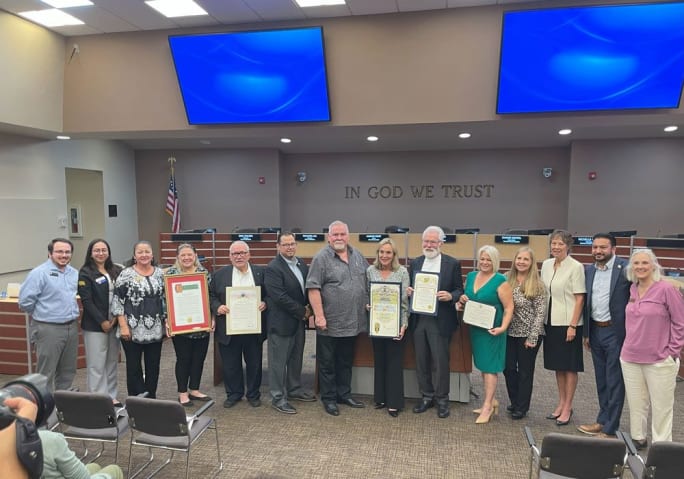
In October, AVTA staff, their board, Los Angeles County Supervisor Kathryn Barger, City of Lancaster Mayor R. Rex Parris, and many other local elected officials and their representatives, joined together to celebrate the agency’s 10-year anniversary of those first two electric buses beginning their journey.
Photo: AVTA
Driving the Future
AVTA’s 100% battery-electric fleet, the first and largest 100% electric fleet in North America, serves the Antelope Valley and areas extending south into the Los Angeles Basin.
By using groundbreaking zero-emission battery-electric bus technology and wireless inductive charging technology, AVTA's innovative bus conversion helped pioneer a new vision for what a 21st century transit agency can accomplish.
AVTA provides local, commuter and dial-a-ride service to a population of more than 450,000 residents in the cities of Lancaster and Palmdale as well as the unincorporated portions of northern Los Angeles County.
Its total service area covers 1,200 square miles and it is bounded by the Kern County line to the north, the San Bernardino County line to the east, the Angeles National Forest to the south, and Interstate 5 to the West.
More Zero Emissions
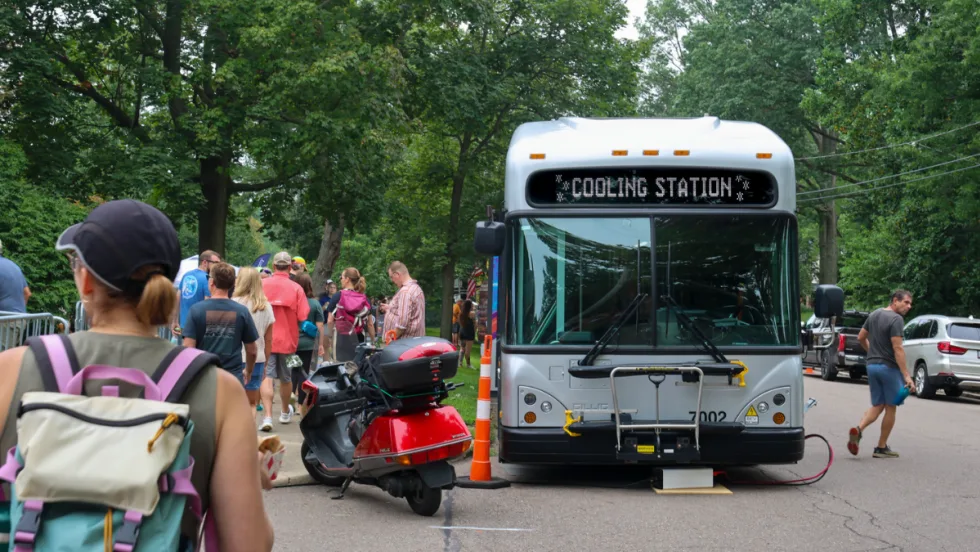
Ohio’s METRO RTA Turns Electric Buses into Mobile Power Sources at PorchROKR
See how three Gillig battery-electric buses powered festival stages while the agency’s new Park & Ride service carried approximately 1,000 attendees, demonstrating another potential use for transit agencies’ electric fleets.
Read More →
CALSTART and Forth Combine to Form Catalyst Mobility
The new name represents a renewed vision for the nonprofit focused on advancing clean, equitable, and affordable transportation solutions that move people and goods.
Read More →
Building a Flexible Path to Transit Electrification
John Hroncich discusses BAE Systems’ modular and scalable approach, lessons learned from decades of real-world operations, and how agencies can identify electrification strategies that fit their fleets.
Read More →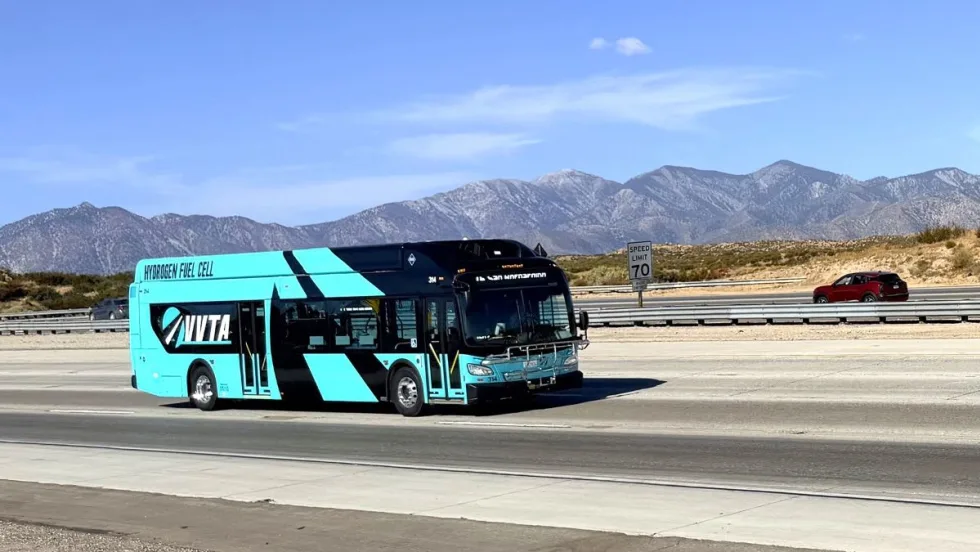
California's VVTA Begins Phased Rollout of Hydrogen Fuel Cell Buses
The agency is introducing 13 zero-emission buses into revenue service while evaluating performance across its urban, rural, and long-distance routes.
Read More →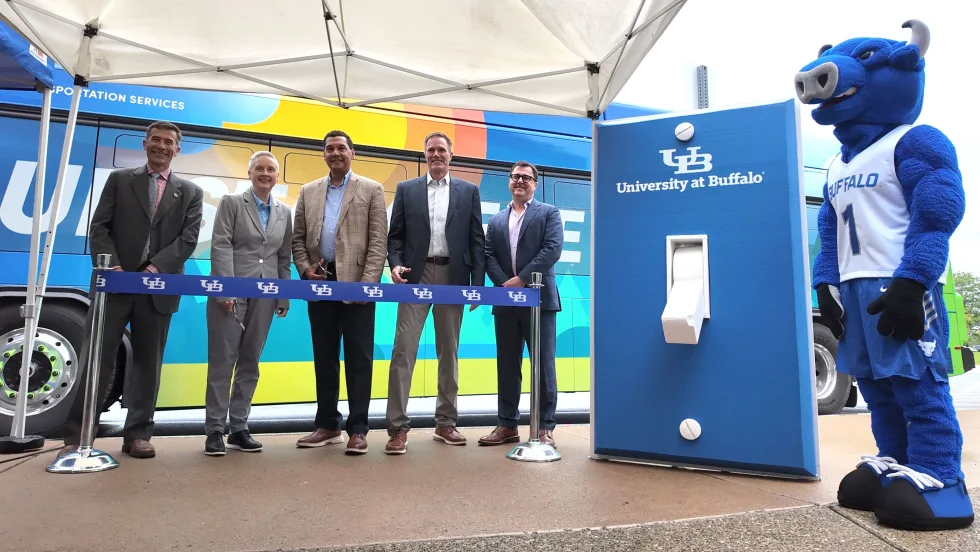
Inside Look: University at Buffalo Puts First 8 Electric Buses Into Stampede Service
UB, transportation solutions provider WeDriveU, and fleet electrification specialist Zenobē marked the deployment in the presence of students, university administrators, and local officials.
Read More →
Biz Briefs: OCTA Taps Clean Energy for Hydrogen Station, Stadler to Supply Via Rail Vehicles, and More
From manufacturers and suppliers to transit agencies and motorcoach operators, these updates offer a snapshot of the projects, partnerships and business moves driving the industry forward.
Read More →
AC Transit’s Cecil Blandon on Building the Next Generation of Transit Maintenance Leaders
The agency’s maintenance chief discusses leadership, workforce development, zero-emission technology, and preparing technicians for the future of public transportation.
Read More →
CTDOT Taps STV for Electric Bus Facility Design
The firm will work with CTDOT and RVT to define the facility layout, operational requirements, and long-term flexibility for RVT’s growing electric fleet.
Read More →
Chicago’s Pace Deploys 24 Hybrid-Electric Buses in Will County
The new buses reduce emissions and fuel consumption while advancing the agency's long-term goal of transitioning to a fully zero-emission fleet.
Read More →
DASH Breaks Ground on First On-Route Electric Bus Chargers in D.C. Region
The fast-charging infrastructure will help extend electric bus range, improve fleet utilization, and support DASH's goal of transitioning to a fully zero-emission fleet.
Read More →