



Chicago awarded $1M in BRT funds from Rockefeller Foundation
Will support the Chicago DOT and Chicago Transit Authority’s research, technical support, project management and community engagement.

The Rockefeller Foundation renewed its support for Chicago’s efforts to develop a Bus Rapid Transit (BRT) system through $1 million in additional financial support for research, technical support, project management and community engagement to the Chicago Department of Transportation (CDOT) and the Chicago Transit Authority (CTA).
To date, The Rockefeller Foundation has provided nearly $1.8 million toward the Chicago BRT program for various activities, including:
Technical assistance of a system network plan and overall coordination.
Branding and communications.
Outreach and education to city and community leaders, chambers of commerce, neighborhood groups and the general public.
Land-use planning around the Western/Ashland corridors.
This support from The Rockefeller Foundation has been able to leverage approximately $80,000 in matching support from the Chicago Community Trust (CCT), direct technical assistance from Institute for Transportation & Development Policy (ITDP), and additional support from the Boeing Foundation.
BRT improvements designed to make bus travel more reliable and appealing to customers include: colored pavement markings and enhanced signage clearly delineating the bus lanes; level-boarding and off-board fare collection; signal priority for buses at key intersections; distinct bus shelters at locations served by designated routes; “Next Bus” arrival signs at bus stops and nearby locations; sidewalk improvements; and the installation of protected bicycle lanes.
“Bus Rapid Transit is aimed at improving commutes along some of the most traveled corridors of Chicago,” said CTA President Forrest Claypool. “In addition to the immediate benefits to CTA customers and all who share the roadway, there is potential for secondary benefits, such as spurring economic growth both downtown and in our neighborhoods.”
The work supported by these grants is jointly managed by the CCT, CDOT and CTA for planning, branding and community outreach projects. Other partners in the work include the Chicago Metropolitan Agency for Planning, Active Transportation Alliance, the Metropolitan Planning Council, the Chicago Architecture Foundation, the Center for Neighborhood Technology, Metropolis Strategies and the Civic Consulting Alliance.
BRT plans for the Central Loop East-West Transit Corridor includes designated bus-priority lanes on two miles of streets. The corridor would serve Union Station, Ogilvie Transportation Center, the CTA Red and Blue Line subways, Streeterville and Navy Pier. A new, off-street transportation center just south of Union Station is also part of the concept.
The CTA recently installed improvements along Jeffery Boulevard from 103rd Street/Stony Island to Jefferson/Washington to test elements of BRT systems, and continues to work with CDOT to study the feasibility of future BRT projects on Western and Ashland Avenue corridors.
More Bus

Biz Briefs: OCTA Taps Clean Energy for Hydrogen Station, Stadler to Supply Via Rail Vehicles, and More
From manufacturers and suppliers to transit agencies and motorcoach operators, these updates offer a snapshot of the projects, partnerships and business moves driving the industry forward.
Read More →
METRO Magazine Announces 2026 Innovative Solutions Awards Winners
Projects Recognized for Advancing Mobility Through Technology, Accessibility, Workforce Innovation, and Operational Excellence
Read More →
Biz Briefs: STV teams with Amtrak, Motorcoach Operators Boost Fleet and Land Contracts, and More
From manufacturers and suppliers to transit agencies and motorcoach operators, these updates offer a snapshot of the projects, partnerships and business moves driving the industry forward.
Read More →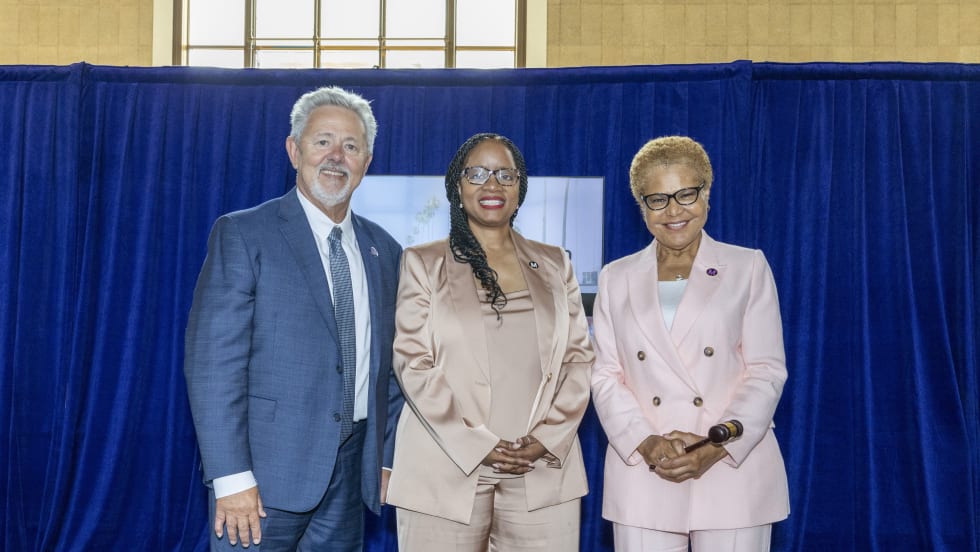
LA Metro Marks Banner Year, Sets Ambitious Goals for New Fiscal Year
Incoming LA Metro Board Chair and Los Angeles Mayor Karen Bass joined outgoing Board Chair Fernando Dutra and LA Metro CEO Stephanie Wiggins to review accomplishments from fiscal year 2026, which included the opening of new rail extensions, advancement of major transit projects, expanded safety programs, and new rider amenities.
Read More →
DART Taps Nathaniel P. Ford Sr. as Next President/CEO
Since 2012, Ford has served as the CEO of the Jacksonville Transportation Authority
Read More →
AC Transit’s Cecil Blandon on Building the Next Generation of Transit Maintenance Leaders
The agency’s maintenance chief discusses leadership, workforce development, zero-emission technology, and preparing technicians for the future of public transportation.
Read More →
Building the Next Generation of Transit Technology
In this edition of METROspectives, Luminator CEO Magnus Friberg discusses the company's transformation, the growing role of AI and software, and what's next for transit technology.
Read More →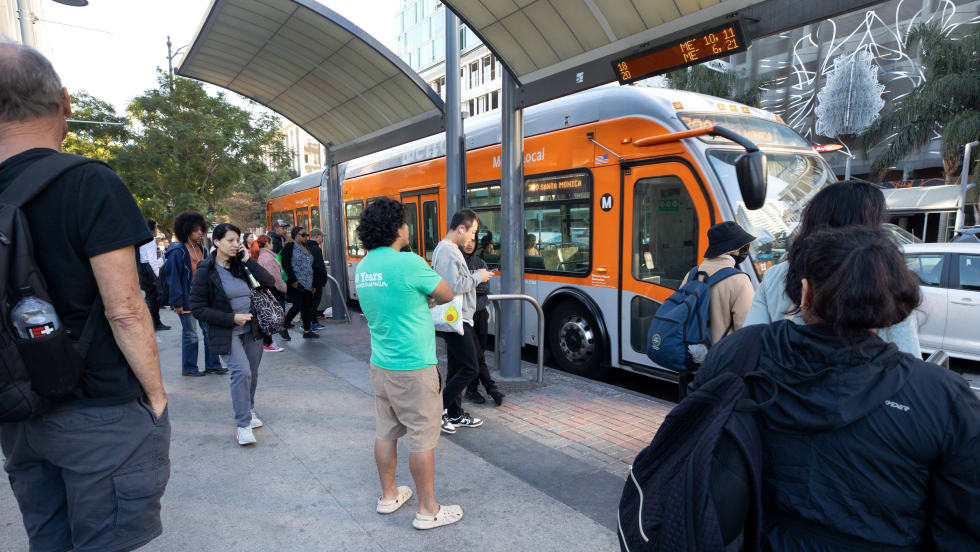
June LA Metro Ridership Surges 2 Million Year Over Year
Total June ridership increased for both weekdays and weekends. Weekday ridership was 953,820, which grew 8.4% from June 2025; Saturdays increased nearly 13% year-over-year to 708,826; and Sundays increased 7.7% to 611,534 from June 2025, according to LA Metro.
Read More →
Washington's Pierce Transit Board Sends Transit Funding Measure to November Ballot
With the adoption of Resolution 2026-006, the measure moves to the Pierce County Auditor, giving voters in the Pierce Transit service area the decision on whether to fund an expansion of local transit service within the agency’s service area.
Read More →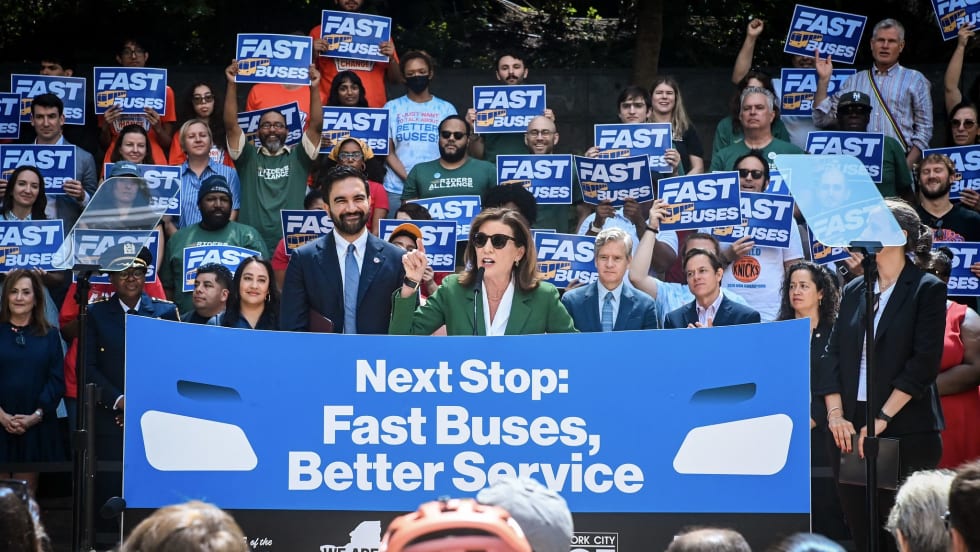
New York Unveils Sweeping Plan to Modernize City Bus Service
Next Stop: Fast Buses, Better Service identifies 50 priority bus corridors for improvements across the five boroughs and launches the City’s next generation of rapid bus service along five key routes.
Read More →