



Chicago Metra upgrades railcar amenities
The program aims to rehabilitate 176 cars with features such as doors with sensitive edges, new LED signs and wheelchair lifts.

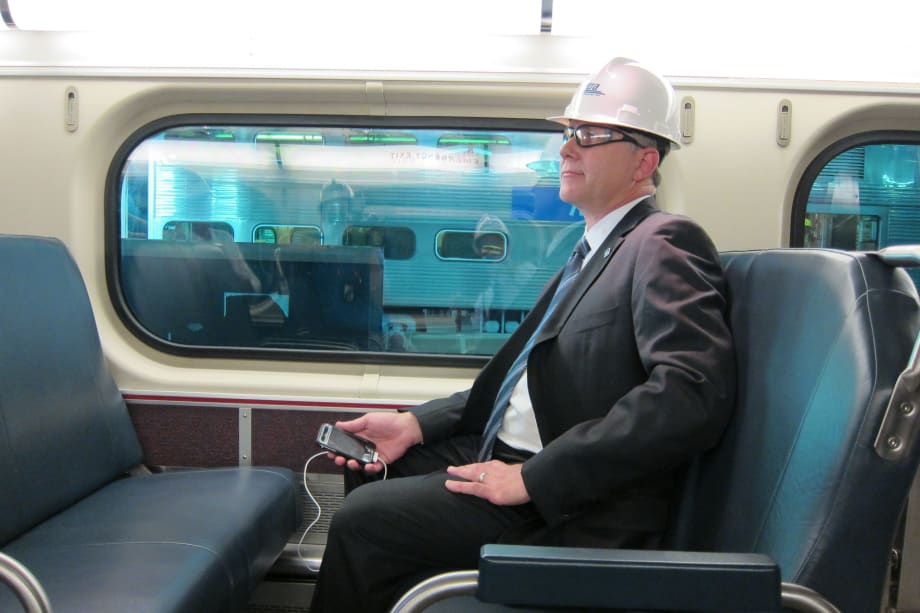
Alex Clifford, executive director/CEO, Metra, charging his phone at one of the new power outlets in a renovated railcar.
Alex Clifford, executive director/CEO, Metra, charging his phone at one of the new power outlets in a renovated railcar.
As part of a multi-year, multimillion-dollar program to renovate its railcars, Chicago’s Metra is installing a variety of new features to improve the passenger experience — perhaps most noticeably by adding power outlets so riders can charge their electrical devices.
Passenger improvements aren’t the only highlight of the rehabilitation program. The passenger cars are being refurbished in-house by Metra workers with years of experience, dedication and know-how. Metra’s processes and procedures have been streamlined to create an ultra-efficient operation that can strip and fully rebuild a car in just 36 days and are saving riders and area taxpayers a great deal of money while pumping dollars back into the local economy.
“If we sound excited by our Amerail passenger car rehabilitation program, it’s because we are,” said Metra Executive Director/CEO Alex Clifford, “We’re getting like-new cars for a fraction of the cost of new ones, giving our riders some nice improvements and amenities and keeping 60 jobs in Chicago. It’s a win-win situation for all involved.”
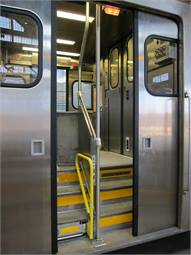
Metra is adding doors with sensitive edges, similar to elevator doors, which will retract if they come into contact with a person or object in the way.
The program aims to rehabilitate 176 cars that were built by Amerail (originally Morrison Knudson) between 1995 and 1998. The car shells were built in Japan but the cars were assembled in Chicago.
Forty cars have been completed so far and 60 should be completed by the end of the year. The entire Amerail fleet, which includes 79 cab cars and 97 trailer cars, should be done by the end of 2016. The work will extend the life of the cars by 12 to 15 years; with future rehabs Metra should be able to get 50 years of service or more out of these cars.
The work is costing about $650,000 in materials and labor per car, or $115 million for the entire project. Contrast that with the going rate for a new car, which is $2.5 million to $3 million depending on the type of car and the number ordered. That’s a savings of about 75% or more.
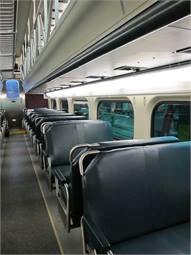
The railcars will feature new composite floors and seats that meet the latest safety regulations.
The new amenities include:
• Doors with sensitive edges, like elevators doors, so they will retract if they come in contact with a person or object in the way.
• Four new LED signs per car, which will assist all passengers, but especially passengers with hearing disabilities, with location announcements.
• New toilets and bathrooms.
• New wheelchair lifts.
• New composite floors and seats that meet the latest safety regulations.
• Nineteen electrical outlets spaced throughout the seating area on the lower level of the car to power phones, computers, iPods, iPads and other gadgets.
More Rail

New York MTA Advances Final Contract for Second Avenue Subway Expansion
Contract Four is the largest in the Second Avenue Subway Phase 2 project and includes construction of station infrastructure, tracks, and signals for the subway expansion, MTA officials said. Work on Contract Four will begin in 2027.
Read More →
San Diego MTS Breaks Monthly Trolley Ridership Record
Agency officials said July’s ridership indicates MTS’s continued recovery from the pandemic.
Read More →
Report Examines NJ TRANSIT Reliability, Funding Challenges
The Garden State Initiative analysis examines the roles of Amtrak infrastructure, fleet management, and agency operations while recommending a more performance-based approach to improving reliability.
Read More →
Stadler, CapMetro Sign Long-Term Rail Fleet Support Agreement
Beginning in 2027, Stadler will provide on-site technical expertise, spare parts support, training, and obsolescence management to help extend the reliability and longevity of CapMetro’s GTW fleet.
Read More →
Biz Briefs: Alstom Lands Canadian Contract, LYT to Supply California TSP, and More
In METRO's latest installment, we take a look at recent news from Complete Coach Works, Beep, FlixBus, and more partnerships making headlines across the transportation sector.
Read More →
CATS Gold Line Marks 5 Years of Service, 2.8M Passenger Trips
With a six-mile expansion planned, the Charlotte streetcar is positioned to connect more neighborhoods and major transit hubs across the region.
Read More →
Why Simulating Pedestrian Movement Has Become Essential for Modern Rail Stations
Pedestrian microsimulation is helping rail planners identify bottlenecks, test station designs, and prepare complex transit hubs for growing passenger volumes.
Read More →
Amtrak Begins Major Construction at New York’s Sunnyside Yard
The new maintenance facility will support Amtrak’s Airo trainsets while improving maintenance efficiency and turnaround times in New York.
Read More →
Chicago Leaders Unveil Plans for O’Hare Airport Express Train
The privately developed project would offer a 15-minute trip between downtown and O’Hare’s Terminal 2, with trains operating every 15 minutes on a dedicated track. The service would use battery-electric trains and three existing freight rail rights-of-way.
Read More →
OCTA Maps Out 30-Year Strategy to Protect Coastal Rail Corridor
The draft feasibility report identifies strategies to protect the coastal rail line for decades as the agency continues near-term stabilization and sand placement efforts.
Read More →