




New CTA courtesy campaign shames inconsiderate ride behavior
Chicago Transit expands anti-harassment campaign
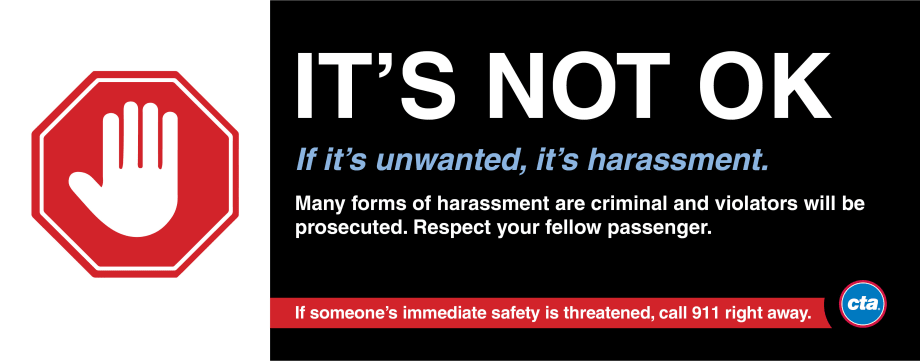
The goal of the campaign is to promote awareness that CTA will not tolerate harassment on its trains, buses or other CTA property and to provide helpful information to customers who believe they are the victims of harassment.
October 13, 2015
2 min to read
The Chicago Transit Authority (CTA) is expanding and updating its “If It’s Unwanted, It’s Harassment” public service campaign. The goal of the campaign is to promote awareness that CTA will not tolerate harassment on its trains, buses or other CTA property and to provide helpful information to customers who believe they are the victims of harassment.
The expanded awareness campaign builds on an earlier, effective version of the campaign that aimed to address harassment while riding the CTA and that established many of the agency’s procedures and protocols that are in place today.
The campaign, developed by CTA and working with community and advocacy organizations, will feature a series of messages that will appear on buses and trains and at train stations. The campaign will serve three purposes:
Encourage customers to report incidents that they experience or witness.
Educate customers on what to do if they believe they are victims of harassment.
Create awareness by putting would-be offenders on notice that harassment of CTA passengers will not be tolerated.
“The comfort and safety of passengers are our top priorities,” said CTA President Dorval R. Carter Jr. “Though the number of incidents reported to us is small, we take every complaint seriously. Our updated and improved campaign will address some of the most commonly heard customer complaints about harassment on CTA buses and trains and send the message that harassment will not be tolerated on our system.”
To develop the updated campaign, CTA used feedback from customers, local advocates and insight from CTA security professionals.
More Security and Safety

Transit Agencies Highlight Safety Gains at National Summit
Leaders from 15 major transit systems shared crime-reduction results and safety initiatives while discussing the role of continued federal support.
Read More →
DART Launches Major Security, Fare Enforcement Initiative
The 90-day demonstration will deploy coordinated security teams at five light rail stations while testing controlled access and gathering data to guide future investments.
Read More →
RTD Launches NextRide App to Consolidate Trip Planning, Fares, Security Reporting
The app expands on RTD’s existing NextRide web application and allows customers to view real-time vehicle locations and service alerts, purchase and store digital fares, and access customer support.
Read More →

TAPTCO Updates OSHA Compliance Training for Transit Maintenance Operations
The revamped program addresses 26 OSHA standards for maintenance facilities, with TAPTCO pointing to training, documentation, and everyday shop hazards as continuing challenges for transit operations.
Read More →
Sponsored•August 18, 2026
How VaporVision Adds Value to Transit Door Systems
Wabtec engineers explain how the system improves doorway detection, strengthens diagnostics and gives transit agencies and OEMs greater operating flexibility.
Read More →
FRA Announces $5.3B in Rail Investments, Including $2B for Amtrak
Funding will support grade-crossing improvements, infrastructure upgrades, and new Amtrak equipment in 23 states.
Read More →
Chicago, Maryland Expand Non-Law-Enforcement Safety, Rider Support
The CTA and MTA are launching new programs aimed at de-escalation, crisis response, rider assistance, and greater transparency.
Read More →
LA Metro, City of West Hollywood, and Partners Advance Smarter Bus Lane Enforcement
The award-winning partnership combines AI-powered detection with human oversight to improve bus reliability, accessibility, and enforcement efficiency.
Read More →
LA Metro Reports 57% Decline in Homelessness on Transit System Since 2024
The agency's latest homelessness count offers new data on how care-based services and cross-sector partnerships can complement traditional transit security strategies.
Read More →
FTA Launches 'Transit Moves America' Dashboard to Highlight Agency Safety and Performance
The online dashboard transforms National Transit Database information into a public-facing resource that allows users to compare transit agencies on key operational and safety metrics.
Read More →