



Chicago's Metra allowing customization of email alerts
The new "Customize Your Commute" program will allow riders to individually choose when to receive email service alerts and give them the option to sign up for a variety of other emails about specialized topics.

Douglas Rahden
Douglas Rahden
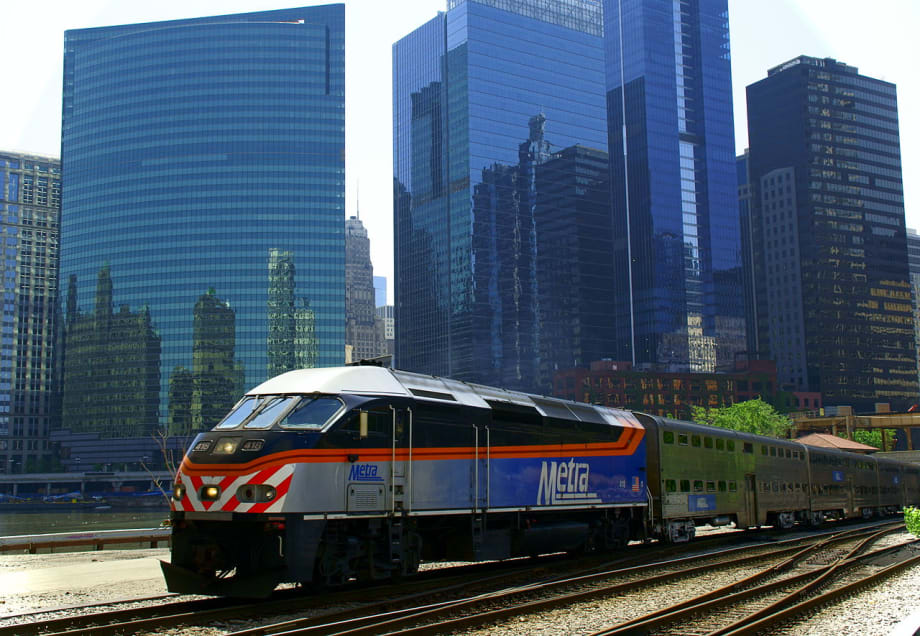
Chicago’s Metra commuter rail system launched “Customize Your Commute,” allowing riders to individually choose when to receive email service alerts and also giving them the option to sign up for a variety of other emails about specialized topics.
The changes will benefit all riders, as well as businesses interested in Metra’s DBE program; parents, educators and schoolchildren interested in Metra’s Safety Poster Contest; and passengers with disabilities who need to know about the status of elevators or other ADA issues.
The enhancements to Metra’s communications arsenal were made in direct response to rider feedback.
“We have designed and launched ‘Customize Your Commute’ to provide more information, and more useful information, that can be personally tailored by every individual to fit their specific interests and needs,” said Metra Executive Director/CEO Don Orseno.
Metra riders who are signed up to receive email alerts about service issues will now be able to tell Metra precisely when they want to receive them. Earlier this year, Orseno had committed to having this enhancement in place by June.
Under the former system, riders who signed up to receive email alerts about delays or other service issues for their preferred line or lines would receive every alert sent during the course of a day.
Many riders suggested the alerts would be more useful if Metra gave customers the option of choosing to receive them only during certain time periods — for instance, during their regular morning and evening commutes. The enhancement therefore allows customers to select windows of time during which they want to receive email alerts.
More Management

METRO Opens Submissions for 2026 Motorcoach Awards
Nominations are now being accepted for METRO Magazine’s Operator of the Year and Innovative Operator of the Year awards.
Read More →
New York MTA Advances Final Contract for Second Avenue Subway Expansion
Contract Four is the largest in the Second Avenue Subway Phase 2 project and includes construction of station infrastructure, tracks, and signals for the subway expansion, MTA officials said. Work on Contract Four will begin in 2027.
Read More →
Transit Agencies Highlight Safety Gains at National Summit
Leaders from 15 major transit systems shared crime-reduction results and safety initiatives while discussing the role of continued federal support.
Read More →

NITA Names New Leadership, Expands Reduced-Fare Program at First Board Meeting
The new regional transit authority appointed its first board chair and interim executive director while extending reduced fares across CTA, Metra, and Pace for eligible riders.
Read More →
Beyond the Checklist: A Structured Approach to Transit Maintenance
Reliability-Centered Maintenance helps transit agencies move beyond routine checklists to focus limited resources on the assets and failures that have the greatest impact on safety, reliability, and service.
Read More →
APTA 2026 Nominating Committee Selects Leadership Slate, Names Chair and Vice Chair Nominees
Leadership changes will help shape the association’s priorities and its representation of the transportation industry during the 2026–2027 term.
Read More →
DART Launches Major Security, Fare Enforcement Initiative
The 90-day demonstration will deploy coordinated security teams at five light rail stations while testing controlled access and gathering data to guide future investments.
Read More →
Advancing Fare Collection Through Technology and Innovation
Learn about delivering 1300 gates at 91 stations while managing fare evasion. Explore the large scale deployment, solution customization and real-world results that affect the region. Prepare for deployment in your region now.
Read More →
Game Day in Motion: Moving Millions During the 2026 World Cup
Between packed transit stations and team motorcoaches, see how agencies and operators across North America tackled the transportation demands of the 2026 FIFA World Cup.
Read More →
Surface Transportation Extension Averts Shutdown, Leaves Transit Funding Gap
The stopgap keeps federal transportation programs moving, but missing advance funding could complicate the transit and rail projects agencies are planning next.
Read More →