




LaFrance, local transit agencies forge partnerships, reap benefits
Clemson U. honored for parking innovations, sustainable practices
The award was based on a range of programs implemented in the last year to maximize Clemson’s limited parking supply, better define where visitors can park, distribute costs equitably among users and enhance sustainability.
October 26, 2015
Clemson University
2 min to read
Clemson University
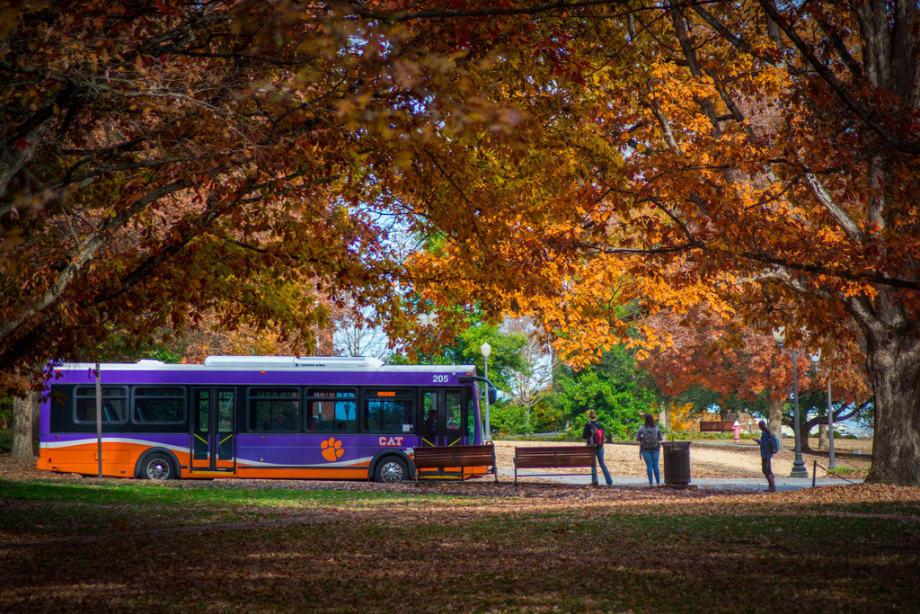
Clemson University’s Parking and Transportation Services (CPATS) was cited by the Carolinas Parking Association and received the 2015 Award of Excellence for most innovative, effective and efficient operation.
The award was based on a range of programs implemented in the last year to maximize Clemson’s limited parking supply, better define where visitors can park, distribute costs equitably among users and enhance sustainability.
“Clemson is one of the few universities to use smart phone apps and the first in the nation to use the loop sensor technology on this large scale to improve parking,” said Dan Hofmann, Clemson’s director of parking and transportation services.
CPATS installed sensors in nearly 400 visitor metered parking spaces and wire loop sensors in 10 large student commuter lots. The sensors are integrated with free smart phone apps that enable students to find open spaces among the 4,200 parking spots.
The My.Clemson app, introduced last year, shows available metered and student commuter spaces on interactive maps that guide users to open spots. The app can be downloaded to any smartphone from the Clemson website and presents a real-time interactive map that tracks the availability of every parking space on campus.
The university also replaced aging, single-space parking meters with multi-space, solar-powered pay stations that accept coins, bills, debit or credit cards, and Tiger One cards and provide printed receipts. All metered spaces are numbered and cost $1 per hour to park. An option to allow visitors to pay by cell phone is launching in some “visitor only” meter locations this week.
The new technology is only one component of a multi-faceted program improving the Clemson parking and transportation experience that earned the university the award this year.
The university also started a low-emission vehicle program and now has 12 electric cars.
An upgraded transit system, solar-powered smart meters, LED lighting in parking lots, solar trash barrels, and new electric cars with license plate recognition technology for parking officials are other factors that dramatically reduce Clemson’s carbon footprint.
More New Mobility

From Hardware to Digital Partner: Luminator Charts Its Next Chapter
CEO Magnus Friberg discusses Luminator’s shift toward becoming a digital partner, the growing importance of software and interoperability, and how AI can help agencies improve operations and passenger experience.
Read More →
Biz Briefs: Alstom Lands Canadian Contract, LYT to Supply California TSP, and More
In METRO's latest installment, we take a look at recent news from Complete Coach Works, Beep, FlixBus, and more partnerships making headlines across the transportation sector.
Read More →
CharterUP’s Armir Harris on Technology, AI, and the Future of Group Mobility
In a recent episode of METROspectives, CharterUP Founder/CEO Armir Harris discussed the company’s evolution from an online charter bus marketplace into a technology platform supporting public- and private-sector mobility and much more.
Read More →
Jacksonville’s NAVI Project Charts a New Course for Autonomous Public Transportation
Through its NAVI program, JTA is showing how autonomous vehicles, intelligent infrastructure, and coordinated operations can work together to deliver everyday public transportation.
Read More →
Biz Briefs: Luminator Marks Milestone and More
From manufacturers and suppliers to transit agencies and motorcoach operators, these updates offer a snapshot of the projects, partnerships and business moves driving the industry forward.
Read More →
New Tricks for Old Bureaucracies: Joshua Schank on Making Transit Innovation Stick
Former LA Metro Chief Innovation Officer Joshua Schank discusses why good ideas aren't enough, how transit agencies can overcome resistance to change, and why today's challenges demand more innovation.
Read More →
How DART's GoPass Is Redefining Regional Mobility
Serving 14 transit agencies, GoPass simplifies multimodal travel by allowing riders to plan, pay for, and manage an entire trip through one app.
Read More →
Biz Briefs: OCTA Taps Clean Energy for Hydrogen Station, Stadler to Supply Via Rail Vehicles, and More
From manufacturers and suppliers to transit agencies and motorcoach operators, these updates offer a snapshot of the projects, partnerships and business moves driving the industry forward.
Read More →CharterUP Expands Into New Mobility and Autonomous Transportation
Vice President of New Mobility Stephen Joos discusses how CharterUP is leveraging its nationwide transportation network, technology platform, and autonomous vehicle partnerships to expand into workforce mobility, campus shuttles, and transit solutions.
Read More →
METRO Magazine Announces 2026 Innovative Solutions Awards Winners
Projects Recognized for Advancing Mobility Through Technology, Accessibility, Workforce Innovation, and Operational Excellence
Read More →